 English


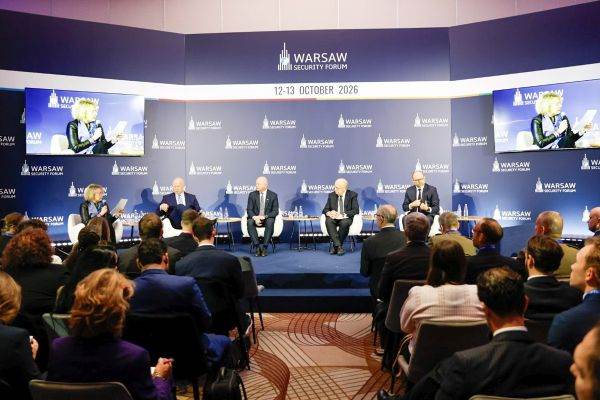
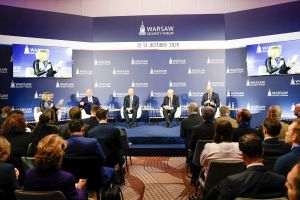
NATO is ready to fight at any moment to defend Europe, and any adversary attempting to occupy the territory of an allied state must know that it will encounter a force capable of blocking its attack, halting its advance and, if the aggression continues, destroying the military system it has committed to the fight, General Alexus Gregory Grynkewich, Supreme Allied Commander Europe, said yesterday at the Warsaw Security Forum, which is taking place over two days in the Polish capital.
At the heart of his address was what the general calls the "theory of victory”: a shared vision of how NATO deters an attack and defends the territory of its 32 allies if deterrence fails.
"If we are attacked, we are ready to fight tonight, but we are not complacent. We will continue to prepare and train every day, and we will be more ready tomorrow and even more ready the day after tomorrow. Our combat readiness under this theory of victory means, first and foremost, winning in defence. Demonstrating our readiness is also central to preventing conflict,” Alexus Grynkewich stated.
NATO's military chief in Europe explained that this concept is based on the strategy for deterrence and defence of the Euro-Atlantic area, agreed upon by all allies. According to him, it is not a military plan in the strict sense of the term, but rather the framework that tells NATO forces what they must be able to do and what capabilities they must demonstrate to convince an adversary that aggression will fail.
General Alexus Grynkewich explained: "We will block the initial attack. If the attack persists, we will blunt it and prevent the enemy's advance. And, if necessary, we will destroy the enemy's forces and the operational warfighting system deployed against us.”
These three stages-"block, blunt, break”-describe the progression from stopping the assault to preventing the offensive from continuing and, ultimately, destroying the mechanism that sustains it. Blunting the attack means reducing the adversary's ability to advance and seize the initiative. Grynkewich is not promising a war without losses, but explaining how NATO intends to prevent the occupation and retention of allied territory.
"To block, our land forces will manoeuvre to dominate any enemy assault at the point of contact. Through manoeuvre, we will fix enemy formations and prevent the occupation of Alliance territory. Land forces will attack the enemy and destroy its advancing forces. But they will not do this alone: our air and naval forces, working together with our space and cyber forces, will rapidly gain freedom of manoeuvre, quickly securing air and maritime superiority in and above the battlespace,” the Supreme Allied Commander Europe explained.
If the attacker continues, the response will also target its forces' supply, command and support capabilities. NATO intends to combine high-tech precision weaponry with large numbers of affordable systems that can be produced at scale, simultaneously employing land, air, maritime, space and cyber assets.
"Should the adversary choose to continue the attack or commit its reserves, we will destroy the warfighting system committed against us. This includes not only the attacking force itself, but everything that supports, sustains or controls that force,” Alexus Grynkewich said, adding: "Enemy formations will be deprived of supplies, enemy commanders will no longer be able to control their forces, and enemy support capabilities and forces will be degraded and destroyed.”
• NATO's Eastern Flank plays a priority role in the military alliance's new strategy
NATO's Eastern Flank holds an essential place in this concept.
The Supreme Allied Commander described the military forces in the region as ready to respond now, while training and investment continue to strengthen their defensive capabilities. Forward-deployed units on the Eastern Flank must demonstrate that they can block an attack, while air and maritime forces must demonstrate that they can support efforts to halt it.
"Our forward-deployed land forces on the Eastern Flank will train and demonstrate their ability to block any attack. Our air and maritime forces will train and demonstrate their ability to gain and maintain freedom of manoeuvre and deliver multidomain effects to further blunt any attack,” Alexus Grynkewich stated, announcing investments in long-range precision strikes, affordable systems, sensor networks and a "combat cloud”.
Regarding ammunition stockpiles, the commander expressed confidence in the available resources, but stressed the need to be able to sustain a prolonged conflict: "We need not only the initial capability, but also the ability to sustain it over the long term. I am looking very closely at stockpiles across the Alliance, I am very reassured about what we have available today, and I know we will continue to improve them.”
However, General Alexus Grynkewich firmly defined the purpose of these preparations and reiterated that NATO seeks to stop aggression and defend its territory, while the stated military objective is to defeat the forces attacking the Alliance.
"We are not seeking to inflict a strategic defeat on our adversary, nor do we need to do so. On the contrary, we seek only to stop any attack in its tracks to deny the ability to occupy and hold our territory. Achieving this objective requires the tactical and operational defeat of the forces used against us, but nothing more,” General Grynkewich explained, adding: "I am not saying that conflict is imminent or inevitable. It is not.” But he pointed out that combat readiness remains necessary, because planning must consider "what is possible, not just what is probable”.
Asked about the strength of the political commitment to Article 5 of the NATO Treaty, concerning collective defence, Grynkewich said he trusted the promises made by allied leaders. The Supreme Allied Commander Europe noted that the declaration adopted at the NATO summit in Ankara expresses an unequivocal shared commitment: "All 32 allies signed an extremely strong declaration that speaks of an unwavering commitment to Article 5, and I take our heads of state and government at their word.”
Alexus Grynkewich cited the American military presence on the Eastern Flank as evidence of NATO commitments being honoured. "We have American troops here in Poland today. We have American troops deployed across the entire eastern flank. Ultimately, it is a political decision as to who provides troops and where, but I believe no one should question the United States' commitment to this Alliance,” the Supreme Allied Commander stated.
In the face of sabotage and other hybrid attacks attributed to Russia, Grynkewich called for coordination among allies, public attribution of responsibility when legal requirements are met, and a response that would counter Moscow's objective of weakening Western support for Ukraine. Increasing military assistance to Kyiv would convey, he explained, that such actions strengthen the allies' resolve.
His speech ended with a warning intended to reach both the populations of NATO states and potential aggressors: "Our Alliance exists to preserve peace. But let there be no doubt: if war comes, we will block, we will blunt any attack and then, if it does not stop, we will destroy the forces carrying out aggression against us.”
• Zelenskyy: "Putin does not read Truth Social”
Alexus Grynkewich's military message complemented the political warnings delivered at the opening of the forum by Polish Prime Minister Donald Tusk, Ukrainian President Volodymyr Zelenskyy and European Commissioner for Defence and Space Andrius Kubilius. Their remarks linked Europe's security to Ukraine's resistance and Europeans' ability to strengthen their defence.
In the Polish prime minister's assessment, Moscow's ambitions extend beyond Ukraine's borders. "Russia wants to dominate Ukraine, and we know it will not stop pursuing its plans. Russia wants to destroy the existing security architecture in Europe to ensure that Russian domination returns to where it was before 1989. We have no doubt about this,” Donald Tusk said, calling on the West to respond with a stronger deterrence policy, particularly through sanctions.
He cited attacks on Ukrainian energy infrastructure as evidence of the gap between diplomatic initiatives and Russia's behaviour: "It is the same every time: if you propose that Russia stop striking critical infrastructure or civilian facilities, the response is brutal and arrogant. We can no longer harbour any illusions: Russia is not interested in de-escalation, a ceasefire or peace, but only in domination.”
Volodymyr Zelenskyy described this gap through the actual situation in Ukrainian cities. According to the Ukrainian president, Donald Trump's announcement of an energy truce was accompanied by new Russian attacks, while emergency crews were trying to restore electricity and water supplies.
"Yesterday, we were all surprised when, following an unexpected but very important post by the American president saying that he had secured an energy truce between Russia and Ukraine, at that very moment Russian jet-powered drones were flying through our skies, and large parts of Kyiv had no water or electricity,” Zelenskyy said. He added: "It was clear that Putin does not read Truth Social, and his Shahed drones follow a different set of instructions.”
The Ukrainian president stated that his country accepts a mutual halt to attacks on energy infrastructure. The condition is that Russia must honour the same obligation, at a time when electricity and the functioning of the networks are vital to the population.
"If Russia wants us to stop our long-range strikes against its refineries and its oil exports, then Russia must stop striking our energy system and critical infrastructure and stop killing our people. This is fair,” Zelenskyy stated. Kyiv's offer, he insisted, is explicit: "We are ready to honour an energy truce if Russia is ready to do the same. We agree if they agree too, and we have already shown that we are serious.”
• Presidential elections in Ukraine only after a complete ceasefire lasting at least 60 days
Zelenskyy called for American pressure on Moscow and continued European support, ranging from ammunition for F-16 aircraft and air-defence interceptors to funding for Ukrainian weapons and drone production. "We need American pressure on Russia-not an easing of sanctions, not concessions, but real pressure,” he stated.
The president also warned about hybrid operations directed against Europe: "Please do not underestimate the threats to your own countries. There is no such thing as a small act of destabilisation. Our intelligence services know that Russia is planning many, many aggressive hybrid operations against Europe, against various countries, against your countries.”
Regarding elections in Ukraine, Zelenskyy linked the possibility of holding them to a complete ceasefire. He cited the ongoing attacks and the difficulty of enabling soldiers on the front line to vote, declaring himself willing to seek legislative solutions together with parliament. "And if we have a complete ceasefire lasting at least 60 days, then I will be ready to work towards holding elections,” the Ukrainian president explained.
Andrius Kubilius, European Commissioner for Defence and Space, raised the issue of Europe's ability to translate these warnings into resources, industrial production and joint decisions. The European Commission official argued that greater responsibility for conventional defence is needed, given that China's rise will direct American resources towards Asia.
"Strengthening defence capabilities is an exclusively European responsibility, not because the United States is no longer a partner, but because of global geopolitical developments: China's rise will lead to the reorientation of American resources towards that region. Europe must assume primary responsibility for conventional defence under the NATO 3.0 concept, reducing its dependence on American strategic enablers and strengthening NATO's European pillar,” Andrius Kubilius stated.
He explained that defence remains primarily the responsibility of the member states, in coordination with NATO, while the European Union can mobilise economic instruments to finance joint projects. The main obstacle identified by the commissioner is the fragmentation of Europe's defence industry and the lack of an integrated market.
In this context, Kubilius mentioned consideration of the possibility of creating a European Security Council that would include the EU states, Norway, Ukraine, the United Kingdom and even Canada. "American military experts are sending a clear message about the need for Europe to become stronger, and this requires greater political unity. A major problem is the fragmentation of the defence industry (...) and the lack of an integrated market. The creation of the Security Council would provide member states with the framework needed to make practical decisions and overcome this fragmentation,” the European commissioner said.
The first day of the Warsaw Security Forum also included discussions on combating cyberattacks, building new energy capacity to serve defence industry factories and ensure energy security along the north-south axis, and establishing a joint military force to ensure the EU's security. As this edition went to press, a debate was underway on the impact that the outcome of the US midterm elections would have on NATO. Discussions continue today, when participants will address the new European security architecture, the EU enlargement process, peace negotiations in the Middle East, and how Russia and China want to shape the new world order.

















 Euro
Euro Dolar SUA
 Franc elveţian
 Liră sterlină
 Gram de aur































Reader's Opinion