English

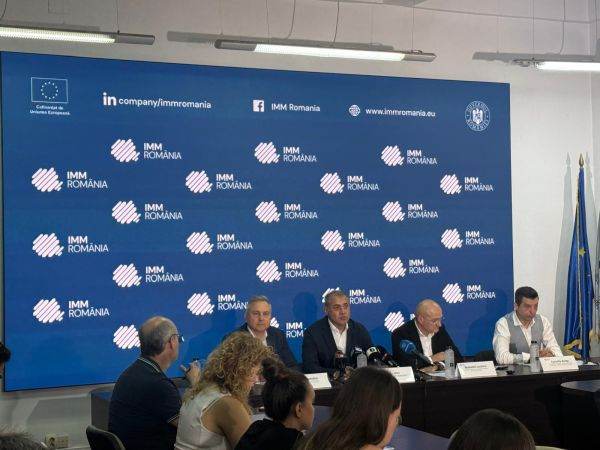
The national economy is losing approximately 63.8 million euros every day due to the current political crisis and the fact that the country is still led by an interim government without full powers, Florin Jianu, president of SME Romania, declared yesterday during a press conference. The loss is not just an accounting estimate, but expresses the direct cost of the institutional blockage: postponed private investments, European funds that risk being lost, increasing interest rates on public debt and pending economic reforms, said the representative of small and medium-sized entrepreneurs in our country. For businessmen, transporters and investors, the current political crisis is no longer a dispute between parties, but has turned into an economic crisis with visible effects on every company and, implicitly, on every family in Romania.
"We say that this political crisis has already become an economic crisis. Officially, Romania has entered a technical recession, because this political context aggravates the current economic decline,” says Florin Jianu, who noted that almost all economic indicators are deteriorating simultaneously. According to the president of IMM Romania, who cited data from the National Institute of Statistics, the gross domestic product has registered successive decreases in recent quarters, trade has fallen by over three percentage points, industrial production has decreased by approximately 2%, and final household consumption has decreased by 1.8%, while the increase in energy and fuel costs continues to put pressure on companies. In parallel, Romania remains the only European state with inflation above 10%, while the European Union average is approximately 2.3%, a situation that, according to Florin Jianu, is increasingly difficult to explain, including to European partners.
The analysis carried out by IMM Romania identifies five major sources of economic losses generated or amplified by the lack of an executive with full powers: the costs of financing public debt, postponed private investments, the blocking of infrastructure projects and reforms, delays in the absorption of European funds and the direct effects on small and medium-sized enterprises and the population. Romania currently pays the highest sovereign yield among the main economies in the region, with around 6.95% for ten-year government bonds, above Hungary, Poland and the Czech Republic, which means additional costs that are ultimately borne by the entire economy.
At the same time, says Florin Jianu, private capital immediately reacts to the lack of predictability. "Capital expects stability, and this uncertainty postpones investments and the creation of new jobs. At the moment, net investments, according to the INS, are only made on existing infrastructure projects, where there are volumes that require construction works, respectively equipment. New investment spending has collapsed by around 47%. Moreover, according to the data, new orders in the coming period have also decreased or are set to decrease by around 14.3%.
The political deadlock also affects major public projects and the implementation of reforms undertaken through the National Recovery and Resilience Plan, especially since our country is in a race against time before the August 31 deadline, and five milestone laws have not yet been adopted. The estimated risk is approximately 7.8 billion euros, and the failure to adopt the Budgetary Payroll Law, the Spatial Planning, Urbanism and Construction Code, or the measures regarding the corporate governance of state-owned companies alone could lead to the loss of billions of euros in European funding.
In the analysis carried out by IMM Romania, all these deadlocks translate into concrete costs for the economy. "We estimated the daily losses for the Romanian economy caused by this political crisis at approximately 64 million euros per day. So, attention: 64 million euros lost daily for the Romanian economy. From several components: over 30% represent losses from the PNRR generated by the unadopted legislation, postponed private investments involve approximately 22 million euros per day, and to these amounts are added the interest on the public debt of approximately 164 million lei per day", specified Florin Jianu.
• Economic recovery measures, not implemented
The President of IMM Romania stated that at this moment our country is not even functioning would on "automatic pilot", but is practically blocked. "Economic operators in the country tell us that they have never experienced such a crisis; the period 2008-2010 was much easier than what is happening now. It is inexplicable that we are in this situation when we have European funds and the PNRR at our disposal, and the global economy is not in an imported crisis. The fact that the Romanian economy is failing to perform and that we do not have a government is dramatic for everyone. (...) The entire society looks at the situation with distrust; we do not understand why we do not have a functional government. It seems that no one is in a hurry, although there are problems in all areas. The President of Romania should gather all the political leaders and have a functional government within a maximum of 24 hours", said Florin Jianu.
The leader of IMM Romania shows that the institutional blockage paralyzes even the economic measures already approved. "The economic recovery measures previously adopted by the government have remained only on paper; none of them are applicable at this time due to lack of funds or strategic investments. The memorandums signed by the Ministry of Finance with various European banks do not provide credit for companies in transport, health or other fields," said Mr. Jianu.
Moreover, the current crisis is also having a devastating impact on the labor market, and the president of IMM Romania warns that the deterioration of economic indicators is already starting to turn into a major social problem. "Regarding the labor market, the situation is dramatic. We see a growing unemployment rate of 6.4%, but especially a worrying unemployment among young people and a low employment rate among people over 50-55 years old. Jobs are being lost in sectors where we did not expect, such as IT or the automotive industry, where large companies are changing their headquarters or no longer performing in Romania. We estimate that, by the end of the year, the unemployment rate will reach 7-8%, which means the disappearance of approximately 70,000-80,000 jobs," said Florin Jianu.
• Left without the cap on the commercial surcharge on diesel, carriers become uncompetitive on the European market
In addition to the gloomy picture above, the representative of the Federation of Romanian Transport Operators offered, during the same press conference, the concrete image of the effects produced in one of the most important economic sectors. FORT President Beniamin Lucescu explains that the interim government's inability to extend the diesel excise tax reduction immediately produced an additional shock for transport companies.
"We, the Federation of Romanian Transport Operators, supported by IMM Romania, sounded the alarm at the beginning of last week. We announced to political decision-makers that, since we have an interim government that cannot extend the measure by emergency ordinance, from July 1 we will have a price increase. Unfortunately, the increase was approximately 60 bani. While in many European countries diesel has become slightly cheaper, in Romania the price has risen to approximately 9.60 lei per liter," said Beniamin Lucescu, who added that the difference compared to neighboring countries directly affects the competitiveness of Romanian companies.
"In Bulgaria, diesel is approximately 7.81 lei, in Poland 7.94 lei, in the Czech Republic 7.98 lei, in Slovakia 8.30 lei, and in Hungary 8.55 lei. Even in Austria the price is lower than here. These prices clearly disadvantage us. The consequences of this increase on transport will be an increase in bankruptcies and insolvencies, and small companies are already starting to close," the FORT president said.
According to Beniamin Lucescu, the effects are no longer just theoretical estimates, but realities that operators report daily to the employers' organization: "We have signals from transport operators, our members with up to five cars, that companies are already closing. We are losing competition to operators in Poland and Lithuania, because they capitalize more easily due to lower costs and cheaper diesel. Last week, a member operator lost a contract in Germany for a difference of only five eurocents per kilometer, the contract being won by a company in Lithuania."
In the absence of capital, carriers are abandoning investments, and this also affects road safety, said the FORT president, who added: "The aging of the car fleet represents an enormous risk. We no longer have money for new vehicles. Due to the lack of capital, some companies postpone technical inspections and the mentality "it will work this month too" appears. We cannot reduce costs by firing drivers, so we cut investments and vehicle maintenance, which leads to a decrease in the quality of services and the impossibility of increasing salaries. (...) In the transport market we have a decrease in demand, with receipts 25% lower than the previous year. High inflation and high costs, together with this measure, will make it difficult to transporters activity ".
Beniamin Lucescu warns that the economic effects are spreading in the chain and also affect state revenues, because transport operators in the border areas supply from their Hungarian and Bulgarian neighbors, and shows that the degradation of the companies' financial situation is already visible at the level of small companies: "We do not yet have a global figure for bankruptcies, but there is a generalized fear that we will no longer be able to operate due to low demand. In Suceava County, I personally know over twenty small companies, with approximately five trucks each, that have sold their cars or are trying to sell them. The authorities' measures, instead of increasing competitiveness, are decreasing it".
In the opinion of business representatives, the overall picture is that of an economy that is wasting time, investment and competitiveness at a time when it should be capitalizing on the billions of euros available through European funds. Entrepreneurs complain about the lack of an executive capable of adopting measures quickly, warning that investments are being postponed, that strategic projects are being blocked, that companies are reducing their activity, and some are already starting to close their doors. In the absence of a government with full powers, they say, each day of delay means not only 63.8 million euros lost to the economy, but also abandoned investments, jobs put at risk and an accelerated deterioration of the competitiveness of the national economy at a time when other states in the region continue to attract capital and consolidate their position on the European market.















 Euro
Euro Dolar SUA
 Franc elveţian
 Liră sterlină
 Gram de aur