English
A decline in muscle mass and physical strength associated with aging could be a significant warning sign regarding dementia risk, according to a study conducted by researchers from Australia, the UK, Canada, Thailand, and Italy, as reported by the Xinhua news agency. Researchers analyzed over 80 studies examining the links between body weight, body fat, muscle health, and dementia. The results showed that individuals affected by sarcopenia faced a 42% higher risk of developing dementia. The study was published in the International Journal of Food Sciences and Nutrition, and the findings were presented in a statement by Curtin University in Australia. Sarcopenia refers to the progressive loss of muscle mass and physical strength associated with the aging process. Researchers argue that dementia risk assessment should not rely solely on body weight but also on the condition and function of the musculature. "Body weight alone does not fully reflect dementia risk. Muscle strength and function are also important as people age," said Uraiporn Booranasuksakul, a researcher at Burapha University in Thailand and one of the study's lead authors.
• The relationship between obesity and dementia varies by age
The analysis also highlighted a complex relationship between obesity, age, and dementia risk. Individuals who were obese in midlife or before the age of 65 faced a 9% higher risk of developing dementia. Conversely, among those aged 65 and older, obesity was associated with a 17% lower risk of dementia. However, researchers warned that this association should not be interpreted as a benefit of weight gain; the findings do not demonstrate that gaining weight reduces dementia risk. Professor Mario Siervo, the study's corresponding author and a researcher at the School of Population Health at Curtin University, stated that the results point to a complex link between body weight, the aging process, and dementia.
According to him, long-term research is needed to determine whether reduced muscle mass and excess body fat-when analyzed together-contribute to an increased risk of dementia. The study authors maintain that maintaining a healthy body composition, including muscle strength and function, should be a key priority as the population ages.



















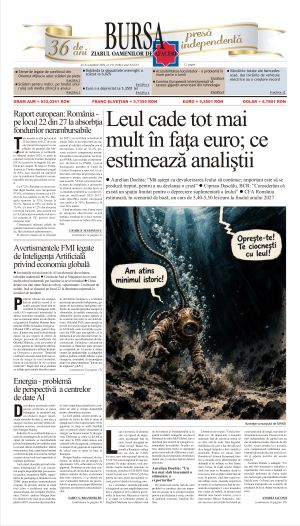





 Euro
Euro Dolar SUA
 Franc elveţian
 Liră sterlină
 Gram de aur