English

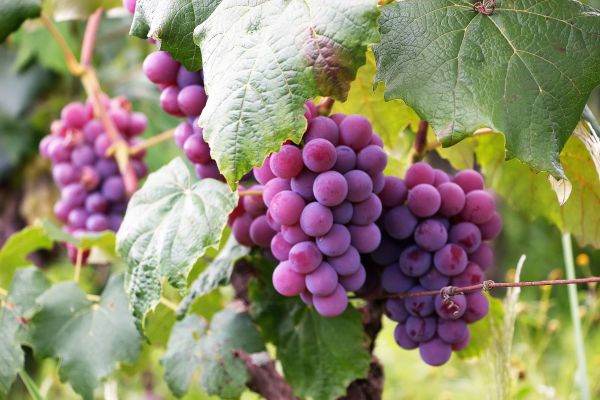
A study based on the longest known series of grape harvest data shows a sharp increase in the frequency of years with extreme temperatures in Burgundy, France. The research, which covers more than six centuries of observations in Beaune, indicates a clear acceleration of warming since 1988, informs AFP. Historian Thomas Labbe reconstructed the grape harvest periods in Beaune, in the Côte-d'Or department, using historical archives dating back to 1354. According to the European scientific journal Climate of the Past, it is the "longest series" of this type of data. The data allows for a comparison of the frequency of years with extreme temperatures over very long historical periods. Between 1354 and 1719, years with extremely high temperatures and, by implication, early harvests occurred, on average, once every 17 years. The frequency then decreased: between 1720 and 1987, such a year occurred approximately once every 53 years. After 1988, however, the interval was reduced to approximately five years. "Since 1988, once every five years. And since the beginning of the 21st century, we have already had ten extreme years, that is, approximately one every two and a half years,” Thomas Labbe explained to AFP.
• Harvest moved by three weeks
The change is also visible in the actual harvest calendar. For about six centuries, between the end of the Middle Ages and 1988, the harvest in Beaune began, on average, around September 27. Later, the process accelerated. In 2019, the average calculated over an 11-year period indicated a start of the harvest on September 6, about three weeks earlier than the historical average. "In the last two decades, the exceptional has become the norm,” Labbe summarized. According to the historian, about 80% of the variations recorded in the harvest period can be explained by temperature. A comparison of the data from Burgundy with meteorological observations made in Paris since 1658 indicated that a one-degree Celsius increase in temperature can bring the harvest date forward by about ten days.
• 2026, a new year of extremes
The data for 2026 seem to confirm this trend. The harvest of grapes intended for the production of cremant, a French sparkling wine, began on Saturday and set a new record. In the case of still wines from Beaune, the first pickings are estimated for the period August 20-25. Thus, the historical record of 1556, when the harvest began on August 15, would not be surpassed. The year 1556 remains an example of the fact that extreme climatic phenomena are not a phenomenon exclusive to the modern era. In that year, drought affected the region from March to September. The difference, however, is the frequency with which such episodes occur today. "Of the ten warmest years since 1354, four have occurred in the 21st century: 2003, 2018, 2020 and 2025,” Labbe pointed out. The year 2026 could also fall into this category. "We have an explosion of extreme phenomena,” the historian concluded.
• Harvests, an indicator of climate change
The historical series analyzed by the researcher also offers an unusual indicator of climate evolution. The harvest period is directly influenced by the temperatures during the months when the vines are growing, so long-term changes can be observed by comparing the data in the archives. For Labbe, the grape harvest data "thus reflects the rapid warming of the planet since 1988,” a period in which the frequency of extreme events has changed significantly. The evolution is relevant not only for the wine industry. Changing the harvest calendar can influence the characteristics of the grapes, the production processes and the adaptation of winegrowers to higher temperatures, given that climatic periods previously considered exceptional are occurring more frequently.
























 Euro
Euro Dolar SUA
 Franc elveţian
 Liră sterlină
 Gram de aur