English


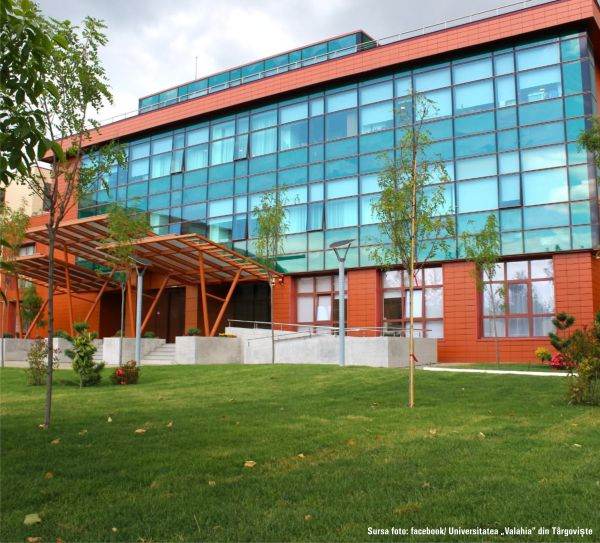
The transition to an economy based on sustainable materials and technologies with low environmental impact opens up new opportunities for regions capable of developing innovation ecosystems. In this context, Dâmboviţa County aims to take an important step through a partnership between KIK Academy and "Valahia" University in Târgovişte, which aims to attract international students and develop a center of excellence in the field of sustainable materials. The initiative goes beyond the size of a simple university program. The partners' vision is to build an ecosystem in which education, research and industry function in an integrated manner, so that Târgovişte becomes, over time, a European benchmark for the development of new materials and technologies dedicated to the circular economy.
• An international master's degree built on market requirements
The starting point of this approach is the launch of the Engineering of Sustainable Materials master's program, organized by the Faculty of Materials Engineering and Mechanics of the "Valahia" University. The program is taught entirely in English, lasts four semesters (two years) and is designed to train engineers capable of developing materials and technologies with reduced environmental impact, through a curriculum adapted to the current requirements of the business and industry environment. The program aims to develop skills in the field of sustainable materials, computer-aided design, the integration of sustainability principles in product design, supramolecular engineering, as well as interdisciplinary research and project management. The curriculum includes disciplines such as nanomaterials and nanotechnologies, sustainable composite materials, biomaterials and synthetic materials, polymer materials processing and circularity, modeling and simulation methods for green industry, polymer materials degradation, technologies for ecological transition, sustainable materials development and management of multidisciplinary research projects.
Rector of the University of "Valahia” Assoc. Prof. Dr. Eng. Ioan Corneliu Sălişteanu explained to us what this project represents for the institution he leads and what makes it different from traditional training models: "More than two years have passed in which our university has proven its openness to the economic and social environment, and not just formally, but by inviting companies to an applied dialogue regarding the training needs of future employees, currently our students. It should be known that universities have greater flexibility in organizing master's programs than undergraduate studies, therefore a natural first step in collaborating with the economic environment is to start these master's programs in partnership. The university is not the first to have such an experience with industrial operators, and the fact that a company is directly involved in the curriculum of a study program is a guarantee of an appropriate profile of the graduates of this study program, adapted to the requirements of the business and industrial environment. The project is an example of a living partnership, in which each party brings what it has best to the table, for the benefit of training specialists who have the theoretical and practical skills desired in the industrial entrepreneurial environment”.
• Direct integration of industry into the educational process
The element that differentiates the project is the direct integration of industry into the educational process. KIK Academy intends to select, for the first promotion, approximately 15 international students, for whom it will finance the costs of studies and accommodation for the entire period of the master's degree. In parallel, the participants will have the opportunity to work part-time within the company and participate in real research and development projects. The proposed model aims to reduce the distance between the academic environment and industry. Students will not only acquire theoretical knowledge, but will effectively contribute to the development of solutions regarding sustainable plastics, biopolymers, advanced recycling, the circular economy and new materials for industrial applications. This approach complements the academic structure of the program, which gives an important weight to practical activities. According to the rector, attracting students to this specialization requires a joint effort of the parties involved: "The premises for attracting talented young people to our county are created through the efforts of the parties involved. I will give you just a few examples, namely the company provides financial support by supporting 15 tuition fees each year of study to facilitate access to education for the best students, without worrying about study expenses. Also nea, KIK Compounds together with the university, constitute a budget for a number of 5 private scholarships for each year of studies, in the amount of 200 euros per month. Thus, a competitive environment is created in which talented young people can develop without the financial worry of financing their studies or living expenses, especially since the university grants a 50% discount on the accommodation fee in dormitories for students enrolled in this master's program. It should also be mentioned that our university is a member of the European Alliance KreativEU, along with 10 other European universities, and, to the extent that our partners wish to get involved in this project, the collaboration can gain greater scope. (...) Competence poles develop where there is interest and good collaboration. To gain national or international dimensions, it depends only on us, on the students we will attract and on how the results of the study and research in the field of sustainable materials will impact the markets of profile products”.
• More than a master's program
In the opinion of the initiators, the real stake is not the launch of a new university program, but the development of a regional ecosystem in which the university, research institutes and companies collaborate permanently. In recent years, many European regions have become competitive by specializing in a niche technological field, building clusters around universities that bring together research, investment and industry. The same model is also envisaged for Dâmboviţa County. By attracting international students and researchers, developing laboratories and involving the private sector in research activity, "Valahia” University could become the core of a regional center of excellence in the field of sustainable materials.
The concept can be described as a future "Sustainable Plastics Valley”, an ecosystem in which ideas generated in the academic environment are transformed into technologies, products and industrial solutions with high added value.
• Competencies for the green economy
According to the study program documents, graduates will acquire competencies in the development of advanced materials, optimization of production processes, integration of new products into industrial flows, development of testing procedures and assessment of environmental impact. At the same time, the program emphasizes the development of transversal skills, such as solving complex problems, assuming responsibility and working in international teams. Admission is organized in English, and the program aims to attract candidates from several regions of the world, contributing to the internationalization of "Valahia” University and increasing its visibility in the European academic space.
• Investment in the region's competitiveness
At a time when the European Union is accelerating investments in the green economy, and the industry is looking for solutions to reduce its carbon footprint and use innovative materials, the training of specialized human resources is becoming a competitive advantage. Dâmboviţa can become one of the main regional centers dedicated to sustainable materials and the circular economy. The success of such an initiative will not be measured only by the number of graduates, but by the ability to transform knowledge into innovation, investment and economic development. In this sense, the project's stake is to build a model in which the university trains specialists, research generates solutions, and industry transforms them into competitive products and technologies on the international market.




















 Euro
Euro Dolar SUA
 Franc elveţian
 Liră sterlină
 Gram de aur