English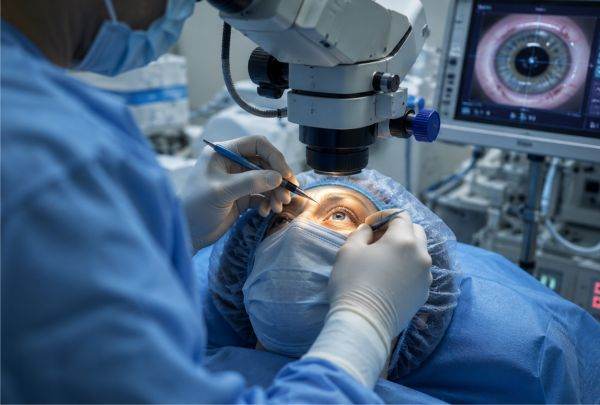
The American biotechnology company Life Biosciences announced last week that it has administered the first experimental treatment ER-100 to a patient suffering from glaucoma, one of the main causes of blindness. The therapy pursues a goal that until recently seemed taken from science fiction literature: to cause aged cells to behave like young cells again, according to articles published by Business Insider, Nature and Science Alert.
The sources cited claim that, if the experiment succeeds, it will not only mean a new method of treating eye diseases, but could pave the way for a completely new generation of anti-aging therapies, capable of regenerating tissues and organs damaged by the passage of time.
"To me, this moment represents a potential transformation not just for the company and not just for the field of aging biology, but, without exaggeration, for the whole of medicine,” said Jerry McLaughlin, CEO of Life Biosciences, according to the cited sources, adding: "We are talking about the possibility of restoring tissue function and reversing disease at a fundamental level of the body.”
The treatment is based on one of the most fascinating theories in longevity research: cellular reprogramming. The concept began to take shape in 2007, when Japanese researcher Shinya Yamanaka demonstrated that certain proteins can reset adult cells, transforming them into a stem cell-like state. The discovery won him the Nobel Prize and opened a research direction that today attracts hundreds of millions of dollars from big pharmaceutical companies and tech billionaires.
In recent years, Jeff Bezos and Sam Altman have invested heavily in companies trying to turn this idea into a medical reality, Business Insider reports. Pharmaceutical giant Eli Lilly recently participated in a $435 million funding round for the startup New Limit, and Merck has directed funds to Rejuvenate Bio. However, Life Biosciences is the first company to actually test this technology on humans.
The ER-100 therapy is based on activating three genes capable of "resetting” certain epigenetic information accumulated with aging. Basically, researchers are trying to convince damaged nerve cells in the optic nerve to function like young cells again.
These cells, called retinal ganglion cells, transmit visual information from the eye to the brain. Normally, they do not regenerate. When they are destroyed by diseases such as glaucoma, vision loss is permanent. That is why the success of the therapy would represent an extraordinary advance.
The sources cited show that David Sinclair, a geneticist at Harvard and co-founder of Life Biosciences, believes that the study will test one of the most important hypotheses in the biology of aging: "This is an important moment for Life Bio and for the field of biology of aging. Our research has suggested that aging is largely driven by the loss of epigenetic information, rather than irreversible damage. This clinical trial represents the first opportunity to test whether restoring this information can improve human diseases.”
Sinclair and his team have published results that have attracted the attention of the scientific community since 2020. The researchers reported that activating the three genes caused the regeneration of neurons in the optic nerve in mice and reversed vision loss in elderly specimens or those affected by glaucoma. Based on these results, the technology was transferred to Life Biosciences, which subsequently conducted preclinical tests in rodents and primates. According to the company, the studies did not reveal serious adverse effects.
However, the excitement is accompanied by a considerable dose of skepticism.
The clinical trial approved by the United States Food and Drug Administration (FDA) is a small one, including a maximum of 18 participants. The first 12 patients will suffer from open-angle glaucoma, and another six will have non-arteritic anterior ischemic optic neuropathy, a condition that causes sudden vision loss. The participants will be monitored for at least five years, and the main goal of the study is to assess the safety of the treatment, not to demonstrate its effectiveness.
The reason is simple: the risks are considerable. The therapy uses a genetically modified virus to carry instructions to target cells. These instructions cause the production of proteins that are supposed to rejuvenate the cells. Moreover, the activation of the genes is controlled by daily administration of the antibiotic doxycycline. If problems arise, patients can stop taking the antibiotic, and the genetic mechanism stops.
However, many researchers warns that cellular reprogramming can have major side effects, including cancer.
"Reprogramming has tremendous potential if it can be used safely in humans,” says Matt Kaeberlein, one of the world's leading longevity researchers, according to the cited sources. He adds: "The technology is still in its very early stages, and the potential for catastrophic adverse effects is high.”
The concerns are not theoretical. In previous experiments on animals, some of the factors used for cellular reprogramming have been associated with the development of tumors. That is why the researchers eliminated one of the four Yamanaka factors, the one considered closest to the mechanisms involved in the development of cancer.
Even so, many experts remain reserved. Cell biologist Paul Knoepfler of the University of California Davis, one of the most vocal critics of the project, stated, according to Science Alert, that success is by no means guaranteed: "One challenge is that ER-100, even under ideal reprogramming conditions, which no one knows about in the human eye, will not reduce the intraocular pressure associated with glaucoma. So even if there is cellular rejuvenation, the effects may not last.”
The same researcher cautiously summarized the situation in a formulation that has become emblematic of the current debate: "As a stem cell biologist, I find reprogramming of any kind fascinating, especially when it is used to treat disease. But we have to stay grounded in reality. A lot of things can go wrong.”
The caution is also shared by Brian Kennedy, director of the Centre for Healthy Longevity in Singapore, who told the cited sources: "I support the concept of epigenetic reprogramming because, theoretically, it has the potential to have a major impact on aging if done correctly. However, I have always been skeptical that we have enough knowledge to do this safely and effectively in humans.”
For now, the first patient has already received the injection, and researchers will monitor both the possible effects on vision and the emergence of complications in the coming months. The preliminary results could provide the first concrete answers to one of the most fascinating questions in contemporary medicine: can aging, at least partially, be reversed?
If the answer is affirmative, the implications go far beyond the field of ophthalmology. Researchers are already dreaming of applications for muscles, livers, brains and other organs affected by age. Such a success could radically change the way degenerative diseases are treated and redefine the very idea of aging.
For now, however, humanity is facing an unprecedented experiment. For the first time, the promise of cellular rejuvenation has left the lab and entered a human body.




























 Euro
Euro Dolar SUA
 Franc elveţian
 Liră sterlină
 Gram de aur