English


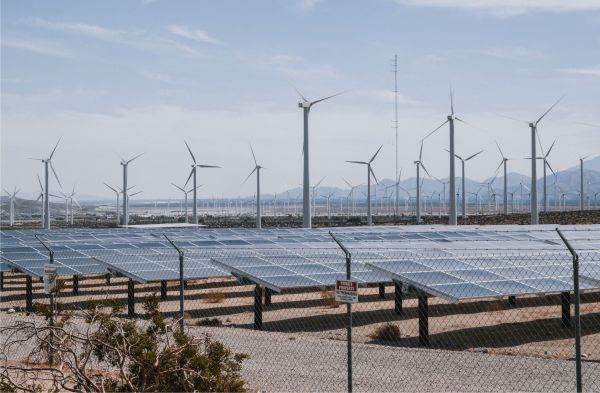
The El Niño-fueled heat wave has sparked an unprecedented boom in the HVAC industry, and major investment banks see the trend as one of the most lucrative opportunities in the coming years, according to an analysis by Goldman Sachs and published yesterday by the Zerohedge website.
While public attention has so far focused on the impact of El Niño on agriculture, crops and food prices, financial analysts warn that the economic effects of this climate phenomenon are much broader and will reshape entire markets, from cooling equipment and energy infrastructure to electrical cable manufacturers and energy suppliers. According to experts at Goldman Sachs, the explosive demand for HVAC systems - heating, ventilation and air conditioning - is on track to generate significant gains for dozens of global companies, amid intensifying heat waves and increasing electricity consumption.
According to the analysis for investors, entitled "Heat Waves Could Further Amplify HVAC Demand”, the team of specialists led by Brian Singer identifies no less than 42 global companies listed with a "buy” recommendation, considered the main beneficiaries of the explosion in demand for air conditioning systems and the infrastructure necessary to supply them with electricity. According to Goldman Sachs, high temperatures will accelerate investments in both air conditioners and electrical networks, equipment for power stability and technologies aimed at increasing energy efficiency.
The data analyzed by the cited source shows that the global market for HVAC equipment continues to grow at a sustained pace. According to the most recent data, dating back to last year, in 2024 global demand reached 114 million units, up 7% compared to the previous year, and in relation to the population, global consumption rose by approximately 6%, to 13.9 units per 1,000 inhabitants. The evolution reflects the fact that air conditioning systems are no longer a comfort product reserved for developed economies, but are becoming a necessity in a world increasingly affected by climate change.
Asia remains by far the most important residential market for HVAC equipment, concentrating approximately 60% of global demand. Japan, Hong Kong, Macau and Taiwan record the highest penetration rates of air conditioners, but analysts estimate that the fastest market expansion will come from other Asian countries, amid accelerated urbanization and increasing temperatures. India and Bangladesh are considered among the economies with the greatest growth potential in this sector, as the combination of a very hot and humid climate and the development of the middle class stimulate investment in modern cooling systems.
Europe is, in turn, one of the big surprises of the Goldman Sachs analysis. Although the continent has faced repeated heat waves in recent years, the degree of use of air conditioners remains significantly below the global average. Germany, the United Kingdom and France are identified as markets with huge growth potential, as many homes and commercial buildings are not yet equipped with modern air conditioning systems. It is this gap compared to other regions that makes Europe one of the most attractive markets for HVAC equipment manufacturers.
However, the increase in the number of air conditioners will have a direct effect on electricity consumption. Goldman Sachs estimates that countries such as Spain, France, Germany and the United Kingdom will see a significant increase in energy demand as people and businesses widely adopt cooling solutions. This phenomenon opens up new opportunities for electrical equipment manufacturers, energy infrastructure developers and utility companies, which will need to invest in expanding and modernizing networks to cope with the additional consumption.
However, the economic impact of the El Niño phenomenon goes beyond the energy sector. Rory Green, chief China economist at TS Lombard, warns, according to Zerohedge, that the current climate episode could become a new inflationary shock at a global level. In the analysis titled "Super El Niño: Famine Follows War?”, he explains that high temperatures and changes in rainfall patterns are affecting agricultural production and fueling rising food prices. In addition, the effects are amplified by the already high costs of fertilizers, influenced by geopolitical conflicts and disruptions in international trade. According to the economist, India is one of the economies most exposed to both risks regarding slowing economic growth, as well as inflationary pressures generated by El Niño. Brazil and Mexico are also considered vulnerable to accelerating inflation through rising agricultural prices, which may influence monetary policy and the economic prospects of these countries.
In this context, investors are increasingly attentive to companies that can benefit from climate and energy transformations. Goldman Sachs includes established HVAC system manufacturers such as Carrier Global, Johnson Controls and Lennox International on the list of main winners, along with groups active in the field of energy and electrical infrastructure such as GE Vernova, Vistra, Quanta Services, Prysmian, Siemens Energy, Midea Group, Hitachi and Power Grid Corporation of India.
The message sent by the major analysis houses is clear: climate change no longer represents only a risk for the economy, but also a factor that redistributes capital and creates new winning sectors. While investors once focused on the effects of El Niño on grains, coffee, and sugar, today the focus is increasingly on the HVAC industry, energy infrastructure, and companies that can respond to a world where extreme temperatures are becoming the new normal. For HVAC manufacturers and the entire industrial chain that supports their energy supply, heat waves are no longer just a meteorological phenomenon, but one of the most powerful drivers of economic growth in the next decade.





















 Euro
Euro Dolar SUA
 Franc elveţian
 Liră sterlină
 Gram de aur