English


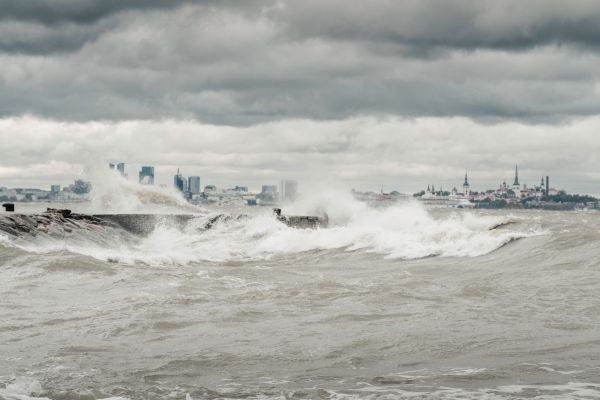
International meteorologists are increasingly predicting that a strong El Niño episode will occur this year, with the potential to become one of the most intense observed to date, according to the European Copernicus Service, quoted by AFP. Copernicus Director Carlo Buontempo said that climate models have revised their forecasts for the intensity of the phenomenon upwards. "The probabilities are strongly in favor of a moderate-strong or even strong episode, with the potential to become unprecedented at this stage," he said.
• Climate models indicate an intensification of the phenomenon
According to the latest update published by Copernicus, about 75% of international experts contributing to the El Niño forecasts estimate that the ocean surface temperature in some regions of the equatorial Pacific could exceed average values by 2.5 degrees Celsius by November. Carlo Buontempo stated that, between May 1 and June 1, all climate models used by specialists revised their forecasts in the sense of an intensification of the phenomenon. El Niño is a natural climate phenomenon characterized by the abnormal warming of the waters in the central and eastern equatorial Pacific Ocean. It affects atmospheric circulation and modifies wind and precipitation regimes on a planetary scale. According to the World Meteorological Organization (WMO), the effects of El Niño manifest themselves differently from one region to another, favoring severe droughts in some areas and heavy rainfall or floods in others. The phenomenon also contributes to the increase in average global temperatures.
Typically, El Niño reaches its maximum intensity towards the end of the year, but its influence on the climate can extend into the following year, because the oceans slowly release the accumulated heat.
• Only three episodes have exceeded the two-degree Celsius threshold
According to historical data cited by AFP and Copernicus, only three El Niño episodes have so far recorded a temperature anomaly greater than two degrees Celsius: those of 1982-1983, 1997-1998 and 2015-2016. The first major El Niño episode documented in modern times was that of 1877-1878. The 2015-2016 event contributed to setting global temperature records and was associated with extreme phenomena, including droughts, heat waves and unusually heavy rainfall in several regions of the globe.
• Risk of new global temperature records
Experts warn that a strong El Niño episode, superimposed on global warming caused by greenhouse gas emissions, could favor the establishment of new temperature records at a planetary level. According to Copernicus, the intensification of the phenomenon comes in a context in which ocean and atmospheric temperatures are already at very high levels, which increases the likelihood of extreme weather events and new climate peaks in the coming years.

























 Euro
Euro Dolar SUA
 Franc elveţian
 Liră sterlină
 Gram de aur