English



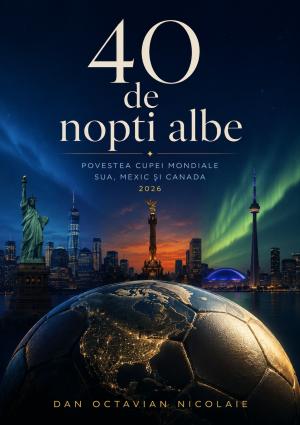
Several federations in Asia, Africa and the Caribbean have reacted harshly after statements attributed to UEFA President Aleksander Èeferin that expanding the World Cup to 48 teams would produce "completely uninteresting" matches, according to reports in the Slovenian press cited by the Associated Press. The reaction was not long in coming. The federations of Cape Verde, Congo, Curaçao, Haiti, Jordan and Uzbekistan joined African states such as Algeria, Egypt, Ghana, Ivory Coast, Morocco, Senegal, South Africa and Tunisia in a joint statement. Their message is firm: "Football does not belong to a select group of nations. Its strength comes from its universality."
• The real stakes: representation, not just format
Beyond the dispute over the World Cup format, the conflict brings to the surface an older tension: the relationship between the dominant traditional football (Europe and South America) and the desire of emerging federations to have greater representation on the global stage. For many of the signatory states, qualifying for the final tournament is not a simple sporting result, but an event with major social and identity impact. Cape Verde, Curaçao, Jordan and Uzbekistan have ticked the boxes for the first time in history, while Congo and Haiti are returning to the World Cup after more than five decades of absence.
• Criticism of Europe and defense of expansion
According to reports in the Slovenian press, Èeferin has said that some matches in an expanded tournament lack sporting interest, even though he acknowledged that expansion offers the chance to participate for smaller nations. UEFA has not officially commented on these claims.
In contrast, the opposing federations believe that such a perspective ignores the effort of the athletes and the significance of participating in the most important tournament in world football.
"To suggest that these matches are less important is deeply disappointing and does not reflect the reality of the work done by the players, coaches and fans," the joint reaction states.
• FIFA and the new logic of power in football
The expansion of the World Cup to 48 teams is one of the most important structural changes in the history of the competition. Supported by FIFA, it was justified by the idea of globalizing football. At the same time, this strategy has changed the political balance within world football: smaller federations have gained electoral weight, and the traditional great powers can no longer unilaterally impose the direction of the competition.
• A rupture that is just beginning
The dispute is not just about the spectacle of some matches, but about who defines the future of world football. If UEFA is skeptical about expansion, FIFA is betting on inclusion and a broader global base for the competition. Between these two visions, world football is entering a phase of visible fragmentation. And the reaction of the federations in Africa, Asia and the Caribbean clearly shows that the old consensus no longer works.
















 Euro
Euro Dolar SUA
 Franc elveţian
 Liră sterlină
 Gram de aur