English

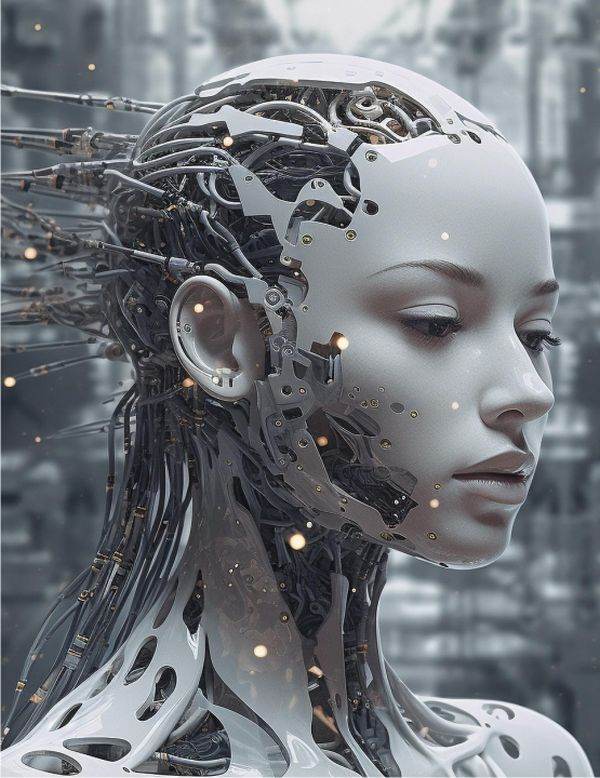
The director of the US Central Intelligence Agency (CIA), John Ratcliffe, said that the most advanced models of artificial intelligence can be compared to "digital nuclear weapons", in a formulation that reflects the growing concerns of American intelligence services about the evolution of AI, reports AFP. Speaking at a conference organized by AWS (the cloud computing division of Amazon), Ratcliffe said that the United States is facing adversaries who are trying to "steal and manipulate America's lead" in the field of emerging technologies. In this context, the CIA chief announced an institutional reorganization focused more strongly on cybersecurity, which he described as "a shield" designed to protect critical US infrastructure.
• Geopolitical pressure around AI
The statements come amid intensifying global competition in the field of artificial intelligence, which is increasingly considered a strategic element similar to classical or nuclear weapons. According to Ratcliffe, the potential impact of AI on national security justifies an unprecedented level of control and surveillance, including regarding access to advanced models.
• Restrictions and controversies in the AI industry
In parallel, US authorities have recently imposed restrictions on access to some AI models developed by private companies. In June, Washington forced the company Anthropic to limit access to two of its most advanced models, "Mythos 5” and "Fable 5”, under export control measures. The decision was a first, being the first time a government has intervened directly to restrict the distribution of a leading AI model. Later, access to "Mythos 5” was partially relaxed, being allowed only to a small circle of American partners, while "Fable 5” remains unavailable to the public.
• OpenAI and the new authorization framework
At the same time, OpenAI released the GPT-5.6 model in a limited access regime, with a new government validation mechanism for authorized partners, marking a major change in the way advanced AI technologies are distributed. These developments suggest a clear trend: cutting-edge artificial intelligence is no longer treated simply as a commercial product, but as a technology with direct implications for global security.




















 Euro
Euro Dolar SUA
 Franc elveţian
 Liră sterlină
 Gram de aur