English

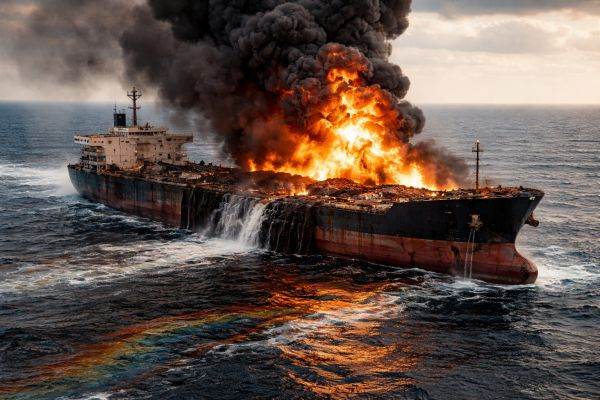
The extremely rich marine ecosystem of the Persian Gulf is under unprecedented pressure, amid the escalation of conflict in the region. Bombings, attacks on oil tankers and the risk of massive oil spills threaten thousands of species, many already vulnerable, according to an analysis based on data provided by AFP and international environmental organizations. Although it seems a relatively limited geographical area, the Persian Gulf is home to an impressive biodiversity: over 2,000 marine species, more than 500 species of fish, five species of sea turtles, including critically endangered species, about 100 species of coral, one of the largest populations of dugongs in the world (5,000-7,500 individuals). In addition, mangrove and seagrass ecosystems are essential areas for the reproduction of many species. This biological richness is, however, doubled by a structural vulnerability: the gulf is shallow (on average about 50 meters), semi-enclosed and connected to the Indian Ocean only through the Strait of Hormuz, which makes the water circulation extremely slow - between two and five years.
• Almost 300 incidents with environmental risk
According to the Conflict and Environment Observatory (CEOBS), since the beginning of the conflict, around 300 incidents with potential environmental impact have been recorded. These include: attacks on oil tankers, damage to energy infrastructure, maritime incidents with a risk of pollution. The situation is aggravated by the fact that dozens of ships carrying around 21 billion liters of oil are blocked in the area, which turns the region into a veritable "ecological time bomb", warns Greenpeace. "This is an ecological disaster waiting to happen", said Nina Noelle, representative of Greenpeace Germany.
• Hard lessons from history
The region already has a dramatic precedent: the 1991 Gulf War, when approximately 11 million barrels of oil were spilled into the sea. The consequences were devastating: the contamination of over 640 km of coastline,
the death of over 30,000 seabirds, decades needed to restore ecosystems. Experts warn that a similar or even worse scenario cannot be ruled out in the current context.
• Impact on species: from birds to cetaceans
Oil pollution directly affects marine and coastal fauna: seabirds lose their waterproof plumage, risking hypothermia and drowning, marine mammals are affected by the noise of explosions and military sonar, turtles and fish are exposed to contamination of their breeding habitats. The Arabian Peninsula is also a major hub for migratory routes between Europe, Asia and Africa, and the conflict disrupts these routes through noise and air pollution. Two studies published in Nature and the Royal Society have previously shown a link between the use of military sonar and the stranding of cetaceans.
• Corals relatively protected, but not completely
According to John Burt, professor of biology at the Mubadala Arab Center for Climate and Environmental Sciences, the impact on corals could be limited under certain conditions: "Oil floats, so it mainly affects the surface of the water and less the corals in the deep zones.” However, coastal ecosystems - such as salt marshes and tidal areas - are much more exposed, and the medium-term effects could be significant.
• "Ecocide” and geopolitical tensions
Amid the escalating conflict, Iranian Foreign Minister Abbas Araghchi accused attacks on oil infrastructure of "ecocide,” citing soil and groundwater contamination. In parallel, maritime incidents reported by international agencies, including the International Maritime Organization, confirm the increasing risks for oil transport in the region. CEOBS Director Doug Weir warns that the ecosystems of the Persian Gulf are extremely sensitive to pollution generated by armed conflicts: "History shows how vulnerable these ecosystems are to the destruction caused by war.”
In a context already marked by climate change and intense maritime traffic, the current conflict risks triggering a major ecological crisis, with long-term effects not only for the region, but also for the balance of global biodiversity.

















 Euro
Euro Dolar SUA
 Franc elveţian
 Liră sterlină
 Gram de aur