English

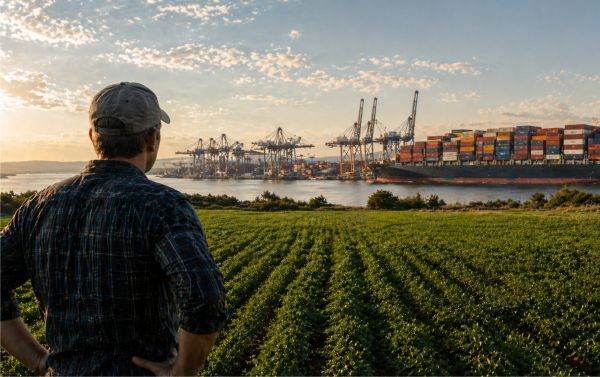
The trade agreement between the EU and the Mercosur countries (Argentina, Brazil, Paraguay and Uruguay) is provisionally applied from today, and will enter into full force once the European Parliament has given its consent, which is a prerequisite for the Council to conclude the agreement. The European Parliament will only be able to vote on the consent after the Court of Justice of the European Union has given its opinion on the compatibility of the agreement with the EU treaties, following Parliament's decision in January to request such an opinion.
The provisional entry into force of this agreement has not gone unnoticed. According to a press release issued by the European Parliament, MEP Gabriel Mato, the Committee on International Trade's standing rapporteur for Mercosur, said: "We welcome the launch of this important partnership between the EU and Mercosur, which represents a significant opportunity to strengthen our economic and political ties with Latin America. Its provisional application opens a crucial stage to assess the real impact of the agreement on the ground. The EU must live up to expectations and respect all its commitments in the agreement, ensuring fair competition and effective support for Europe's most sensitive sectors, in particular agriculture."
The chairman of the Committee on International Trade, German Social Democrat Bernd Lange, added: "This is a real game changer and exactly the right remedy in these difficult economic times. The agreement sends a strategic signal against isolationism, in favour of partnership and rules-based trade. I am confident that by the time Parliament takes its final decision, the agreement will have already delivered economic and political benefits. We should also continue with future agreements and speed up ratification procedures so that we can reap the benefits much more quickly than at present - while maintaining the role of the European Parliament.”
The EU-Mercosur agreement, concluded on 17 January 2026 in Asuncion, Paraguay, creates a market of 720 million people, cuts customs duties worth billions of dollars and opens up opportunities in multiple sectors. To prevent any negative effects on the European agricultural sector from trade liberalisation, in February 2026 the European Parliament approved safeguard clauses setting out how the EU could temporarily suspend tariff preferences for agricultural imports from Mercosur countries, if an increased influx of such imports would affect EU producers. According to the safeguard clauses approved by the European Parliament at its meeting on 10 February 2026, the European Commission is obliged to launch an investigation into the need for safeguard measures when imports of sensitive agricultural products from Mercosur, including poultry, beef, eggs, citrus fruits and sugar, increase by 5% compared to the three-year average (below the 10% per year threshold initially proposed by the Commission) and, at the same time, import prices are 5% below the relevant domestic price. An investigation may also be requested by a Member State, a natural or legal person representing the industry or an association acting on behalf of the industry, in the event of a threat of serious damage to the sector concerned. Furthermore, at least once every six months, the Commission will have to present a report to the European Parliament assessing the impact of imports of sensitive products.
Before the full implementation of this agreement, the European Parliament decided to refer the document to the Court of Justice of the European Union for verification of its provisions in the light of those contained in the treaties of the community bloc. Sending the document to the CJEU does not exclude its provisional implementation, an implementation ordered by the European Commission and to which the Bologna government also agreed last month.
According to the memorandum approved by the Government in the meeting of 31 March 2026, the EU-Mercosur agreement protects approximately 350 European geographical indications, including 15 Romanian agricultural products with geographical indications. The Bucharest executive claims that the agreement generates new opportunities for EU-Mercosur cooperation and dialogue on topics of interest to Romania, especially in the economic, cultural, addressing climate challenges and integrity in the private and public sectors.















 Euro
Euro Dolar SUA
 Franc elveţian
 Liră sterlină
 Gram de aur