English


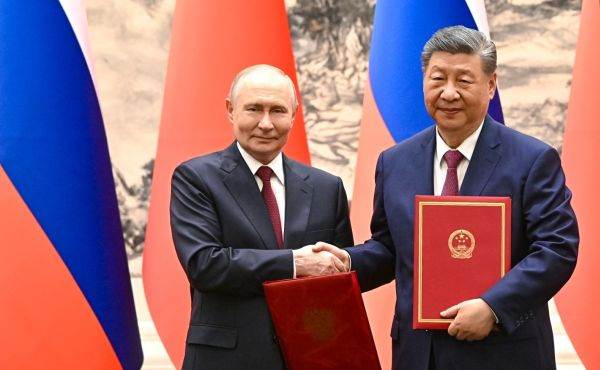
The energy and trade agreements signed in Beijing between Xi Jinping and Vladimir Putin are not merely political gestures - they rely on a parallel financial infrastructure, systematically built over the past decade, which makes it possible to settle these transactions outside the dollar-dominated system. The transaction volumes negotiated at the summit would have been difficult to process without the networks described below.
Russia and China accelerated their financial decoupling from Western systems beginning in 2023, adopting CIPS and SPFS to bypass SWIFT and conducting 92% of bilateral trade in yuan and rubles by 2024, according to AInvest analysis.
In March 2026, Russia and Iran traded 214 billion dollars in Chinese yuan, marking a symbolic record for BRICS-led de-dollarization, according to CoinTribune.
China is building an alternative to SWIFT through the Cross-Border Interbank Payment System (CIPS), which processes 30% of Belt and Road Initiative trade and is becoming a critical infrastructure for yuan-denominated transactions, according to the Center for Strategic and International Studies.
Launched in 2015, CIPS has approximately 2,000 participants, compared to 11,000 for SWIFT, and processed more than 6.6 million transactions in 2023, with a total value of 123 trillion Chinese yuan, an increase of nearly 30% compared to the previous year, according to the Chinese central bank[4].
• Concrete mechanisms for bypassing SWIFT
Russia developed the System for Transfer of Financial Messages (SPFS) in 2014, which by the end of 2023 included 556 organizations from 20 countries, of which 159 were foreign, while usage of the messaging system doubled compared to 2022, according to the Russian central bank, via Interfax.
Russia's Mir payment system and Iran's Shetab system were interconnected in three stages - beginning in November 2024 with withdrawals of rubles from Russian ATMs using Iranian cards, continuing in May 2025 with payments using Mir cards at Iranian POS terminals, and expected to be finalized with the third phase, allowing Iranians to make payments in Russian stores, according to the Central Bank of Iran and Mehr News.
India developed the Unified Payments Interface (UPI) in 2016, a system now used extensively, which has expanded beyond India through partnerships with financial institutions in other countries, including France, the United Arab Emirates and Singapore, according to the National Payments Corporation of India.
UPI can be used to bypass the SWIFT banking system, allowing payments with sanctioned countries such as Russia and thereby weakening American financial hegemony, according to analyst Evan Freidin from the Lowy Institute.
• Integrated BRICS digital infrastructure
Russia, China and India are connecting their digital currencies - the digital ruble, digital yuan and digital rupee - with the infrastructure expected between 2026 and 2027, while the BRICS digital currency network aims to bypass Western financial control through the BRICS Pay platform and local currency settlements, according to Watcher.guru.
This infrastructure connects existing national CBDCs - such as India's digital rupee, China's digital yuan and Russia's digital ruble - allowing cross-border payments to be settled directly in national currencies, without going through correspondent banks or the dollar-centered SWIFT network, according to Asia Times.
The mBridge platform, initially developed under the Bank for International Settlements together with the central banks of China, Thailand, the UAE and Hong Kong, continues to operate independently following the BIS withdrawal at the end of 2024, processing 387.2 billion RMB (55 billion dollars) in payments, with 95% of transactions denominated in digital yuan, according to Ledger Insights.
• Fragmentation of the global economy
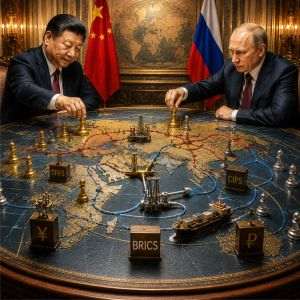
Trade among BRICS members exceeded 1 trillion dollars in 2025, with nearly 67% of payments made in local currencies such as the yuan, ruble or rupee, while Beijing now accounts for approximately 70% of the bloc's trade, according to CoinTribune. The BRICS bloc, which now represents nearly 40% of global GDP measured by purchasing power parity, is systematically building alternative payment infrastructures through systems such as mBridge and BRICS Pay, which completely bypass dollar intermediation, while the dollar's share in global foreign exchange reserves fell from 73% in 2001 to approximately 54% in 2025, according to Merchant Gold Group.
Washington's increasing use of sanctions as a geopolitical weapon, the freezing of 300 billion dollars of Russian central bank reserves in 2022 and the restriction of Iran's access to SWIFT provided dozens of nations with a practical incentive to build alternatives to the dollar, while Russian President Vladimir Putin argued at the October 2024 BRICS summit that the US had "weaponized” the dollar, according to a report by the website Techi.
• Consequences for investors
Investors are faced with the need to balance exposure to emerging currencies and gold against traditional equities, in a context where gold is the only universally accepted asset, immune to sanctions, free from counterparty risk and outside the control of any nation's central bank - which is why central banks purchased approximately 863 tonnes of gold in 2025 and are projected to buy 755 tonnes in 2026, according to AInvest and Merchant Gold Group.
This gradual rebalancing toward "neutral” assets such as gold was highlighted by the dramatic evolution of gold prices, which increased by 60-70% in 2025, pushing prices above 4,000 dollars per ounce for the first time in history and continuing to rise in the first month of 2026 to more than 5,500 dollars per ounce, according to Asia Times.
Sources
AInvest - Russia-China Financial Decoupling and Alternative Payment Systems
CoinTribune - Russia and Iran Settle Billions in Yuan
Center for Strategic and International Studies - China's CIPS and the Future of Cross-Border Payments
People's Bank of China - CIPS Annual Operational Data 2023
Interfax - SPFS Expansion and Foreign Participation Data
Mehr News Agency - Iran and Russia Connect Banking Systems
National Payments Corporation of India - Lowy Institute - India's UPI and the Future of Financial Connectivity
Watcher.guru - BRICS Digital Currency Network Developments
Asia Times - BRICS Digital Currency Infrastructure and De-Dollarization
Ledger Insights - mBridge Continues After BIS Withdrawal
CoinTribune - BRICS Trade and Local Currency Settlement Growth
Merchant Gold Group - Decline of Dollar Reserves and Central Bank Gold Demand
Techi - Putin Says the US Has Militarized the Dollar
Bank for International Settlements - Project mBridge Overview
SWIFT - Global Payments and Financial Messaging Data
AInvest - Central Bank Gold Purchases and Strategic Allocation Trends
Merchant Gold Group - Gold as a Neutral Reserve Asset
Asia Times - Gold Surge Amid Global Fragmentation and De-Dollarization

























 Euro
Euro Dolar SUA
 Franc elveţian
 Liră sterlină
 Gram de aur