English

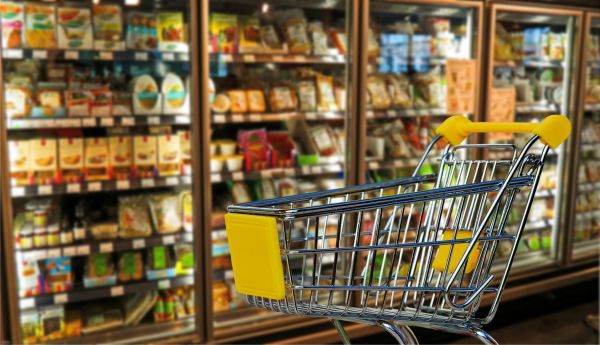
CEOs of companies in the retail and agri-food sectors denounced, for the first time in France, the practices of their own industry, in a report published yesterday, asking the state to "oblige” them to better protect health and the environment, AFP reports, according to Agerpres.
In a rare joint statement, around 15 executives from major supermarket chains, as well as from major processing companies, unanimously stated that this "race down in prices is hindering the ecological and social transition and generating hidden costs”, particularly for health.
The initiative is led by the organization Inside Track, which relies on anonymous insiders who want to change their sector.
In France, supermarkets and the agri-food industry usually blame each other for this race down in prices.
"Overall, retailers are feeding themselves at the expense of consumers (...). There is only one solution: for the state to regulate us and intensify controls,” confesses a retail director, a sector identified in the report as the "architect” and "mainly responsible” for this situation.
The report presents well-documented cases: supermarkets are reducing their profit margins on flagship products (Coca-Cola, beer, Nutella, etc.) and compensating for this with organic or premium products.
The report also accuses distributors of hiding behind the "deceptive argument of purchasing power” and of deliberately making healthier foods "less visible, less competitive and less desirable”.
On the other hand, the document also highlights that for the largest producers, "pressure from distributors does not erase their responsibility”.
"A sweet tomato sauce. Why? Because it costs less. (...) But there will be a cost later: health," one of the contributors told AFP.
These whistleblowers also highlight initiatives aimed at involving farmers in more sustainable practices, but with a "limited scope" or only for "a secondary ingredient".
An inside source acknowledges that there is also "an aspect of greenwashing": "They just apply Band-Aids. We try to change things, but in the end we change nothing".
The report highlights that some companies have even backed down, returning to conventional agriculture (with pesticides and synthetic fertilizers), due to the inability to make their approach commercially viable. An inside source highlights, for example, that animal welfare is the first thing sacrificed because it is difficult to monetize.
• Fast food puts traditional restaurants in difficulty
In France, the land of gastronomy and Michelin stars, the advance of fast food is putting traditional restaurants in a difficult position, informs AFP, according to Agerpres.
At the beginning of May, Alain Fontaine, president of the French Association of Master Chefs (AFMR), warned of the risk of the "disappearance" of traditional restaurants with table service, threatened by fast food.
"It is rather a matter of the fact that the new markets that are opening up are mainly in the fast food sector," clarifies Francois Blouin, president of the consulting firm Food Service Vision. According to him, in the traditional restaurant sector, new openings barely cover closures, while fast food recorded a growth of 6 to 7% in 2025.
"If we are so popular, this is because we offer a solution adapted to the needs, time constraints and budgetary limitations, but also to the desires and pleasure of consumers,” says Esther Kalonji, general delegate of the National Union of Fast Food and Catering (Snarr). Beyond the speed of service, Esther Kalonji mentions "flexibility, accessibility, diversity of offer, transparency” and "the ability to be available at any time of the day”.
In a context of persistent inflation, the prices charged by fast food and the quantity-price ratio remain the greatest strengths of these restaurants.
On average, a consumer pays between 15 and 18 euros at a fast-food restaurant, compared to around 30 euros at a table-service restaurant, according to Bernard Boutboul, director of the consulting firm Gira Conseil.
The restaurant industry has faced a colossal increase in the price of raw materials, which increased by 16% between the end of 2022 and the end of 2025.
While traditional restaurants have largely passed on this increase to their prices, with an average increase of 31% in bills, fast-food (which has lower staff costs) has limited the increase to 5 to 10%, according to the consulting firm Gira Conseil. To achieve this, the sector has reduced its profit margins.
And "in the last ten months, sales have been a little more complicated," mainly because of the "somewhat bleaker economic climate," Malik Mensour, chief operating officer of the burger chain G La Dalle, which opened in 2014 and has about a hundred restaurants, most of them franchises, told AFP.
But traditional restaurants continue to reinvent themselves with successful concepts: soups, all-you-can-eat restaurants and tapas and charcuterie offerings, says Francois Blouin, who considers the different types of restaurants only "indirect competitors" because they respond to different consumer needs.

























 Euro
Euro Dolar SUA
 Franc elveţian
 Liră sterlină
 Gram de aur