English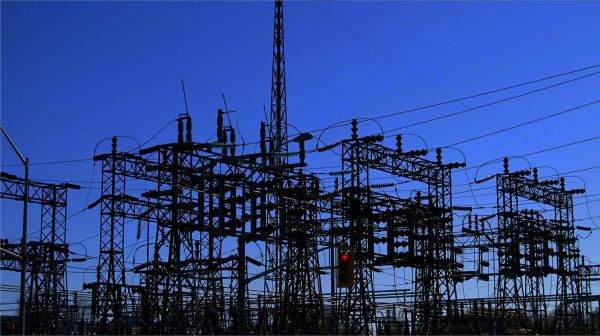
Yesterday, the government adopted the Electricity Risk Preparedness Plan, a document that establishes how central authorities should react if the National Electricity System is hit by a cyberattack, an extreme cold wave, a fuel crisis, a severe drought, an earthquake or even a war. Beyond the technical language and the 56 pages of the plan, the message is as direct as possible: in a major crisis, the state must know who decides, who intervenes, which installations are protected, where emergency energy can come from and, ultimately, whose power is cut off to prevent the collapse of the entire system. And regarding the power cut, those targeted are industrial consumers, while household and residential consumers will continue to benefit from electricity.
At the end of the government meeting, interim Prime Minister Ilie Bolojan announced that today the Executive will adopt a new decision by which Transelectrica will be designated as the entity that will be in charge of implementing this plan regarding the reduction of energy consumption of industrial consumers, during a period of energy crisis, or regarding the temporary disconnection of some industrial consumers, with a prior notification sent 24 hours in advance.
The Government Decision approved yesterday establishes a national mechanism for the prevention and management of electricity crises, developed by the Ministry of Energy based on European Regulation 2019/941. It is not an immediately applicable rationalization plan nor the announcement of scheduled interruptions for the population, but a document establishing the state's mode of action when the market, production and imports are no longer sufficient, and the safe operation of the network is threatened.
The starting point is a European list drawn up by ENTSO-E, the organization of European transmission and system operators, which identified 32 regional scenarios, from cyber attacks and sabotage to solar storms, volcanic eruptions, nuclear accidents, simultaneous failures, human errors, pandemics and armed conflicts. After assessing the likelihood and impact on Romania, the central authorities in Bucharest have narrowed the list to nine threats that must be treated as a priority: cyberattack on the electricity grid, cold wave, extreme winter phenomena, the fossil fuel crisis, strikes and employee riots, pandemic, drought, earthquake and military conflict. According to the data presented by the Government, a cyberattack can compromise SCADA systems through which networks and installations are controlled, can delete data, block operations or even transfer control of some equipment to attackers. A prolonged cold wave can push consumption up just as coal transport is hampered, gas becomes scarce, wind turbines are stopped by weather conditions, and power lines give way under wind and snow. Drought can simultaneously reduce hydro production and the cooling capabilities of thermoelectric and nuclear power plants. A strong earthquake can damage poles, transformers, stations and dispatch centers before the authorities have time to take preventive measures. In the event of a military conflict, the plan goes as far as relocating command centers to protected areas, evacuating personnel, and intervening in installations under the protection of specialized structures.
The central principle is that the energy market must be allowed to function for as long as possible, including when supply is low, demand is high, and prices are rising sharply. Before any radical measure, Transelectrica must load the energy groups to the maximum available power, request the early return to operation of units under repair, use hydroelectric power plants, storage capacities, and pumped storage plants more efficiently, modify the network topology, increase import possibilities, and request emergency energy from operators in neighboring states.
If these measures are not sufficient, the state can move on to instruments that directly affect the market and large consumers. Exports can be reduced or canceled, interconnection capacity in the export direction can be limited, groups in technical reserve can be started, and power plants capable of using alternative fuels can be ordered to increase their reserves. Only at the end of this sequence does the most sensitive measure appear: limiting electricity consumption in tranches.
Here, the plan draws an important line between the population and industry. Household and residential consumers are exempt from the Limitation Norm and the Manual Disconnection Norm. The measures target industrial consumers who, through the power supply scheme and the specifics of the technological process, can temporarily reduce their absorbed power without causing a greater danger than the one the state is trying to avoid. The objectives whose interruption would endanger human lives or could cause explosions or destruction are also protected, such as hospitals, sanatoriums, underground mines and energy facilities that supply oil and gas extraction.
The programmed limitation of industrial consumption cannot be ordered arbitrarily. Transelectrica elaborates biannual normative schedules for the summer and winter seasons, and their application in a foreseeable crisis requires the adoption of a government decision. Operators must inform the affected customers in writing at least 24 hours in advance. Industrial consumers included in the plan remain obliged to comply with the power reduction for the entire established period and are liable for the consequences of non-compliance with the order.
For situations that break out without warning, the plan allows the manual disconnection of some industrial consumers as a last resort. The measure can be used if the system frequency can no longer be maintained above the safety level, if an area of the country remains isolated, if lines and transformers are overloaded, if the voltage drops to dangerous values, or if a power deficit occurs that threatens the stability of the network. After the interruption period, consumers can be re-supplied at a minimum technological power, sufficient to protect the installations and personnel.
The nerve center of the entire mechanism will be the National Operational Center in the Energy Sector, CONSE, coordinated by the Ministry of Energy and composed of representatives of Transelectrica, Hidroelectrica, Nuclearelectrica, Transgaz, Romgaz, OMV Petrom, Complexul Energetic Oltenia, Complexul Energetic Valea Jiului and the major distribution operators. CONSE is the structure that declares and closes the crisis, evaluates incidents, coordinates the measures in the plan, mobilizes resources and ensures public communication. Its activation is made at the request of the National Energy Dispatcher, through the competent authority. The plan requires operators not to wait for disaster to occur. Networks and equipment must be evaluated, modernized and maintained, vegetation in the corridors of the lines must be eliminated, the foundations of the poles must be checked in areas exposed to floods and landslides, and diesel generators, batteries, UPS systems and backup communications must be tested periodically. The document requires the preparation of stocks of poles, cables, insulators, mobile transformers, oil, SF6 gas and fuel, as well as the existence of intervention teams, spaces for the accommodation of essential personnel and agreements with companies that own heavy equipment.
Romania would not be able to manage a crisis of this magnitude alone. Transelectrica has agreements for the supply of emergency electricity with operators in Hungary, Bulgaria, Serbia, Ukraine and the Republic of Moldova. The aid can flow in both directions, within the limits of the available capacity and the reserves of the state that provides it. In parallel, European platforms allow operators to see in real time the state of the continental network, frequency, energy exchanges, imbalances and possible system separations. If a problem cannot be solved through ordinary measures, regional coordination can be triggered that includes the redispatching of production, modification of cross-border capacities and, in extreme cases, the restriction of trade.
The plan adopted by the Government is, in essence, the official recognition of an uncomfortable reality: electricity is no longer just a commodity traded on the stock exchange, nor a service that temporarily stops when a cable falls, but a national security infrastructure. Without it, communications, water supply, hospitals, transport, industry and state institutions stop. The real test will be the ability of authorities and companies to transform it from a plan of dozens of pages into a mechanism that works under pressure. An energy crisis leaves no time for clarifying responsibilities, searching for spare parts or improvising communication channels. The Government has now established who must act and in what order. From this moment on, the decisive question is no longer whether Romania has a plan for a major power outage, but whether all the institutions provided for in it are truly prepared to apply it.

















 Euro
Euro Dolar SUA
 Franc elveţian
 Liră sterlină
 Gram de aur