English


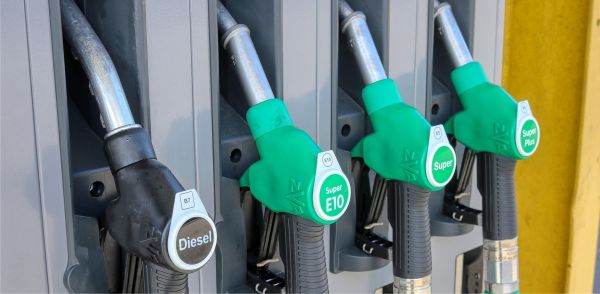
The government is permanently monitoring the evolution of the fuel market, supply risks and the commercial behavior of major oil companies and will continue consultations in the coming period so that any decisions are adapted to the situation on the ground, according to a press release issued yesterday by Victoria Palace, after the meeting that Prime Minister Ilie Bolojan and Finance Minister Alexandru Nazare had with the main operators on the fuel market.
The discussions between the Government and the oil companies coincide with the expiry, on July 1, of the facilities introduced following the situation that arose in the fuel market after the outbreak of the war in the Middle East and the blockade of the Strait of Hormuz, namely the reduction of excise duty on diesel and the capping of the commercial surcharge. Immediately after the cessation of these measures, the effects began to be visible in the filling stations, but not in a uniform manner, which raises questions about the way in which each operator establishes its pricing policy. While some companies have transferred almost the entire fiscal impact to consumers, others have preferred to absorb part of the costs or even to maintain prices unchanged, demonstrating that there is a commercial margin that allows for different strategies.
In parallel, the business environment is calling for the maintenance of some protective measures. IMM Romania, at the request of FORT, proposes to extend the 36 bani reduction in fuel excise duty by another three months, arguing that a new increase in transport costs will put pressure on small and medium-sized companies, already affected by inflation, high financing costs and the economic slowdown. The request comes at a time when many transporters are warning that the elimination of tax incentives risks generating chain price increases for almost all goods and services.
However, an extensive analysis carried out yesterday by the Smart Energy Association brings to the debate a different perspective on the mechanisms underlying pump prices. According to the association's president, Dumitru Chisăliţă, the expiration of crisis measures is only one of the explanations for the recent price increases, the real problem being the way companies choose to build their prices. The data presented show that approximately 16% of the diesel sold in Romania is produced from domestically extracted crude oil, and the rest comes from imported crude oil refined in the country. In the case of gasoline, the share of domestic production is much higher, approximately 35%, a difference that should, theoretically, reduce the impact of international fluctuations on the final price. In other words, the existence of a significant domestic production should function as a natural buffer against sudden price increases, limiting exclusive dependence on developments on foreign markets.
Starting from the costs of extraction, refining, transport, distribution and marketing, AEI specialists have built three scenarios regarding the theoretical level of prices. The first, based exclusively on actual costs and a commercial margin of 10%, indicates a price of approximately 8.58 lei per liter for diesel and 8.31 lei for gasoline. The second scenario introduces the normal gap between the purchase of raw materials and the sale of the finished product, using oil quotes from about a month ago, which leads to an estimated price of 9.01 lei for diesel and 8.69 lei for gasoline. The third scenario uses current international quotes and indicates a theoretical level of approximately 9.99 lei per liter for diesel and 8.88 lei for gasoline.
Comparing these values with the prices actually charged at gas stations provides relevant conclusions. OMV and MOL increased the price of diesel yesterday to 9.60 lei per liter, exactly 38 bani, an increase explained almost entirely by the return of excise duty and the elimination of the cap on the commercial mark-up. Gasoline was increased in price by only two bani, to 8.68 lei per liter. Petrom, however, adopted a different strategy, increasing the price of diesel by only 32 bani, to 9.54 lei per liter, which means that the company absorbed approximately four bani of the fiscal impact. In the case of gasoline, Petrom kept the price unchanged at 8.62 lei per liter. At the same time, Rompetrol and Lukoil had not operated, at the time of the analysis, price changes.
These differences demonstrate that the market does not react mechanically to fiscal changes nor exclusively to the evolution of the international cotations. Each company has a certain commercial freedom in setting prices, and this flexibility raises questions about the intensity of competition and the level of margins practiced in different market segments.
The AEI analysis shows that diesel was traded yesterday by about one leu above the estimate based on real production costs and by almost 60 bani above the scenario built starting from the supply costs of a month ago, but being close to the level justified by current international quotations. In contrast, gasoline was only about 20 bani above the estimated effective costs and even below the levels resulting from the other calculation scenarios. The conclusion is that the diesel market reacts much more aggressively to external changes than the gasoline market.
The explanation is economic. Diesel is the essential fuel of the real economy, being used in road transport, agriculture, construction and logistics. Any increase in the price of diesel is quickly transmitted to transport costs and, subsequently, to the prices of consumer goods, fueling inflation. That is why the differences between theoretical costs and final prices practiced in the market acquire a strategic importance for the entire economy.
Politically, the situation is complicated by the legislative deadlock that prevented the extension of the facilities. An amendment was submitted to Parliament by which the reduction of excise duty and the capping of the commercial markup were to be extended for another three months, but the project did not reach a vote before the end of the first parliamentary session of this year.
Transporters warn that the effects of the elimination of protective measures could be seen quickly, estimating that fuel prices could increase by up to 50 bani per liter. PSD deputy Augustin Hagiu, former president of the employers' organization FORT, claims that the project that provided for the extension of the capping until November 30 was blocked in the Budget-Finance Committee, which made it impossible to adopt it before Parliament went on vacation. In the event of a rapid deterioration of the situation, it may be necessary to convene an extraordinary session.
The fact is that, at this moment, our country, the second largest crude oil producer in the European Union, displays prices comparable to those in Western European countries, given that it has a significant domestic production that should mitigate external shocks.
The expiration of the crisis measures represents not only the return to a normal fiscal regime, but also a major test for market competition and transparency. If the differences between economic costs and final prices continue to remain high, the debate will no longer only concern the level of excise duties or the evolution of international quotations, but also the way in which competitive mechanisms operate, the degree of transparency of price formation and the responsibility of operators towards consumers and the economy.





















 Euro
Euro Dolar SUA
 Franc elveţian
 Liră sterlină
 Gram de aur