English


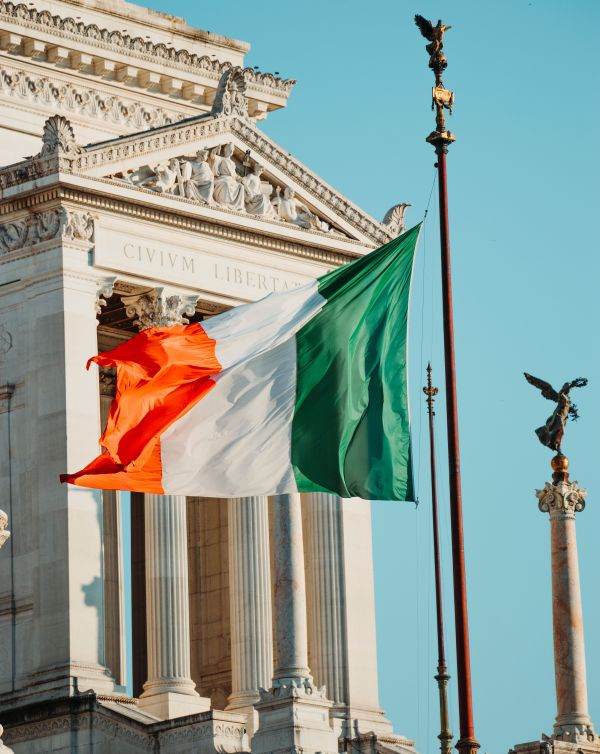
Ireland is forced to simultaneously manage the war in Ukraine, the enlargement of the European Union to the east, negotiations on the future multiannual budget, trade tensions with the United States and China and the reforms needed to regain economic competitiveness, after yesterday, July 1, it took over the six-month presidency of the EU Council.
Basically, in the next six months, the government in Dublin, led by Prime Minister Micheal Martin, will have the mission of leading negotiations between the 27 member states, building compromises between often divergent national interests and maintaining European unity in an international context characterized by unprecedented uncertainty and volatility.
This is the eighth time that Ireland, a member state of the European Union since 1973, has taken over the rotating presidency of the EU Council, but this time the challenges are incomparably more complex than in previous mandates. Under the slogan "Strength comes from unity”, Dublin is assuming the role of mediator between European capitals at a time when every decision can have major economic and geopolitical consequences.
• Controversy over the adoption of a new sanctions package against Russia
The first priority is the adoption of a new sanctions package against Russia. The calendar is extremely tight, as the European Union has set July 15 as the deadline for reaching an agreement. The stakes are huge: in the absence of a compromise, the European mechanism for capping the price of Russian oil will be automatically recalculated, and, against the background of the evolution of the global energy market, the current ceiling of $ 44 per barrel could increase significantly, approaching or even exceeding the initial level of $ 60 per barrel. Such a scenario would represent a financial breath of oxygen for Moscow and would undermine one of the main economic instruments used by the European Union to limit the Kremlin's financial resources. Although European diplomats estimate that the deadline can be met, the negotiations are far from simple. Bulgaria has already expressed its opposition to the inclusion in the sanctions list of Patriarch Kirill, the leader of the Russian Orthodox Church, and Vagit Alekperov, the founder of the oil group Lukoil, and the authorities in Sofia warn that they are ready to use their veto. In parallel, other member states are demanding changes to restrictions on fish imports from Russia, on the transport of liquefied natural gas and on entry bans applied to the Russian military. Ireland will have to find a balance between the political firmness desired by most member states and the specific economic interests of some European capitals. The second priority of the Irish EU presidency concerns the enlargement process of the community bloc, at a time when Brussels is trying to transform the accession of Ukraine and the Republic of Moldova from a political project into an accelerated technical process. The change of government in Budapest has raised hopes that the deadlocks that have slowed down the negotiations over the past two years will be overcome, and during the Cypriot presidency the first negotiation chapters have already been opened with the two candidate states. However, optimism is tempered by the cautious stance of the new Hungarian executive, which prefers a gradual approach and does not want to accelerate the process excessively. However, Ireland has set itself the goal of opening as many of the five remaining groups of chapters in the negotiations with Ukraine and the Republic of Moldova as possible, hoping that at least one or two of them will be launched before the European summer break, and the others in the autumn. At the same time, Dublin will coordinate the negotiations with Montenegro, considered the most advanced candidate for accession, which aims to close all chapters by the end of the year and move on to drafting the accession treaty. For Brussels, this document is particularly important because it would become the legal model for future enlargements of the Union, which turns the negotiations into an extremely sensitive exercise, in which each member state will try to introduce its own guarantees, transition periods and protection mechanisms.
• Finalizing negotiations on the next multiannual European financial framework, a priority for the Dublin government
A third major challenge is the negotiation of the European Union's future multiannual budget, for the period 2028-2034, which will define the strategic direction of the European project for the entire decade. Talks are already tense after the Cypriot presidency proposed a moderate reduction, of around 2%, compared to the European Commission's initial draft, valued at around 2 trillion euros. Net contributing states, such as the Netherlands and Sweden, considered the adjustments are insufficient, while traditional beneficiaries of European funds insist on maintaining allocations for agriculture and cohesion policy. Ireland has the difficult task of building a new financial compromise that reconciles camps in almost irreconcilable positions. At the same time, the negotiations will include one of the most sensitive topics in recent years: the introduction of new own resources of the European Union, namely new taxes or sources of income at European level that would allow the financing of the strategic ambitions of the community bloc without increasing national contributions. The Irish version of the negotiating document is expected in October and will represent the basis of the last political discussions between the heads of state and government, who are trying to finalize the agreement by the end of the year, before the series of elections in France, Italy, Spain and Poland, scheduled for 2027, further complicate the negotiations.
Also on Dublin's agenda is the accelerated deterioration of trade relations with the world's most important economies. Relations with the US administration are marked by President Donald Trump's threat to impose 100% tariffs on European countries that tax digital services. Even though trade policy is the exclusive competence of the European Commission, the presidency of the EU Council will have to maintain the unity of the 27 member states in the event of an escalation of the transatlantic conflict, at a time when the economic interests of European capitals differ considerably.
In parallel, trade relations between Brussels and Beijing are entering a new phase of tension after the European Union's trade deficit with China reached approximately 360 billion euros in 2025. The European Commission is calling on Beijing to take concrete measures to reduce the imbalance and limit exports of heavily subsidized products to the European market, warning that, in the absence of results by October, the Union will adopt additional trade instruments. In this case, Ireland will also have to manage the differences between the member states that are calling for tough measures against China and those that prefer to maintain a more stable economic relationship.
• Strengthening the Single Market, a key issue for the new EU Council Presidency
Another key objective for the Irish Presidency of the Council of the EU is to accelerate the internal economic reforms needed to strengthen the European Single Market and increase the Union's competitiveness in a world increasingly dominated by technological competition between the United States and China. During the Cypriot Presidency, the European Parliament, the Council and the Commission agreed on a roadmap called the "One Europe, One Market Roadmap", which sets an ambitious timetable for the adoption of key economic reforms by the end of 2026. Ireland needs to accelerate negotiations on the Economic and Investment Union, European cybersecurity legislation, the digital euro project, the so-called "28 regime" aimed at simplifying the work of companies in the single market, as well as the controversial Industrial Accelerator Act. This latest project aims to introduce stricter conditions for companies from outside the European Union seeking access to European public procurement and investment, but member states have not yet managed to reach a consensus on the practical definition of the concept of "Made in Europe”. China has already warned that the adoption of such legislation could lead to retaliatory measures against European companies.
Beyond these five strategic files, Ireland also begins its mandate with a domestic problem that risks quickly becoming a European one. The authorities in Dublin are conducting an investigation into the commercial relations between the Aughinish Alumina refinery, the largest alumina refinery in Europe, and the Russian economy. According to journalistic investigations published this spring, alumina produced in Ireland would reach smelters controlled by the Russian company Rusal, and the resulting aluminum would subsequently enter supply chains used, including by Russian defense manufacturers. The company claims that its activity fully complies with European legislation, as alumina is not subject to EU sanctions, and that exports to Russia represented approximately 45% of total sales in 2025, a proportion estimated to remain in 2026. If the government investigation confirms the suspicions, the Irish executive could face an extremely difficult choice: supporting the extension of European sanctions on alumina or protecting one of the country's most important industrial employers.










 Euro
Euro Dolar SUA
 Franc elveţian
 Liră sterlină
 Gram de aur