English
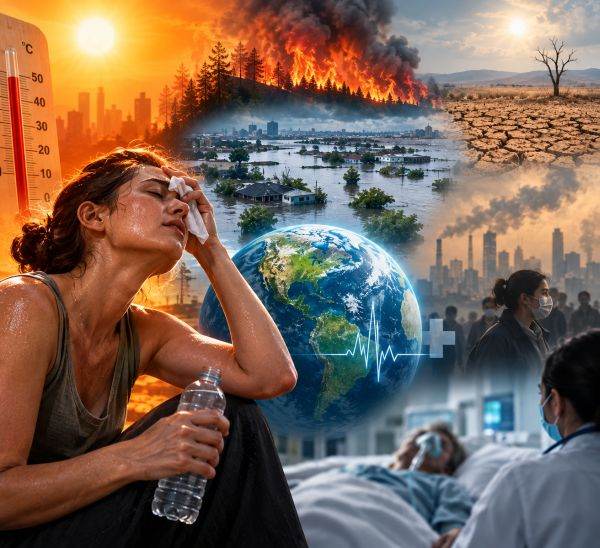
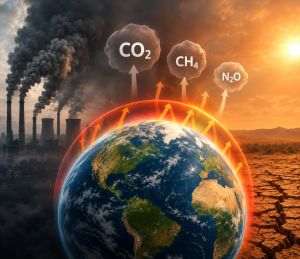
Climate change should be recognized as a "global health emergency" to prompt governments to accelerate funding for the adaptation of health systems and economies, the Lancet Countdown report warns. According to the study's tenth edition-published ahead of the UN Climate Change Conference (COP31)-nearly three million heat-related deaths occurred globally between 2016 and 2023, with the impact of global warming on health intensifying faster than the response measures being taken. The report brings together contributions from 146 researchers across 30 countries, who assess the consequences of climate change for human health. In 2023 alone, heat was linked to a record 710,000 deaths-a figure exceeding the number of deaths caused by malaria or HIV. Researchers estimate that more than two-thirds of these deaths are attributable to climate change driven by human activity. "Ten years on from the Paris Agreement, our findings are unequivocal: the negative health impacts of climate change are advancing faster than the global response to them"-and are, in fact, "accelerating"-stated Marina Romanello, Executive Director of the • Lancet Countdown• scientific project. • An international intervention mechanism for climate-driven health crises
Researchers are calling for climate change to be recognized as a global health emergency and for the establishment of a coordinated inter-state intervention mechanism-modeled on the approach used by the World Health Organization for pandemics.
The goal is to move beyond ad-hoc reactions to extreme events and instead build a coherent, long-term response that protects public health and strengthens the capacity of healthcare systems to cope with the effects of global warming. Ollie Jay, a professor at the University of Sydney, explained that estimating deaths attributable to climate change involves comparing heat-related mortality against a hypothetical scenario in which human-induced warming had not occurred. While periods of extreme heat have always existed, climate change amplifies their intensity and frequency, contributing to an increase in the number of deaths. The report also notes that, last year, extreme drought affected more than half of the planet's land surface for at least one month.
• Global warming costs the economy over $1 trillion annually
The effects of climate change are also reflected in significant economic losses. According to researchers, the decline in worker productivity caused by global warming has cost the global economy more than $1 trillion per year over the last three years.
This impact is distributed unevenly across different regions. Southeast Asia is estimated to have lost the equivalent of 3.9% of its gross domestic product (GDP), while Africa lost 3.2%. In Europe, the estimated loss was 0.2% of GDP, whereas for the Americas, it reached 1.5%. These disparities highlight the heightened vulnerability of certain regions where the impacts of climate change intersect with limited economic resources and constrained adaptive capacities.
• Investments in clean energy are rising, yet fossil fuels continue to dominate the energy system
The report also identifies progress made since 2016. According to the data presented, 56 of the 194 WHO member states have adapted their health systems, and early-warning mechanisms now allow for the anticipation of extreme weather events.
Investments in clean energy reached $2.1 trillion in 2025-double the amount allocated to fossil fuels. Nevertheless, fossil fuels still provide approximately 80% of the world's energy. The report notes that air pollution linked to these fuels causes roughly 2.73 million deaths annually. Conversely, efforts to reduce pollution in at least 77 countries have helped avert approximately 323,000 deaths since 2016. "Cleaner air, more resilient health systems, and early-warning mechanisms... are saving lives around the world," the report states. • Climate research remains unevenly funded
Funding for medical research related to climate change has increased sevenfold, reaching $316 million in 2024. However, 84% of these funds went to researchers in wealthy countries, even though the least developed nations are among those most affected by climate-related health threats. Marina Romanello noted that current efforts are too slow and too modest to meet the needs of the most vulnerable populations. For the first time, researchers' work has also been hindered by the disappearance of certain data sources, particularly in the United States. Romanello also pointed to the lack of public information regarding fossil fuel subsidies. The director of the Lancet Countdown also warned that the geopolitical instability of the last two years has pushed the issue of global warming-and its health impacts-into the background, even though a lack of climate action risks exacerbating that very instability. The report therefore calls for an acceleration of adaptation measures, a reduction in reliance on fossil fuels, and a more equitable distribution of resources aimed at protecting health in the face of climate change.






















 Euro
 Dolar SUA
 Franc elveţian
 Liră sterlină
 Gram de aur