English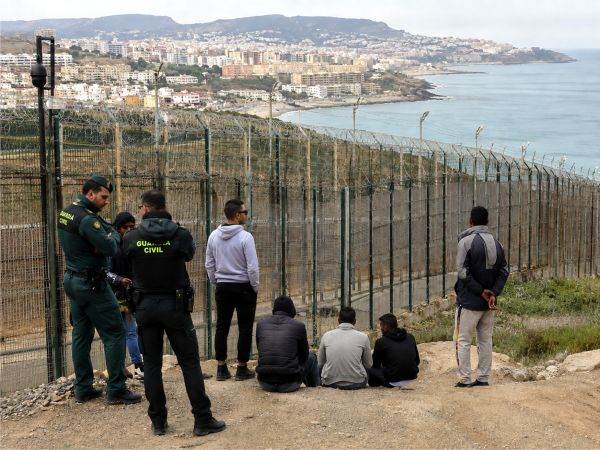
New waves of illegal migration to the Spanish enclaves of Ceuta and Melilla have brought back to the forefront one of the most sensitive issues on the European Union's agenda: the balance between protecting external borders and respecting the fundamental rights of migrants. After the Spanish authorities announced that more than 72,000 people had tried to illegally enter Ceuta from Morocco, and around 70,000 had been turned back, the interior ministers of the member states met to analyse the evolution of the situation and possible additional measures to support Spain and protect the Union's external borders.
• Unprecedented pressure on Spanish enclaves
Ceuta and Melilla, the two Spanish enclaves located on the northern coast of Africa, represent the only land borders between the European Union and the African continent. For this reason, they have become one of the main migratory pressure points towards the community space over the last two decades. According to information presented by the Spanish authorities and analyzed by Reuters, more than 72,000 migrants have tried to cross the border illegally from Morocco in recent months, prompting Madrid to accelerate return procedures. Approximately 70,000 people have already been returned to Morocco, based on existing bilateral agreements between the two states. The Spanish authorities claim that the measures were necessary to prevent the blockage of local infrastructure and to avoid the transformation of the enclave into a permanent point of concentration of migrants.
• Emergency meeting of EU interior ministers
The increase in migratory flows prompted the convening of an extraordinary meeting of interior ministers from the member states of the European Union, during which the response capacity of the Spanish authorities, the role of the Frontex agency and cooperation with Morocco in the field of border control were analyzed. According to the Council of the European Union, securing external borders remains one of the priorities of European migration policy, in parallel with the implementation of the Pact on Migration and Asylum, which is to be progressively implemented in the coming period. European officials stressed that managing the phenomenon must combine effective border control with respect for international obligations regarding the protection of asylum seekers and vulnerable persons.
• Rapid returns provoke contradictory reactions
Madrid's decision to accelerate the return of migrants has generated strong reactions both in the political environment and in civil society. Several human rights organizations, including the UN High Commissioner for Refugees (UNHCR) and non-governmental organizations specialized in the protection of refugees, have drawn attention to the fact that return procedures must respect international law and allow for the individual assessment of potential requests for international protection. For their part, the Spanish authorities maintain that the measures applied comply with the European legal framework and the bilateral agreements concluded with Morocco and represent an essential component of protecting the external border of the European Union.
• The debate moves online
Beyond the operational dimension, the situation in Ceuta has fueled a wide debate on social platforms. Part of the public opinion believes that the measures adopted by the Spanish authorities are necessary to protect the borders and to combat migrant smuggling networks. Other participants in the debate, however, believe that rapid returns risk affecting the rights of people who may need international protection. The polarization of opinions reflects one of the most difficult challenges facing the European Union: finding a balance between border control and compliance with the obligations assumed by international conventions on refugees.
• Frontex warns that migratory pressure remains high
The European Border and Coast Guard Agency (Frontex) shows in its analyses that migratory pressure on the Union's external borders continues to be influenced by armed conflicts, political instability and economic difficulties in Africa and the Middle East. According to the agency, although the Atlantic and Central Mediterranean routes continue to record the most important flows of illegal migration, the enclaves of Ceuta and Melilla remain vulnerable points, where developments can be rapid and difficult to anticipate.
• European Pact on Migration enters a decisive phase
The current crisis occurs at a time when the European Union is preparing the implementation of the Pact on Migration and Asylum, adopted in 2024, which introduces common rules on the registration of migrants, asylum procedures, returns and social mechanisms leadership between Member States. The European Commission believes that the new legislative framework will allow for a more efficient management of migratory pressure situations and will reduce differences between national border control policies. However, many analysts believe that the effectiveness of the new rules will depend largely on cooperation between Member States and on collaboration with the countries of origin and transit of migrants.
• A challenge that goes beyond Spain's borders
The developments in Ceuta and Melilla demonstrate that migration continues to be one of the most complex challenges for the European Union. Beyond the humanitarian dimension, the phenomenon has implications for border security, the EU's external relations, the functioning of the Schengen area and political stability in the Member States. For Brussels, the efficient management of these situations will represent one of the main tests regarding the application of the new European migration policy and the Union's capacity to respond in a coordinated manner to crises that go beyond the borders of a single Member State.






















 Euro
Euro Dolar SUA
 Franc elveţian
 Liră sterlină
 Gram de aur