English


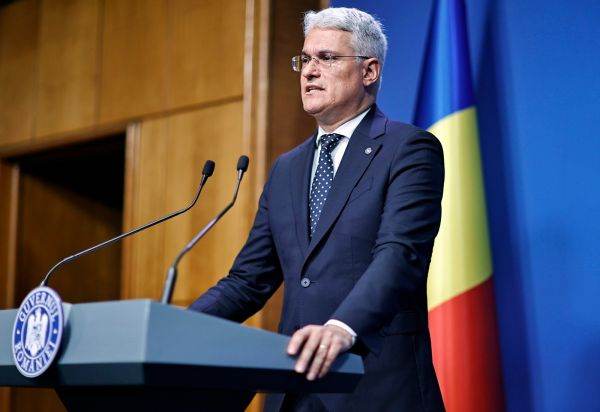
The PNRR is moving forward. Where forward? Forward, but with the brakes on. At least that is what emerges from the answers that the Ministry of Investments and European Projects sent us last Friday, following a request submitted at the beginning of April to the Prime Minister's Chancellery, which redirected it to MIPE.
Although, in that request, we asked what the inter-ministerial group that monitors the implementation of the PNRR does, the ministry responds with the solemnity of a printer's instruction manual: "analyzes”, "monitors”, "identifies”, "formulates”, "facilitates”, "harmonizes”. No information about who is actually responsible for delays, which projects are blocked or who failed. But we have "inter-institutional coordination mechanisms”. Which means that several institutions are simultaneously participating in the same ambiguity.
The question about the group's last meeting seems to have caused a slight institutional discomfort. The answer? The last meeting took place "in February”. That's all. We don't know the day. We don't know the conclusions. We don't know who participated. We don't know which projects are at risk. We don't know who was scolded and who was congratulated. We only know that the "general stage" was analyzed.
More impressive is the answer regarding the existence of activity reports. Here, MIPE employees answered us that there are "syntheses", "decision-making traceability", "unitary information" and "monitoring of established measures".
In that request, we asked which projects are at risk of losing funding, that is, projects that risk not being implemented by August 31, 2026, how many of them will be moved to the 2021-2027 European multiannual financial framework (+2) and how much money we will lose from the PNRR for the failure to implement those projects. What did MIPE employees answer us?
"Projects identified as at risk of non-implementation can be consulted through the dedicated dashboard, available at: https://mfe.gov.ro/pnrr-dashboard/, which offers an intuitive interface for analysis and monitoring. The platform includes advanced filtering functionalities, allowing the selection of projects according to the associated risk level (low, medium or high), thus facilitating the prioritization of interventions," the document sent to the Editorial Office states.
Superb. Elegant. Minimalist. Essentially, the institution paid to respond tells the citizen to handle it on their own on the internet. It's like calling the fire department when your house is burning and being told that you have to go to the hydrant and intervene yourself to put out the fire.
I accessed the MIPE dashboard regarding the PNRR to search for the respective projects and there are thousands of projects whose implementation stage is below 30%. To which are added thousands of other projects with an implementation stage between 30% and 50%, practically impossible to complete by the deadline: August 31, 2026.
And when the discussion reaches money, the ministry finally delivers something close to involuntary sincerity: we risk penalties of up to one billion euros for unimplemented reforms, including for the famous corporate governance. Suddenly billions, risks, penalties and financial corrections appear. That is, exactly what the public wanted to know from the beginning.
However, MIPE employees are not honest on this point either. From the PNRR dashboard that on Friday contained all the data entered until May 18, 2026, we note that half of the components of the national plan have no chance of being fully implemented by August 31, 2026. That is, for 8 out of 16 components (ed. - C) we will lose a lot of money, billions of euros.
This is C1 - Water Management, where the allocation was 403.32 million euros and only 97.62 million euros of work were carried out, or 24.2%. At C2 - Forest and Biodiversity Protection, we had an allocation of 395.5 million euros and work was carried out for 143.5 million euros, or 36.3%. C3 - Waste Management had an allocation of 468.95 million euros, and the work carried out amounted to 166.06 million euros, or 35.4%. C6 - Energy, since we are still talking about the energy hub Romania, has an allocation of 367.88 million euros, only 51.12 million euros of work was carried out, or 13.9%. While we're on the subject of energy, let's also talk about C16 - Repower EU, with an allocation of over 1.74 billion euros and works carried out for only 103.09 million euros, or 5.9%! C7 - Digital transformation - allocation of almost 1.74 billion euros, works carried out for only 373 million euros, or 21.5%. Likewise, supporting the business environment and research - C9 - which benefited from an allocation of approximately 2.13 billion euros and has works carried out for 306.15 million euros, or 14.4%. A little better of the eight components at risk is the one with number 15, Education, which out of 2.79 billion euros allocated, has carried out works for 996.7 million euros, or 35.7%.
But here too we do not find out who is responsible for the potential hole of billions of euros. In the Romanian administration, responsibility is probably the only renewable resource that cannot be identified on the dashboard. The Romanian state does not respond, but "facilitates the premises of a strategic coordination related to monitoring the decision-making process regarding the implementation of the necessary measures". In other words, no one knows exactly what is happening, but there is a committee that is closely following the situation.
And it is probably preparing a new synthesis.

















 Euro
Euro Dolar SUA
 Franc elveţian
 Liră sterlină
 Gram de aur