English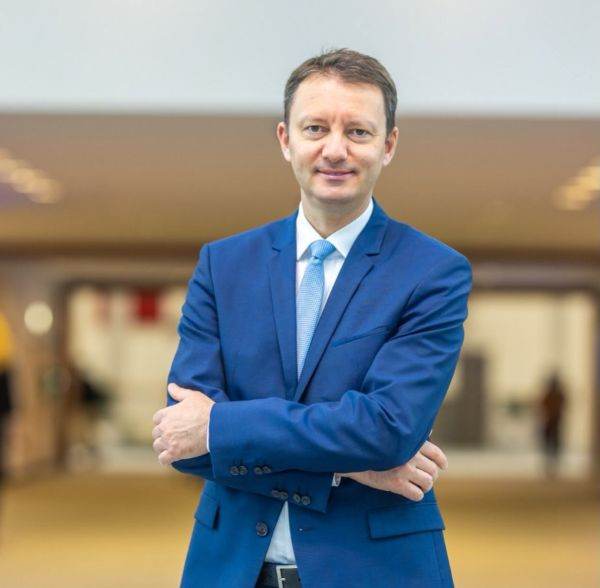
After two unsuccessful prime ministerial nominations-Eugen Tomac returned his mandate, and Adrian Veştea's proposed government was rejected by Parliament-Siegfried Mureşan has been named Prime Minister-designate by President Nicuşor Dan. He is tasked with forming the future Cabinet, drafting the government program, and securing a parliamentary majority of 233 deputies and senators for investiture.
President Nicuşor Dan stated yesterday, following the conclusion of consultations: "I observed a great deal of concern regarding electoral interests among the parties, and far less concern for the national interest. This is not right, because our job-and the fact that we live off the people's money-means we must reach a compromise. Romania needs a government and the budgetary revision upon which people's daily lives depend. We do not have a clearly defined majority, despite hours of discussions. Consequently, I chose to nominate the person who received the most votes from the parties during the consultations for the position of Prime Minister. That person is Siegfried Mureşan; he has experience in the European Parliament, has negotiated important matters over time, and possesses the necessary expertise. I spoke with him, and he asked for some time to consider the matter-a request I respect. Mr. Mureşan remains the first choice, and I am waiting before issuing the presidential decree. The Prime Minister-designate faces a difficult task. Regardless of how this situation resolves, I am convinced that Romania will remain on a pro-Western path and fulfill its commitments, including its fiscal trajectory and its relationship with investors." Minutes after Nicuşor Dan's statement, MEP Siegfried Mureşan wrote on his official Facebook page that he accepted the President's proposal, leading to the issuance of the designation decree.
This outcome was foreseeable following the marathon consultations at Cotroceni Palace between Nicuşor Dan and representatives of parliamentary political parties and other parliamentary groups-independents and national minorities-during which the leaders of the main political parties showed no signs of reaching a compromise regarding the future government.
At the conclusion of the consultations, statements from political leaders revealed that no parliamentary majority existed to invest the future government. The PSD declared itself ready to take charge of the executive branch; the PNL and USR maintained their support for Siegfried Mureşan; AUR announced it would not vote for a cabinet in which it did not participate; and the UDMR and minority representatives warned that any prime minister would fail without a stable majority.
PSD President Sorin Grindeanu announced that his party was prepared to take over the government. The Social Democratic leader cited the PSD's victory in the 2024 parliamentary elections and argued that the party possessed the necessary experience to lead the executive. He attributed the current political crisis to Ilie Bolojan's governance, asserting that right-wing parties had repeatedly caused economic decline and a deterioration in the standard of living. However, Grindeanu did not provide details regarding the potential parliamentary majority that a PSD-led government would rely on, noting that negotiations would enter a new phase following the eventual designation of the prime minister.
AUR, through George Simion, announced that it would not vote for any government of which it is not a part. The party leader accused Nicuşor Dan of keeping Romania in a state of political deadlock for nearly three months and of keeping AUR out of government, despite the party enjoying the support-by his account-of millions of voters. George Simion estimated that any government appointed under the current parliamentary makeup would not last longer than six months. However, he rejected the idea of a "transitional government," stating that no such arrangement exists under the constitution.
The PNL reaffirmed its support for Siegfried Mureşan but indicated it could also accept a technocratic prime minister with a clear mandate to continue reforms. Ilie Bolojan stated that a fully empowered government-led by a credible prime minister and composed of competent ministers-is urgently needed, though he set conditions: "The new government must continue measures to cut state spending and create the conditions to place the economy on a sound footing."
For its part, the USR maintained its proposal to have Siegfried Mureşan designated as prime minister. However, Dominic Fritz noted that the party is willing to discuss an alternative solution should the President nominate neither Mureşan nor Sorin Grindeanu. Consequently, the USR raised the possibility of two successive minority governments: first, one formed by the PNL, USR, and UDMR, followed by one led by the PSD. Both cabinets would have the same prime minister designated by the president. Fritz insisted that the first part of the rotation should return to center-right parties, and pointed out that a technocratic prime minister cannot function without an explicit political agreement in Parliament.
"A government's majority is tested in Parliament, through a vote. It is important to have this test and to have a nomination," stated the USR leader. He did not rule out early elections if negotiations fail to yield a workable solution.
UDMR President Kelemen Hunor warned that designating a prime minister without sufficient parliamentary support would prolong the crisis. UDMR did not propose a candidate but declared itself open to a government composed of specialists, provided the prime minister is capable of negotiating with the parties and understands the state of public finances.
"It must be someone who cannot be fed fairy tales about money and the budget," Kelemen Hunor asserted. In his view, early elections remain a possibility but should not be the first option.
National minorities representative Varujan Pambuccian described the situation as a "deep crisis" and emphasized that the decisive issue is not whether the cabinet is political or technocratic, but the existence of a solid parliamentary majority. He warned that the prolonged deadlock is directly affecting daily life and advised the head of state against trying to force a solution that could be deemed unconstitutional.
POT, through its president Anamaria Gavrilă, announced it would support a technocratic government designated by Nicuşor Dan, while the "United for Romania" parliamentary group once again proposed Victor Ponta for the position of prime minister. In fact, Ponta had previously put himself forward, citing the 1.23 million votes he received in the first round of last year's presidential election. This is a ludicrous explanation, because if that criterion were applied, Crin Antonescu-who garnered 1.89 million votes in the same election-should also have nominated himself. Should Ponta not be designated, the group's 17 MPs are willing to support a cabinet that presents a coherent program and is capable of building a stable majority.




















 Euro
Euro Dolar SUA
 Franc elveţian
 Liră sterlină
 Gram de aur