English


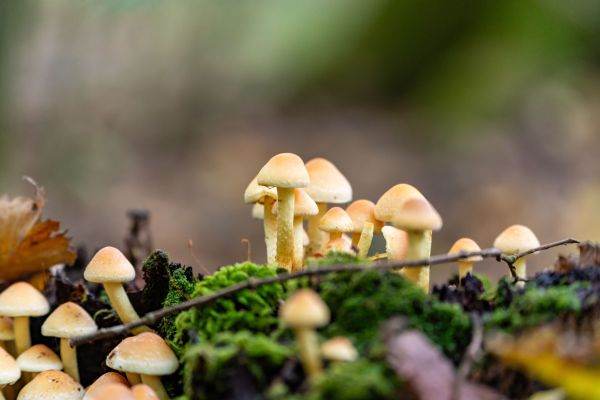
An invisible network of fungi that stretches beneath the soil surface plays a crucial role in sustaining life on Earth and storing carbon, and its dimensions are hard to imagine. According to a study published in the journal Science and cited by Live Science, if all the filaments of this network were arranged in a straight line, they would stretch for about 110 quadrillion kilometers, the equivalent of about 10% of the diameter of the Milky Way. The research provides the first global map of arbuscular mycorrhizal fungal networks, underground structures that form symbiotic partnerships with most land plants and play a major role in the carbon and nutrient cycle.
• A hidden world under the grasslands
According to the study published in Science, the densest fungal networks are found in natural grasslands and certain wetlands, such as the Florida Everglades. The top 6 inches of soil contains about 40 percent of the global fungal biomass. "This is the densest fungal forest on Earth, and it's under wild grasslands,” said Justin Stewart, an evolutionary biologist at the Society for the Protection of Underground Networks, an organization that studies these ecosystems, as quoted by Live Science.
According to the researcher, the discovery changes the way we view the distribution of life on the planet and highlights the importance of preserving grasslands, ecosystems that are disappearing at an accelerated rate due to the expansion of agricultural activities.
• A vital alliance between plants and fungi
Mycorrhizae are a symbiotic relationship between plant roots and the mycelia of certain fungi. Through extremely fine filaments called hyphae, fungi provide plants with nitrogen and phosphorus, in return for carbon produced through photosynthesis.
These networks function like biological pipelines, transporting nutrients in both directions and contributing to the health of ecosystems. According to researchers, mycorrhizal fungi absorb approximately 4.3 billion tons of carbon dioxide equivalent annually, which represents about 11% of global emissions generated by the burning of fossil fuels in 2021.
• Artificial intelligence has created the first global map
According to Live Science, the study authors analyzed 16,669 soil samples from 322 previous studies, covering all continents and nine major biomes of the planet.
Then, using artificial intelligence, the researchers estimated the density of fungal networks for each square kilometer of topsoil, based on climate data, soil chemistry and vegetation types. The results indicate an average density of 4.4 meters of hyphae in a single cubic centimeter of soil. In the case of wild grasslands, the density reaches 6.6 meters per cubic centimeter, while cultivated land with trees has the lowest values, of about 3.8 meters.
• Intensive agriculture affects underground ecosystems
According to the researchers, modern agricultural practices contribute to the degradation of this biological network. Cultivated soils have, on average, a density of mycelium that is about 50% lower than in natural ecosystems. The authors of the study believe that the use of fungicides and fertilizers rich in nitrogen and phosphorus could explain this decrease. "Wild grasslands are disappearing quite quickly. It is much easier to pull out the grass than to cut down a tree," warned Justin Stewart.
• An important tool in the fight against climate change
Independent specialists believe that the new global map represents an important step for the conservation of biodiversity and the management of natural resources. Andrea Genre, an expert on mycorrhizal fungi at the University of Turin, who was not involved in the research, told Live Science that such mapping was "urgently needed” because it could help develop more effective strategies for conserving biodiversity, developing agriculture and combating climate change. Edouard Evangelisti, a plant biologist at the University of Côte d'Azur in France, described the study as "revolutionary” because it sheds light on an essential but invisible component of terrestrial ecosystems.
• Underground map of life to be updated
The researchers point out that there are still understudied regions, particularly tropical forests and deserts, where more evidence is needed to reduce uncertainties. The research team says the map will be updated and completed in the coming years, providing a more precise picture of the distribution and role of these fungal networks. The discovery confirms that one of the planet's largest living structures is not on the surface, but beneath our feet, where billions of e kilometers of microscopic filaments support soil fertility, absorb carbon and contribute to the balance of global ecosystems.
























 Euro
Euro Dolar SUA
 Franc elveţian
 Liră sterlină
 Gram de aur