English


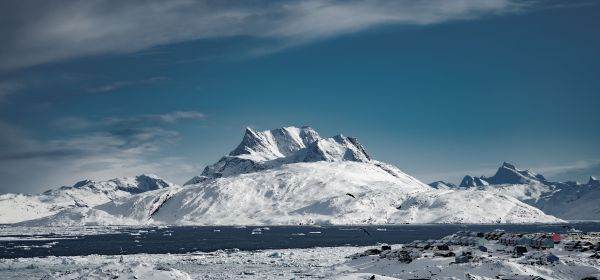
Climate change is accelerating the destabilization of Greenland glaciers, which are currently releasing four times more icebergs than in the early 2000s, according to a study published in the scientific journal Nature and carried out by researchers from the Technical University of Denmark (DTU), reports AFP. The research highlights that the effects of this phenomenon are not limited to the Arctic region, but have direct implications for marine ecosystems and the safety of maritime transport in the North Atlantic.
• Direct link between climate warming and iceberg formation
According to the authors of the study, the changes observed in Greenland glaciers are closely linked to climate evolution. "Our results indicate a direct, climate-induced link between changes in the glacier surface, increased iceberg movement and increased availability of hard seabed substrates,” says the research published in Nature. The phenomenon of ice breaking off from glaciers, known as "calving,” has accelerated significantly in recent decades as Arctic temperatures rise faster than the global average.
• Explosion of icebergs in Fram Strait
According to data presented by the Technical University of Denmark, the large glaciers in northeast Greenland have lost a significant part of their stability in recent decades.
"We already know, from measurements and satellite observations, that the large glaciers in northeast Greenland have lost stability over recent decades,” said researcher Shfaqat Abbas Khan, one of the study's authors. According to the DTU press release, in the Fram Strait - the main sea corridor between Greenland and the Norwegian archipelago of Svalbard - the number of icebergs observed has quadrupled since 2000. Also, the proportion of groups consisting of at least five individual icebergs, originating from both Greenland and the Russian Arctic, has increased by approximately 4.5% per decade since the beginning of the 21st century.
• Impact on marine ecosystems
The researchers point out that the effects of the accelerated detachment of icebergs go beyond the problem of rising sea levels. According to the study, icebergs transport significant amounts of rocks and sediments over distances of hundreds of kilometers before melting. These materials reach the ocean floor and can change the structure of marine habitats and the distribution of species. "The consequences are not limited only to sea level rise, but also directly affect seabed ecosystems located far from the glaciers," emphasized Shfaqat Abbas Khan. The authors of the study believe that these changes may influence marine food chains and biodiversity in areas far from the source of the icebergs.
• New challenges for navigation in the Arctic
According to the researchers, the increase in the number of icebergs coincides with the gradual opening of new maritime routes in the Arctic regions, amid the reduction of the sea ice surface. This development creates commercial opportunities for maritime transport, but also increases navigation risks. Ships using the corridors in the North Atlantic and the Arctic Ocean could encounter icebergs more frequently on their routes, which requires increasingly efficient monitoring and warning systems.
• Arctic, one of the territories most affected by global warming
According to numerous climate studies published in recent years, the Arctic is warming approximately three to four times faster than the global average. This increased warming is causing glacier melt, sea ice loss, and major changes to polar ecosystems. The new study, published in Nature, provides further evidence that the destabilization of Greenland's glaciers is having effects that extend far beyond the Arctic, affecting both the marine environment and economic activities dependent on shipping.
























 Euro
Euro Dolar SUA
 Franc elveţian
 Liră sterlină
 Gram de aur