English

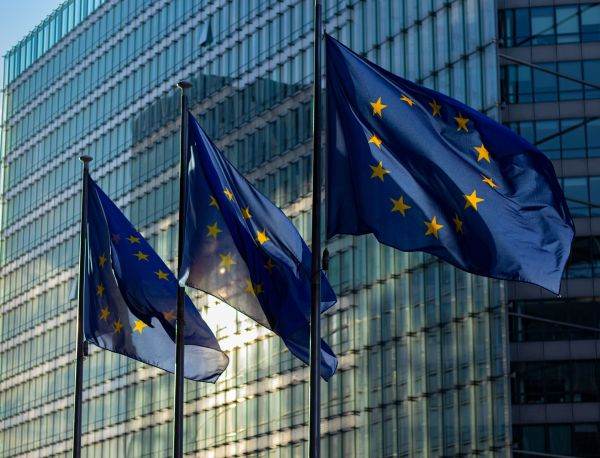
The real, current state of the European Union, beyond the figures presented by the European Commission and the other institutions in Brussels, is expressed by the vote of Icelanders in last Saturday's referendum on the resumption of accession negotiations to the community bloc, negotiations suspended ten years ago.
52.8% of Iceland's eligible voters opposed the resumption of negotiations, in a referendum in which 82.5% of voters participated, a participation that gives the result a very high legitimacy. We note, however, that while the capital Reykjavik voted, according to data published by Reuters and the Associated Press, in favor of reopening negotiations, rural, agricultural and fishing Iceland blocked any discussion with the institutions in Brussels regarding a possible accession to the European bloc. In essence, Icelanders beyond the borders of the metropolitan capital have shown through their vote that they do not trust the institutional mechanism of the European Union, the bureaucracy in Brussels and, above all, the sustainability of any concessions that Iceland might obtain at the negotiating table. As for the European bureaucracy, we show that the EU operates through a legislative, administrative and judicial system that is incomparably more complex than the institutions of a state the size of Iceland. For a small society, accustomed to a relatively direct relationship between the voter and national institutions, the prospect of essential rules resulting from the interaction between the Commission, the Council, the European Parliament, European agencies, legislative procedures, regulations, directives and the jurisprudence of the Court of Justice can fuel the feeling that the decision is being removed from the citizen.
But why did the Icelanders refuse to resume negotiations? First of all, because for Iceland, sovereignty over natural resources is not an abstract theme of political discourse, but the foundation of the national economic model. Then, fishing remains the key issue. According to Reuters, the fishing industry generates, directly and indirectly, about 15% of Iceland's GDP and about 40% of export earnings. For a country of only about 400,000 inhabitants, control over fishing areas, quotas and marine stocks is equivalent to control over a strategic national resource.
And this is precisely where the problem with Brussels arises, which lies in the EU's Common Fisheries Policy. Once it becomes a member state of the community bloc, Iceland could no longer treat the management of fishery resources exclusively as a national competence. However, before the referendum, the European institutions in Brussels sent out that the particularities of Iceland could be taken into account and that "creative solutions" could be found, but the result of last Saturday's vote shows that Icelanders did not have enough confidence that any derogations would be permanent. The Icelanders who voted against the resumption of negotiations did not vote so out of fear that the institutions in Brussels would take their fish the next day. They believe that, once the competence is transferred, the government in Reykjavik will no longer be able to guarantee that the European institutions in Brussels will not change the rules in ten or twenty years, which is a fundamental difference. Another reason for the refusal is agriculture. Only two weeks before the referendum, the members of the Icelandic farmers' organization voted 95% against the resumption of negotiations. This is because joining the EU requires the integration of Icelandic agriculture into the Common Agricultural Policy and the elimination of tariff protection for agricultural products from other member states. The farmers' vote was categorically against, given that representatives of the Icelandic government explained before the referendum that agriculture would be one of the elements to be negotiated and that Iceland would try to obtain special mechanisms for Arctic agriculture, following the models of Finland and Sweden.
For the Icelandic farmer, the equation is much simpler: he produces in a difficult climate, on an isolated island and at high costs. The unfettered entry of agri-food products from the EU market is perceived as an existential risk, to which are added Iceland-specific concerns regarding food security and the protection of livestock from diseases existing on the continent.
However, Iceland already benefits from a large part of the economic advantages of European integration without being a member of the EU. Iceland is part of the European Economic Area, EFTA and the Schengen area; it practically has access to the European internal market and already applies a large part of the relevant EU legislation. Moreover, approximately 75% of the relevant legislation is already aligned with European standards.
Therefore, immediately after the referendum result was announced, Prime Minister Kristrun Frostadottir said it is clear that the main lesson of Saturday's vote is that Icelanders are satisfied with the EEA agreement.
It should be noted that the government in Reykjavik organized the referendum against the backdrop of the deterioration of the strategic environment in the Arctic, the war in Ukraine and, above all, Donald Trump's statements regarding Greenland. Iceland is a NATO member, but it does not have its own army, and the pro-EU camp tried to present European integration as an additional safety net in a world where the transatlantic relationship has become more unpredictable. However, voters did not perceive a threat large enough to justify changing the national model.
However, 47.2% of voters wanted the negotiations to resume. The difference was only about 12,700 votes, with a turnout of 82.5%. The result therefore says something more interesting than "Icelanders do not want the EU". He says that most Icelanders believe that the current formula offers them a better cost-benefit ratio than membership: single market through the EEA, free movement and Schengen, very close European cooperation, NATO for security, but their own crown, national control over fisheries and much greater autonomy over agriculture and resources.
This is the real explanation for the result of last Saturday's referendum. To convince Iceland to join the EU, it is not enough for the EU institutions to demonstrate that membership brings benefits, but that the additional benefits over the very advantageous arrangement that Iceland already has through the EEA are greater than the price of giving up control over fisheries, agriculture, currency and some sovereign powers.
















 Euro
Euro Dolar SUA
 Franc elveţian
 Liră sterlină
 Gram de aur