English

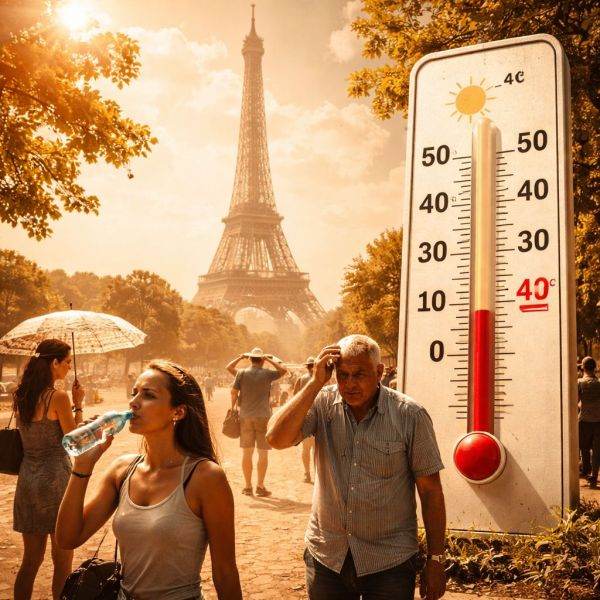
Summer temperatures, close to the 30 degree Celsius threshold, were recorded on Tuesday in southwest France, where several weather stations reported record values for February, according to data published by the national weather service Meteo-France and reported by AFP. Specialists describe the episode as one "worthy of a month of May”, emphasizing that the phenomenon is part of a trend of increasing frequency of unusual heatwaves during the winter.
The highest value was recorded in Orthez, in the Pyrenees-Atlantiques: 28.3 degrees Celsius - the highest temperature ever measured in February at this station (active since 1994), the previous record was 27.1 degrees Celsius, in February 2020. Other towns in the southwest also reported remarkable values: Biarritz - 27 degrees Celsius, approximately 14 degrees Celsius above normal for the period, Pau - 26 degrees Celsius, Mont-de-Marsan - 25°C, Toulouse - 22 degrees Celsius. Meteorologists noted that the "heat threshold” of 25 degrees Celsius was exceeded in several points in the region - an extremely rare situation in the last month of winter.
• Meteorological explanation
According to Meteo-France, the heat wave was generated by: a mass of warm air of subtropical origin; atmospheric circulation favorable to the transport of air from the south; clear skies. Forecasts also indicated that temperatures were set to rise temporarily before returning to values closer to normal.
Meteorologists point out that such episodes are becoming more frequent: winters are warmer on average; temperature records are being broken more often; the amplitude of extreme phenomena is increasing. According to Meteo-France, the rate of warming in France is faster than the global average, due to: its continental geographical position; the amplification of warming in temperate zones; the cumulative effect of greenhouse gas emissions.
Although the warm weather is perceived positively in the short term, experts warn of the risks: Agriculture - premature onset of vegetation, vulnerability to late frosts; Environment - increased water stress, increased risk of early fires; Economy and society - pressure on water resources, change in the seasonality of tourist activities.
Climate studies show that Europe is one of the regions warming the fastest worldwide. Episodes of "abnormally high" temperatures in the cold season are considered a clear indicator of this development.


























 Euro
Euro Dolar SUA
 Franc elveţian
 Liră sterlină
 Gram de aur