 English

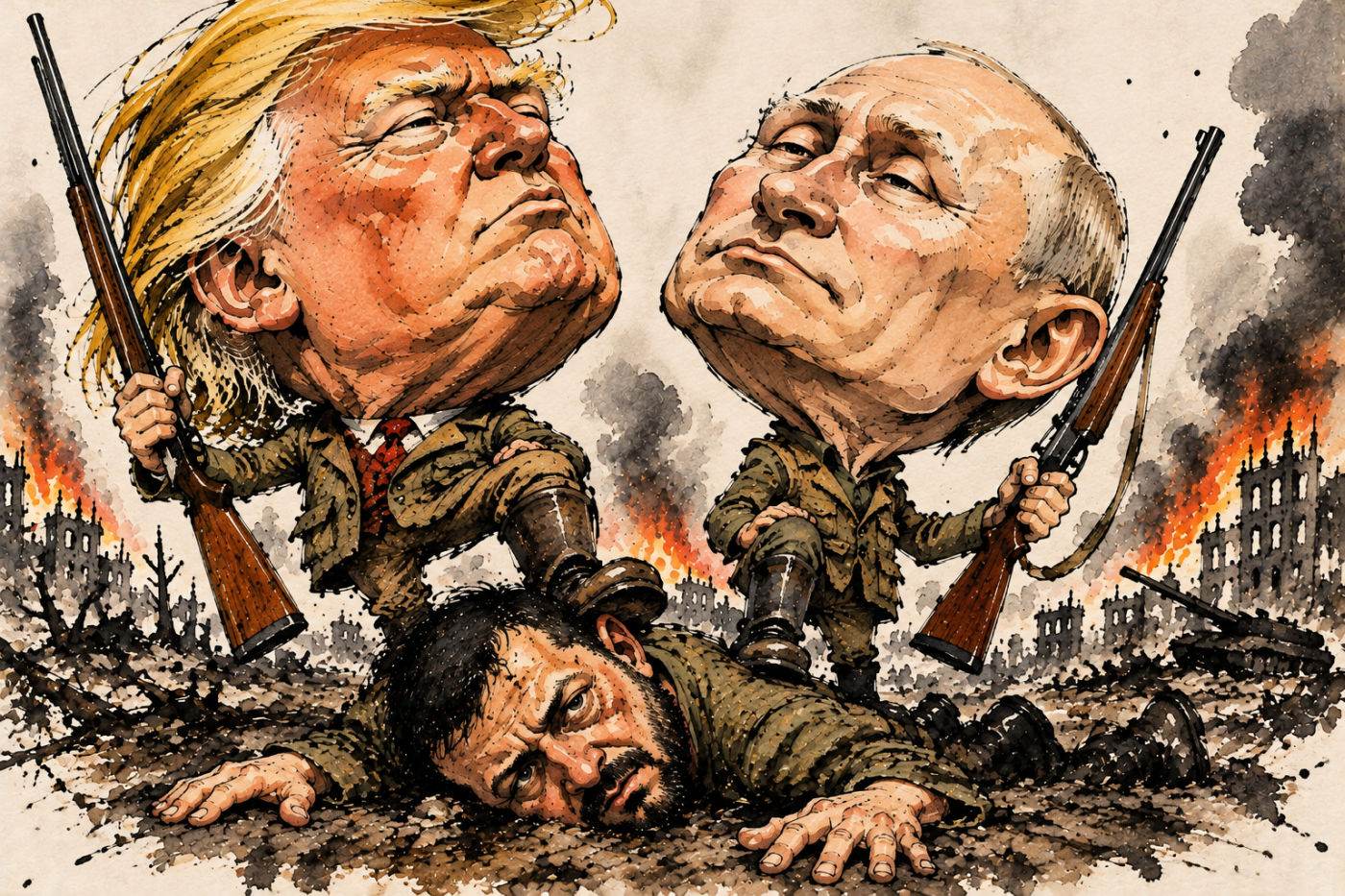
The President of the United States, Donald Trump, asked Ukraine to choose another president, a day after lifting US sanctions on Russian diesel. Trump made the statements on Saturday, October 10, in front of reporters as he left the White House, according to Kyiv Independent and CBS News.

BURSA showed, in the analysis ”Trump Hands Putin a Gift: Lifts US Sanctions on Russian Diesel for Nothing in Return”, published on October 10, that Washington dropped sanctions on Russian diesel without Russia making any move regarding the war in Ukraine. Facts that have emerged since then confirm this conclusion, but show that a part of the analysis's economic calculation must be corrected.
What did Trump say about Zelensky?
Trump held Ukrainian President Volodymyr Zelensky responsible for the continuation of the war: ”Zelensky could have ended this war many times, many, many times, and chooses not to do it.”
Trump repeated that he asked Zelensky not to hit Russian refineries: ”I said: you can do whatever you want in Russia, but don't hit the refineries, because that causes a world problem.” Regarding Zelensky, Trump said that he ”wants to cause problems for our farmers, our livestock breeders, with the diesel” and that he ”would do well to stop”.
Then Trump called for a change in Ukraine's leadership: ”I suggest they choose a new leader, who can make a deal.” And: ”I think it's time for Ukraine to have a new president.” Trump also said that Zelensky should organize elections, that Ukraine has lost ”30% of the country” and that the war started because of incompetence, according to the Associated Press, cited by Times of Israel. Asked if the diesel deal will prolong the war, Trump replied that he sees things differently.
Does America need Russian diesel?
No. The United States is one of the largest diesel exporters in the world. According to weekly data from the US Energy Information Administration (EIA), cited by DTN, in the week prior to the agreement the United States exported 1.764 million barrels of distillates per day, primarily diesel, and imported 118,000 barrels per day. In August, US diesel exports reached a record high of approximately 1.9 million barrels per day, according to OilPrice.
Furthermore, the import of Russian diesel into the United States is legally uncertain. General License 135 authorizes it, but the Ending Importation of Russian Oil Act, passed by Congress in 2022, prohibits it, and the ban has not been lifted through the procedure provided by law, as BURSA showed in the October 10 analysis.
Russian diesel will therefore most likely go to other markets, such as Turkey or Latin American countries. The United States feels the effect only through the world price: when Russian diesel hits the market, the world price may drop, and the US price follows it, because American refineries sell a significant part of their production for export.
The situation has a paradox. In September, Trump supported banning US diesel exports to lower domestic prices ahead of the elections. The European Commission criticized the idea, because the European Union buys about half of the diesel it imports from the United States, according to the EFE agency. Trump dropped the ban on October 3. Six days later, he lifted sanctions on Russian diesel.
What needs to be corrected in the calculation published by BURSA?
In the October 10 analysis, BURSA compared the 4.8 million tons of diesel announced by Trump, i.e., approximately 36 million barrels, with US consumption, and concluded that they cover about nine days of consumption. The comparison with US consumption measured the wrong thing. The correct comparison is with the world market, where Russia supplied approximately 11% of diesel exports in 2025, according to the Wall Street Journal. The Russian export ban, in effect since July 8, removed these quantities from the market and contributed to the price increase worldwide, including in the United States.
The market reacted on the very day of the announcement. On October 9, the price of diesel futures on the New York Mercantile Exchange fell by 4.61%, to $4.73 per gallon. The American-Russian agreement and the expectation that China will resume its fuel exports contributed to the drop, according to DTN. BURSA's analysis cited analysts who do not expect a major effect on the price. The market reaction shows that the agreement had at least an immediate effect. It is not yet known whether it will hold and whether it will reach the pump, because it depends on the quantities that Russia will actually deliver.
The correction strengthens Trump's economic argument, but does not change the three main conclusions of the analysis. Russia gave nothing in return. The United States had other means, which it had already used, including releasing reserves from G7 states, starting with diesel. And Ukraine had proposed a solution that would have also lowered the price.
Is Trump right about the cause of the price increase?
Only partially. BURSA's October 10 analysis showed, based on the September report of the International Energy Agency, that the world supply of diesel was reduced by two compounding factors: restrictions in the Strait of Hormuz, caused by the war between the United States and Iran, and damage to Russian refineries produced by Ukrainian strikes. Trump blames the price hike solely on Ukraine.
In Saturday's statements, Trump mentioned neither the war with Iran, nor the closure of the Strait of Hormuz, nor the Russian attacks on energy infrastructure and civilians in Ukraine, according to Kyiv Independent. He also did not mention Ukraine's proposal for a reciprocal energy ceasefire, presented in the October 10 analysis, which would have also increased the global diesel supply and would have required a reciprocal action from Russia.
What did Russia do after the agreement?
On October 10, the Russian government partially lifted the export ban and allowed the sale abroad of 500,000 tons of diesel, according to the TASS agency, cited by Kyiv Independent. Deputy Prime Minister Alexander Novak stated that Russian production is sufficient for both the domestic market and export. The authorized quantity is lower than the 800,000 tons that, according to Trump's announcement, Russia was supposed to deliver immediately and in November.
Polish Foreign Minister Rados³aw Sikorski questioned Russia's ability to deliver, recalling the fuel shortage in Moscow and the damage to Russian refineries: ”Where will the export surpluses come from?”, according to Times of Israel.
On the same day, Russian aerial bombs hit apartment buildings in Zaporizhzhia. Regional authorities reported at least 20 dead, including three children, according to CBS News. Russian bombardments killed over 60 people in four days.
What did Ukraine answer?
Zelensky stated that the diesel agreement serves Russia and allows Moscow to kill more and fight longer, according to CBS News. On the X network, Zelensky wrote that Russia expressed its ”gratitude” for the lifting of diesel sanctions through the bombardments in Zaporizhzhia.
Ukrainian Foreign Minister Andrii Sybiha responded to Trump's demand: Zelensky has the support of Ukrainians, and they have the right to decide.
The two sides describe differently what Kyiv knew. A high-ranking Ukrainian official told the Associated Press that Kyiv was not informed in advance about the deal and that the agreement has nothing to do with the discussions in Miami, according to Times of Israel. A US official told the publication Axios that US envoys Steve Witkoff and Jared Kushner had told Ukrainian negotiators, during the talks in Miami, that Trump was going to speak with Putin and lift the sanctions on Russian diesel.
What do Europe and Washington say?
Swedish Prime Minister Ulf Kristersson stated that Stockholm regrets the agreement, because energy revenues are essential for financing the Russian war, and announced that the European Union will adopt on Monday, October 12, the most comprehensive sanctions package against Russia so far. German government spokesman Stefan Kornelius stated that Germany remains committed to the sanctions imposed on Russia and that support for Ukraine remains unchanged, according to the Associated Press, cited by Times of Israel.
In Washington, former Vice President Mike Pence, who served in Trump's first term, stated that the agreement makes no sense and urged Trump to cancel it immediately, according to CBS News.
What did Trump announce on Sunday?
On Sunday, October 11, Trump wrote on the Truth Social network: ”Starting right now, there is an ENERGY CEASEFIRE in the war between Russia and Ukraine. Both sides have agreed. Do not violate it!”, according to Euronews. The Kremlin did not confirm the announcement. Zelensky told the publication Axios that the announcement ”was news” to him and that Ukraine accepts the ceasefire if Russia accepts it too: ”If President Trump negotiated it with Putin, please tell us when it starts.” In September, Trump had made a similar announcement, which neither side confirmed, and the strikes continued.
The ceasefire announced by Trump is exactly the solution that Ukraine had proposed before the diesel agreement.
Also on Sunday, Zelensky responded on the ABC network to Trump's demand regarding elections: ”Tell Putin: give us two months, 60 days of total ceasefire, and we will hold elections”, according to Jerusalem Post. Ukraine's legislation prohibits the organization of presidential elections as long as martial law is in effect, which was instituted after the Russian invasion in February 2022. Zelensky's offer shows that elections in Ukraine depend on stopping the fighting, meaning on Russia.
Can Trump's support for Putin be explained?
By the stated justification, no. The price of diesel explains why Trump wants more diesel on the global market.
The US administration also gave an explanation for the timing of the decision. According to a US official cited by Axios, Trump lifted the sanctions after Zelensky ignored about six American requests to stop the strikes on Russian refineries. ”Strikes on refineries cause suffering in Russia, but they also cause suffering for the United States”, the official said. According to Kyiv Post, which cites Axios, the US envoys allegedly warned the Ukrainian negotiators that Washington could stop providing intelligence information if the strikes continue. The US official denies there was an explicit threat.
This version explains the timing of the decision, not the decision itself. Trump's requests have no basis: Ukraine is the attacked state and decides on its own how to defend itself, and Trump asked it to unilaterally stop the strikes, without asking anything of Russia, which was simultaneously striking the Ukrainian energy infrastructure. The premise of the requests is false: Trump blames the rising cost of diesel solely on Ukraine, although the International Energy Agency points out that restrictions in the Strait of Hormuz also contributed to it. And Ukraine did not refuse the solution: it refused the unilateral halt and proposed reciprocity every time.
There remain four things that neither the stated justification nor the administration's version explain.
It does not explain why Washington asked Russia for nothing in exchange for relaxing the sanctions.
It does not explain why Trump is only now announcing the energy ceasefire proposed by Ukraine, after he has already lifted the sanctions on Russian diesel and has nothing left to offer Russia in exchange for respecting it.
It does not explain why Trump is asking Ukraine for another president. The demand has nothing to do with the price of diesel.
It does not explain why the relaxations of sanctions against Russia are repeated, even though the majority of Republican voters supported additional sanctions, as the October 10 analysis showed.
Trump has his own explanation, which he repeats: Putin wants a peace deal, and Zelensky is blocking it. The facts of the last three days do not support it. The Kremlin postponed peace negotiations on the very day of the conversation between Trump and Putin, Russia bombed Zaporizhzhia a day after the agreement and did not confirm the energy ceasefire announced by Trump.
In the terms of ordinary foreign policy, where a state asks for something in exchange for what it concedes, Trump's decision cannot be explained. Trump asked nothing of Russia. He is asking Ukraine to give up strikes on Russian refineries and the president with whom his envoys are negotiating. Trump's irritation that Zelensky did not follow his demands does not explain why the victim of aggression is punished, and the aggressor is rewarded.
The question asked in the October 10 analysis remains, now more pressing: if the relaxation of sanctions was not necessary for supplying the United States, and Russia gave nothing in return, what is Trump aiming for when he demands concessions only from Ukraine?
Upcoming data
On October 12, the European Union is adopting the new package of sanctions against Russia. On October 31, the Russian ban on diesel exports expires for the quantities that were not authorized on October 10. Between these dates, the deadlines of October 15 and 18, presented in the October 10 analysis, will show whether the reduction of the excise duty on diesel in Romania is maintained and whether Trump applies the tariffs stipulated by the Lindsey O. Graham Act on sanctioning Russia and Iran for buyers of Russian oil. Until then, facts will show whether the energy ceasefire announced by Trump exists.
AUTHOR'S NOTE
I prepared the analysis with the assistance of artificial intelligence; the responsibility for the analysis belongs entirely to me.






















 Euro
Euro Dolar SUA
 Franc elveţian
 Liră sterlină
 Gram de aur































Reader's Opinion