English


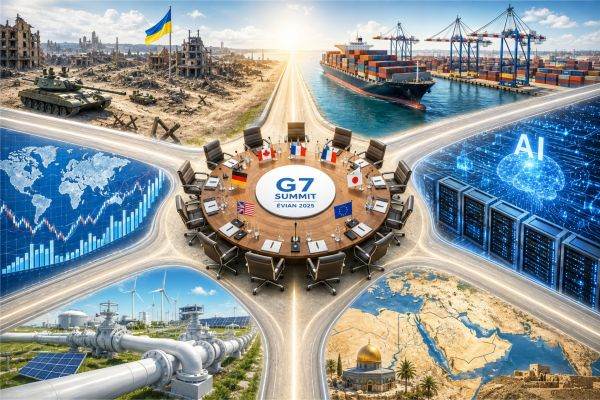
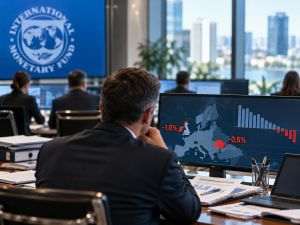
The leaders of the world's most developed economies are meeting for three days starting today in Evian, France, for the G7 summit, held under the French presidency of the group, in an international context marked by geopolitical uncertainties, trade tensions and growing global economic imbalances. The meeting is seen as an important test of the ability of major democratic powers to demonstrate that multilateralism remains an essential tool for managing global challenges and for maintaining a stable and predictable international economic environment.
The leaders of Canada, France, Germany, Italy, Japan, the United Kingdom and the United States will participate in the summit, along with representatives of the European Union. The EU will be represented by the President of the European Council, Antonio Costa, and the President of the European Commission, Ursula von der Leyen. The French authorities have also invited leaders from several non-G7 countries to participate in some of the working sessions, in an attempt to broaden the dialogue on key global issues.
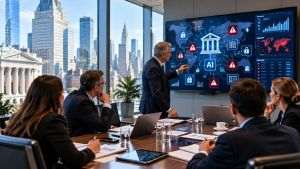
The meeting's agenda includes six working sessions dedicated to geopolitical challenges, peace and security for Ukraine and Europe, the situation in the Middle East, international partnerships and global solidarity, the prospects for more balanced economic growth and the future of artificial intelligence. The summit's organizers stress that the deterioration of the international economic climate and the increase in macroeconomic imbalances require more effective coordination between the world's major economies.
Ahead of the summit, French President Emmanuel Macron organized a video conference last Thursday with the participation of G7 member states, as well as representatives of China, India, Brazil, South Korea and Kenya. The discussions focused on macroeconomic imbalances and global economic governance, topics that will also feature prominently on the agenda of the Évian meeting.
The President of the European Council, Antonio Costa, believes that the current international context makes it indispensable to strengthen cooperation between the major democratic economies. "In an era of geopolitical uncertainty and macroeconomic imbalances, G7 unity and effective multilateralism are essential to strengthen global stability, boost sustainable growth and address common challenges. The Evian Summit will be an opportunity to advance these priorities through constructive dialogue and action, including by maintaining our support for Ukraine and by ensuring balanced global economic growth," the European official said, according to a press release issued by the European Council. In addition to the traditional themes of security and the economy, artificial intelligence will occupy a central place in the leaders' discussions. According to information published by Reuters and taken over by the investing.com website, representatives of some of the most important companies in the field of technology and artificial intelligence will participate in the meeting. Among them are Sam Altman, CEO of OpenAI, Demis Hassabis of Google DeepMind, Dario Amodei of Anthropic, Arthur Mensch of Mistral AI, Aidan Gomez of Cohere, Robin Rombach of Black Forest Labs, Pratyush Kumar of Sarvam AI, Victor Riparbelli of Synthesia, Alex Wang of Meta, Marc Benioff of Salesforce and Ren Ito of Sakana AI.
The G7 leaders are to debate and adopt a declaration on the protection of minors online, one of the priorities promoted by the French presidency. The heads of state and government will also participate in a working lunch with leaders of the technology industry, during which topics such as the regulation of new technologies, the infrastructure necessary for the development of artificial intelligence and the digital networks of the future will be addressed.
The meeting will end with the adoption of several joint statements reflecting the group's positions on the main international and economic files on the global agenda.









 Euro
Euro Dolar SUA
 Franc elveţian
 Liră sterlină
 Gram de aur