English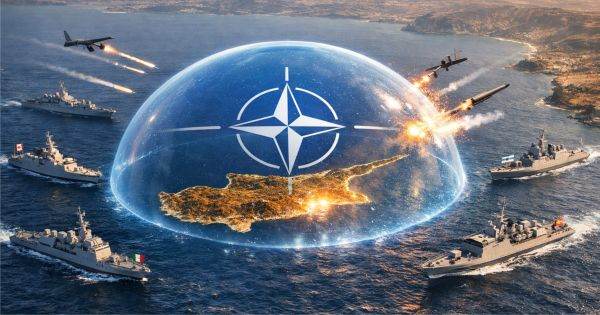
Guido Crosetto, the Italian Defense Minister, invoked Article 5 (on collective defense) of the NATO Treaty yesterday, in the context of the war with Iran, according to the website of the daily Il Sole 24 Ore. The announcement was made by Crosetto, in the plenary session of the Chamber of Deputies, in Rome, during the debate on the evolution of the crisis generated by the confrontation in the Middle East.
The Italian minister announced the decision at the end of his speech, explaining that Rome will follow the example of other European states and will directly contribute to the defense of Cyprus, after the drone attacks that hit the island's territory in the context of the escalation of the regional conflict. In his speech, Crosetto explicitly invoked the collective defense clause provided for by NATO, known as Article 5 of the North Atlantic Treaty, which provides for the intervention of allies to defend a partner state under attack.
According to the Italian Defense Minister, Italy is preparing to send "naval capabilities” to protect Cyprus, emphasizing that this decision is part of a broader strategy to reassess the military presence in the region. Crosetto stated that the Italian authorities must quickly adapt their military apparatus and respond to requests from friendly states in difficulty. In this regard, Rome is considering the deployment of a multi-domain military system in the Middle East, which will include naval assets, anti-drone air defense systems and missile interception capabilities.
The message sent by the Italian minister reflects an important strategic shift: Italy no longer treats the Middle East conflict as a distant crisis, but as a direct threat to European stability. The drone attacks on Cyprus have generated concern in Western capitals, and the rapid reaction of several states indicates that Europe is beginning to consolidate its positions in the eastern Mediterranean.
The European mobilization is not just symbolic. We note that Greece has sent three warships to defend Cyprus, without government officials in Athens invoking Article 5 of the NATO Treaty. Spain has already confirmed that it will send the frigate Cristobal Colon to the vicinity of Cyprus, where it will operate alongside the French aircraft carrier Charles de Gaulle and other military ships of NATO allies. The naval group led by France is already on its way to the Mediterranean, after the Spanish frigate joined it at the beginning of March for escort, protection and advanced military training missions. According to the Spanish Ministry of Defense, the frigate Cristobal Colon is the most advanced warship in the Spanish fleet. In the Mediterranean, it will have the mission of ensuring the air defense of the naval group and helping to protect the area from threats posed by drones or missiles. At the same time, the ship will act as a support element for the Patriot missile batteries that Spain has already deployed in Turkey, thus strengthening the defensive system of the eastern flank of Europe.
In parallel, the supply ship Cantabria is due to depart shortly to provide fuel and logistical support to the naval group during its transit through the Gulf of Cadiz, ensuring the continuity of operations on the route to the eastern Mediterranean.
As European ships head towards the eastern Mediterranean, and tensions between Iran and its adversaries continue to rise, Cyprus is becoming one of the flashpoints of the geopolitical confrontation that could redefine the balance of power in the region. Beyond the immediate military dimension, the deployment of these naval forces sends a strong geopolitical signal: European states are beginning to treat the escalation of the conflict in the Middle East as a direct threat to the security of the continent. Sending ships to Cyprus is not just a one-off protection operation, but also a demonstration of strategic solidarity between European states and their allies.



























 Euro
Euro Dolar SUA
 Franc elveţian
 Liră sterlină
 Gram de aur