English

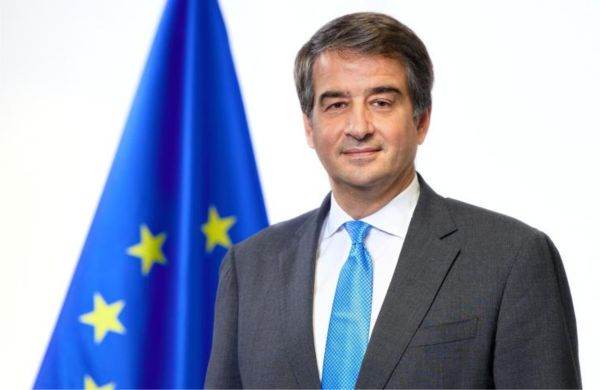
The European Commission is preparing to reallocate 160 billion euros from cohesion funds to support measures for the population and the economy, in an attempt to limit the effects of the explosion in energy prices caused by the war in Iran and the disruption of supply routes in the Gulf, according to a letter sent to ministers from member states by Raffaele Fitto, the EC's executive vice-president for Cohesion and Reforms, a document consulted by Euronews.
The source cited shows that the European Commission official states in the letter that "it is essential to ensure that these already available European funds are used in full in a timely manner to benefit the regions and communities that need them most, especially in the context of the current developments in energy prices".
Raffaele Fitto's message comes at a time when several EU member states, including Italy, are facing the economic consequences of the conflict in Iran, which has pushed up energy costs in Europe and on international markets, amid disruptions to supply flows from the Gulf. In this context, Brussels is increasingly talking about using European budgetary flexibilities to avoid a new price spiral and a sharp deterioration in European industrial competitiveness.
The letter sent by the European Commissioner explicitly stresses that member states and regions can already direct funding towards energy-related investments, "for example, by extending existing measures to support families and companies, reducing energy consumption". In practice, the European Commission is opening the door to the accelerated use of European money to indirectly compensate for the energy shock, at a time when Europe's energy-intensive industries are feeling the full brunt of the cost pressure.
Raffaele Fitto's position almost entirely replicates the political line promoted in recent days by Italian Prime Minister Giorgia Meloni, who sent a letter last week to European Commission President Ursula von der Leyen, demanding that energy security be treated as a European strategic priority and that the same fiscal flexibility recently granted to defense spending be applied to the energy sector.
The political context is not without relevance, as Raffaele Fitto is part of Giorgia Meloni's ruling party, the right-wing Fratelli d'Italia. In recent months, the European official has been one of the main promoters of the changes introduced as part of the mid-term review of cohesion policy, changes that allow member states and regions to redirect funds to emerging challenges such as defense, decarbonization or affordable housing.
The European Commission announced in March that almost 35 billion euros of cohesion funds have already been redirected following these changes. Defense spending has played a particularly important role for the states on the eastern flank of the European Union, with Poland alone redirecting over 6 billion euros.
Now, Brussels suggests that exactly the same mechanism could be used to cushion the energy shock that threatens in particular highly industrialized and energy-hungry economies such as Italy and Germany. Raffaele Fitto's letter states that "cohesion policy funds have thus demonstrated their capacity to intervene in support of the European Union's strategic priorities, including in the energy field."
The financial size of the potential operation is huge. The cohesion policy budget for the period 2021-2027 amounts to 515 billion euros. According to European Commission data, by the end of March, approximately 355 billion euros had been allocated for specific projects, but only 100 billion euros had actually been spent.
Although the letter does not explicitly mention the amount available for possible reallocations, calculations indicate that around euro160 billion could theoretically remain available for redirection. However, the actual amount could be lower, as some governments and regions have already launched public procurement procedures and tenders for ongoing projects.
However, the volume of unspent EU funds remains significant, mainly due to delays in the completion of programmes and the fact that member states have prioritised in recent years the use of the European post-pandemic fund, which had much stricter implementation deadlines.
Following Giorgia Meloni's letter to Ursula von der Leyen, European Commissioner for the Economy, Valdis Dombrovskis, said that the European Executive is currently reviewing "policies, in particular including fiscal policy options, in order to best address the crisis, including the use of existing flexibilities within our framework”.
The position expressed by Raffaele Fitto fits perfectly into this logic of making the use of European money more flexible, with the European official insisting on "the significant role that cohesion policy is called upon to play in addressing the current energy crisis and its impact on economic, social and territorial cohesion”.
However, behind the technical formulations in Brussels, a major strategic change is taking shape: the European Union is starting to treat the energy crisis as a systemic threat comparable to the pandemic or the security challenges generated by the war in Ukraine and the conflict in the Middle East. And the fact that Brussels is already discussing the redirection of up to 160 billion euros shows the extent of the economic pressure that is accumulating on Europe.














 Euro
Euro Dolar SUA
 Franc elveţian
 Liră sterlină
 Gram de aur