English

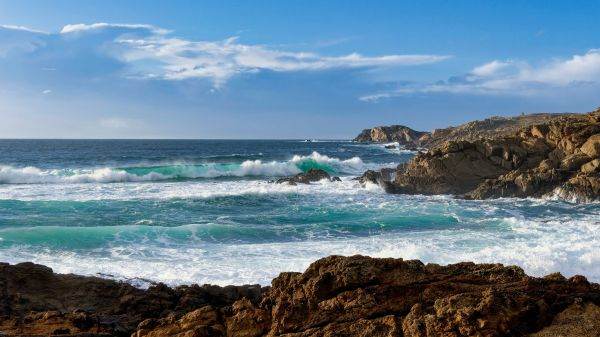
Human-induced climate change was the main cause of recent record temperatures in waters around Europe, according to an analysis by the World Weather Attribution (WWA) group and cited by Reuters. Researchers warn that warming oceans and seas could have serious consequences for marine ecosystems and coastal communities.
• Mediterranean Sea reaches record temperatures
Europe's marine waters have not been spared from the extreme heat wave that has affected many countries this summer. In July, the average water temperature in the Mediterranean Sea reached 27 degrees Celsius, the highest value ever recorded for that month. In early August, a buoy placed off the island of Mallorca indicated a temperature of 33 degrees Celsius. According to the WWA analysis, human-induced climate change has contributed to a warming of around 2 degrees Celsius in the Mediterranean and around 1.4 degrees Celsius in the seas of western Europe. The group uses scientifically validated methods to assess the role of global warming in causing extreme weather events. "This phenomenon has the potential to completely reshape the ecosystems on which coastal communities depend for food and income, as well as generate extreme and damaging weather events on land,” said Claire Bergin, a climatologist at Maynooth University in Ireland and co-author of the study.
• Some temperatures would have been "virtually impossible” without global warming
The analysis shows that the maximum water temperatures recorded this year in the eastern and western Mediterranean, in the Bay of Biscay and along the Iberian coast would have been "virtually impossible” in the absence of human-induced climate change. In the Celtic Sea, located between Britain and Ireland, this year's extreme temperatures would have been expected to occur only once a century in a world without human-induced climate change, according to the research. Warmer waters contribute to increased humidity and nighttime temperatures in coastal regions and can fuel powerful storms later in the year.
• Increasing pressures on marine ecosystems
Greenhouse gas emissions, mainly from burning fossil fuels, have raised the planet's average temperature by about 1.4 degrees Celsius above pre-industrial levels, according to the World Meteorological Organization. This higher base temperature allows the high-pressure systems that cause heat waves to reach higher temperatures.
Sudden increases in water temperatures can cause mass mortality of some species, including corals, and disrupt food sources for sea birds and mammals, generating knock-on effects on ecosystems. John Bruno, a marine ecologist at the University of North Carolina, explained that some species are moving north in search of cooler waters, but the ability to adapt is not the same for all species. "We are rapidly approaching the absolute biological limits of adaptation for many species,” Bruno said.
According to the WWA analysis, about 90% of the Bay of Biscay and 80% of the western Mediterranean Sea were affected by marine heatwave conditions this year. In the absence of human-induced global warming, the proportion would have been about 40%, the analysis estimates.



















 Euro
Euro Dolar SUA
 Franc elveţian
 Liră sterlină
 Gram de aur