English

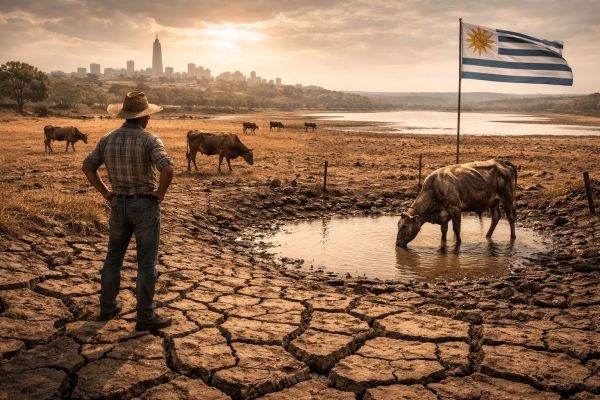
The Uruguayan government has declared an agricultural emergency in several regions in the south of the country, after severe rainfall deficits have severely affected the agricultural and livestock sectors. The measure will allow the rapid provision of financial and fiscal support to around 2,000 small farmers, according to authorities. The decision, announced by the Ministry of Agriculture, will be valid for 90 days and targets three essential areas of the economy: livestock farming, dairy production and agricultural crops. Authorities estimate that the drought is affecting a huge area, around 3.5 million hectares of agricultural land. According to the director of natural resources at the ministry, Gustavo Garibotto, between 1,800 and 2,000 farmers are already facing significant losses. The affected area includes the capital region, Montevideo, as well as peri-urban areas where agriculture and livestock farming are essential economic activities.
• Causes: prolonged lack of rain
Authorities point to the main cause as the severe deficit of rainfall that persists in the south of the country. The situation comes against the backdrop of already difficult years for the agricultural sector: between 2020 and 2023, Uruguay experienced its worst drought in over seven decades, with major economic effects. The declaration of a state of emergency allows for the adoption of rapid interventions, including: deferral of local tax payments; facilitated access to credit; logistical support for water and feed; special support programs for small producers. The authorities hope to limit bankruptcies and loss of production capacity in the agricultural sector.
• Major economic impact
Agriculture remains a central pillar of Uruguay's economy. In 2025, beef was the country's main export product, surpassing cellulose, soy and dairy products. Experts warn that the persistence of drought could reduce agricultural production and exports, with effects on national income and the trade balance.
The repeated droughts in recent years are considered by specialists to be part of an increasingly unstable climate pattern in South America. Rising temperatures and changing rainfall patterns are putting increasing pressure on agriculture, especially in countries dependent on agri-food production. The state of agricultural emergency reflects the vulnerability of Uruguay's rural sector to climate change and extreme weather events. For the authorities, the immediate challenge is to support farmers and, in the long term, to adapt the agricultural system to increasingly unpredictable climatic conditions.

























 Euro
Euro Dolar SUA
 Franc elveţian
 Liră sterlină
 Gram de aur