English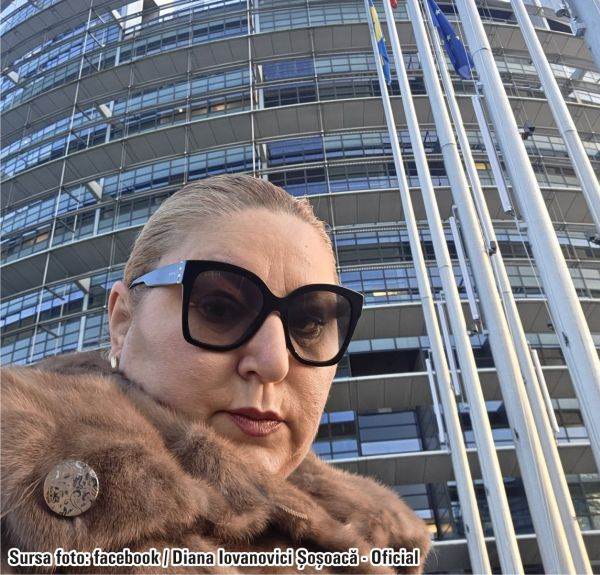
Diana Iovanovici-Şoşoacă was left without parliamentary immunity following the approval by the European Parliament of the request made by the Prosecutor General of Romania, in a case in which the MEP is being prosecuted for committing 11 crimes. The request to lift immunity was approved by a large majority, yesterday's decision coming after previously, in the Committee on Legal Affairs (JURI) of the European Parliament, the request had already been validated with 17 votes in favor, zero votes against and one abstention.
Following this vote, the MEP, founder of the SOS Romania party, a party characterized by pro-Russia, anti-EU and anti-US positions, may be further investigated in a complex criminal case in which she is charged with a total of 11 crimes, including four crimes of illegal deprivation of liberty, provided for by art. 205 paragraph 1 of the Criminal Code, four crimes of public promotion of the cult of persons convicted of genocide, crimes against humanity and war crimes, as well as the promotion of fascist, legionary, racist or xenophobic ideas, conceptions or doctrines, according to art. 5 of GEO no. 31/2002, to which is added the public promotion of anti-Semitic ideas, conceptions or doctrines, provided for by art. 3 of Law no. 157/2018, the denial, contestation, approval, justification or obvious minimization of the Holocaust or its effects, based on art. 6 paragraph 1 of the Emergency Ordinance no. 31/2002, as well as the offense of insult, provided for in art. 257 para. 1 and 4 of the Criminal Code.
The political context of the vote reveals the fact that even MEPs from the "Patriots for Europe" group, which includes the FIDESZ party led by Viktor Orban and the Rassemblement National formation - led by Marine Le Pen, supported the lifting of immunity, an aspect noted even by Diana Şoşoacă in a live intervention on Facebook, where she harshly criticized this vote, stating that "patriots, nationalists vote against each other" and accusing them of playing the Khazars' games.
The European Parliament's decision follows the official request sent by the Romanian Prosecutor General's Office, in a case involving serious allegations such as Holocaust denial and legionary propaganda, and confirms the European institution's practice of allowing national judicial authorities to carry out their work without hindrance, including in the case of MEPs, when there are solid suspicions of committing crimes.






















 Euro
Euro Dolar SUA
 Franc elveţian
 Liră sterlină
 Gram de aur