English

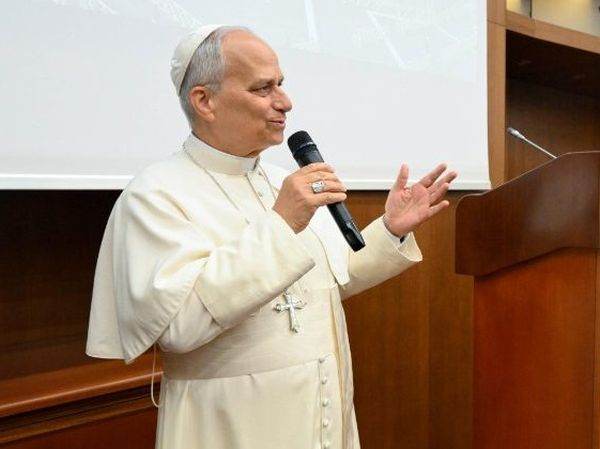
Pope Leo XIV has approved the creation of an interdepartmental commission dedicated to coordinating projects and policies on artificial intelligence within the Holy See. The initiative reflects the Vatican's growing interest in the impact of new technologies on people and society and could precede the publication of a papal encyclical on the topic. The new commission will bring together representatives from several dicasteries - the equivalent of ministries in the Vatican government - and will be tasked with facilitating the exchange of information on projects and policies related to artificial intelligence. According to the official document, the body will promote "dialogue, communion and participation” between the institutions of the Holy See and will also analyze how AI is used in administrative and pastoral work.
• Cardinal Michael Czerny to lead commission
The initiative was proposed by Cardinal Michael Czerny, prefect of the Dicastery for Promoting Integral Human Development, who will coordinate the work of the new structure. The commission's mandate includes assessing "the possible effects on human beings and on humanity as a whole,” as well as protecting the dignity of each person, especially from the perspective of integral human development.
• Vatican preparing possible encyclical on AI
From the beginning of his pontificate, Pope Leo XIV expressed concern about the ethical implications of artificial intelligence. According to Vatican sources, the Sovereign Pontiff is considering the possibility of publishing an encyclical dedicated to this topic, a doctrinal document of great importance for the Catholic Church. Such a text could become a global landmark in the debate on the relationship between technology, human dignity and the common good.
• The "Antiqua et Nova” Document
In January 2025, the Dicasteries for the Doctrine of the Faith and for Culture and Education published the document entitled "Antiqua et Nova,” which analyzes the relationship between artificial intelligence and human intelligence. The text emphasizes that AI can be a useful tool for human progress, but warns that it cannot replace the moral conscience, freedom, and responsibility of the person. The commission will be made up of representatives from the dicasteries for the Promotion of Integral Human Development, for the Doctrine of the Faith, for Culture and Education, and for Communication, as well as members of the Pontifical Academy for Life, the Pontifical Academy of Sciences, and the Pontifical Academy of Social Sciences. This composition indicates that the Vatican wants a multidisciplinary approach, combining theological, scientific, ethical, and social perspectives.
• Inspired by the commission created during the pandemic
The new structure is reminiscent of the commission for the COVID-19 pandemic, established by Pope Francis in March 2020 to coordinate the Church's response to the global health crisis. With this initiative, the Vatican is strengthening its role as a major actor in the international discussion on artificial intelligence. While governments and technology companies seek rules for the development and use of AI, the Catholic Church insists that technological progress must remain at the service of man and his dignity. Pope Leo XIV's message is clear: artificial intelligence can bring major benefits, but only if it is guided by solid ethical principles and respect for the human person.


















 Euro
Euro Dolar SUA
 Franc elveţian
 Liră sterlină
 Gram de aur