English
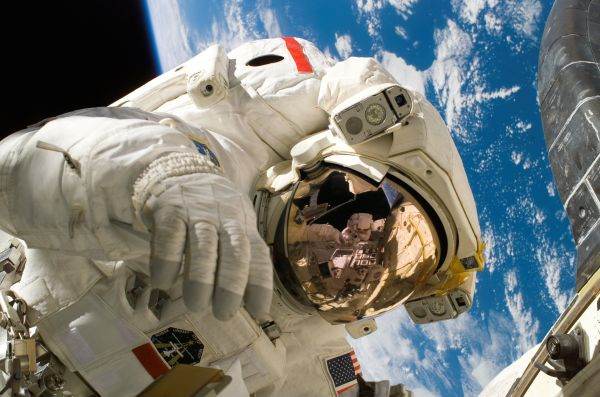
The European Space Agency is proposing the development of its own crew transportation system, an initiative aimed at reducing reliance on the United States. A political decision is expected in December in Rome, though funding has not yet been approved. Europe is considering an investment of approximately euro10 billion over the next decade to develop the capability to transport its own astronauts into space and bring them safely back to Earth. The initiative seeks to strengthen European technological autonomy in a field where the continent currently depends on external partners.
According to Euronews, Josef Aschbacher, Director General of the European Space Agency (ESA), estimates that developing a European system for crewed spaceflight would require roughly euro1 billion annually for a decade. Conversely, continuing to purchase transportation services for European astronauts could cost around euro5 billion over the same period. These figures are estimates presented as part of the debate on the future of the European space program, rather than an already approved budget.
• Political decision expected in December
Ministers responsible for space affairs from ESA member states are set to meet in Rome on December 15 to review options for the future of European space exploration. The meeting will address both the development of independent astronaut transportation capabilities and Europe's role in lunar exploration, as well as preparations for future missions to Mars. According to the ESA, member states already endorsed a common direction for strengthening European space exploration capabilities during the International Space Summit held in Paris in September. The Agency is currently preparing concrete proposals for the upcoming meeting in the Italian capital. The ESA Director General clarified that the December meeting is intended for setting political direction, rather than serving as a stage for the automatic allocation of necessary funds. Decisions regarding funding will be made through the Agency's standard mechanisms.
• Europe lacks its own system for crewed spaceflight
Although it possesses a well-developed aerospace industry and participates in international exploration programs, Europe currently lacks a complete, indigenous system capable of launching astronauts and ensuring their safe recovery. European astronauts reach the International Space Station using vehicles developed outside the continent-primarily in the United States. In this context, developing a crewed capsule, emergency escape systems, and the infrastructure required for such missions would allow Europe to exercise greater control over its access to orbit. According to Euronews, Josef Aschbacher believes that such a capability could bolster the European space industry, effectively shifting spending-currently directed toward services purchased from abroad-into investments made within Europe. The goal is not to abandon international cooperation, but rather to engage in it from a stronger technological position.
• Initial industrial projects are already underway
Europe is not starting from scratch. In addition to the Ariane 6 and Vega-C launch vehicles, ESA is supporting the development of commercial capsules designed to transport cargo to space stations. One example is the ALADDIN program, for which ESA has awarded The Exploration Company a contract totaling 760 million euros. Of this amount, 310 million euros are earmarked for a demonstration mission using the Nyx capsule, while another 450 million represent options for two subsequent flights. According to the specialized publication SatNews, the demonstration mission is scheduled to dock with the International Space Station no later than the second quarter of 2029. While the program focuses on cargo transport, the development of such technologies could help build an industrial foundation for future European space transportation systems.
• A stake that goes beyond transporting astronauts
The debate surrounding space autonomy comes at a time when Europe is seeking to strengthen its position within an expanding global industry. According to statements made by Josef Aschbacher to Euronews, the global space economy is valued at approximately 600 billion euros, with an annual growth outlook of around 10%.
In this context, investments in launch vehicles, capsules, recovery systems, and reusable technologies could generate contracts for European companies and foster the development of strategic technological capabilities. However, creating an indigenous system for human spaceflight entails more than just building a rocket and a capsule. It requires safety systems, ground infrastructure, and control systems, recovery procedures, and certifications specific to crewed spaceflights. The meeting in Rome will indicate whether member states are willing to translate the goal of space autonomy into a concrete program.























 Euro
 Dolar SUA
 Franc elveţian
 Liră sterlină
 Gram de aur