English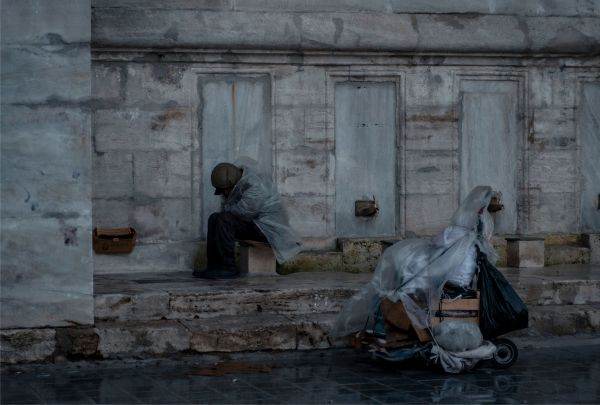
The number of homeless people in the European Union and the United Kingdom is rising, reaching approximately 1.4 million, according to the latest report on housing insecurity in Europe presented in Paris by the Housing Foundation and the European Federation of National Organisations Working with the Homeless (FEANTSA), EFE reports. Now in its 11th edition, the report also highlights the spread of the phenomenon among the elderly-a demographic long considered less at risk of homelessness.
• Ireland Among Countries with the Sharpest Increase
According to the data presented, the number of homeless people has risen in all countries for which comparable information is available. One of the most severe cases is Ireland, where the number of people without a fixed abode surged by 367% between 2014 and 2026. The previous estimate for the entire region, dating back to 2024, placed the homeless population at around 1.3 million. The new data suggest a widening gap between the scale of the phenomenon and the measures adopted at the European level. "Five years after the Lisbon Declaration, the challenge is no longer recognizing the problem, but turning that recognition into action," the report's authors stated during a press presentation. Although housing policy falls primarily within the remit of individual member states, the European Union still has "room for maneuver," argued Manuel Domergue, a director at the Housing Foundation.
• Insufficient housing solutions
The rise in homelessness is occurring against a backdrop of increasingly insufficient housing solutions. The situation is exacerbated by austerity policies, which have impacted social welfare systems and non-governmental organizations in some states.
In this regard, the report cites Finland, where budget cuts have affected support services and NGOs. Furthermore, stricter migration policies-such as those implemented in Belgium-can increase the number of at-risk individuals and worsen their living conditions. The study's authors point out that housing insecurity does not affect young people alone; older adults are also increasingly vulnerable due to rising housing costs and the aging of the European population.
• At least 170,000 homeless older adults
The report estimates that there are at least 170,000 homeless older adults across the European Union and the United Kingdom. "It is often assumed that older people are relatively secure regarding housing-long-term homeowners with assets accumulated over time and mortgages already paid off. On average, this is true," the report's authors noted. However, they warn that statistical averages mask significant differences between subgroups. Vulnerable older adults include the homeless, private-sector tenants facing inaccessible housing markets, and low-income homeowners living in dilapidated properties who lack the resources for repairs or relocation. Furthermore, policies regarding the aging population rarely take housing issues into account. Vulnerable individuals or those already experiencing homelessness face additional challenges due to a loss of autonomy and health issues, while temporary accommodation and support systems are ill-equipped to handle these situations.
• Significant differences between European countries
Of the 23 countries whose data were used in the report for estimates and comparative analyses, only 13 provide information on homelessness broken down by age group.
The situation varies significantly from one state to another. According to Margaux Charbonnier, a project officer at FEANTSA, the variations between countries are "quite striking." In Ireland, the rate of elderly homelessness is estimated at 1.6%, compared to 32.5% in Poland and 44% in Hungary. In Central and Eastern Europe, chronic housing shortages disproportionately affect the elderly, who have few options for overcoming these difficulties. In Western Europe, the profile of the homeless population tends to be younger and includes a higher proportion of migrants, with shorter periods spent without housing. Based on these data, the report's authors call on European institutions to adopt additional measures, including the development of a European plan for affordable housing and the allocation of resources to combat homelessness amounting to up to 5% of social expenditure.


























 Euro
Euro Dolar SUA
 Franc elveţian
 Liră sterlină
 Gram de aur