English


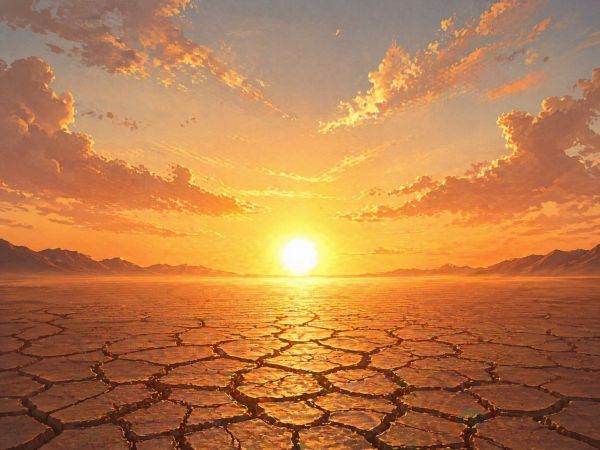
All of Europe experienced above-average temperatures in 2025, in a year marked by record-breaking forest fires, heat waves and sea temperatures, according to a joint report by the World Meteorological Organization and the Copernicus Climate Change Service, cited by Reuters. According to the annual report on Europe's climate, at least 95% of the continent was affected by temperatures above historical averages. At the same time: forest fires have destroyed more than 1 million hectares; the affected area exceeds the territory of Cyprus; this is the worst fire season ever recorded in Europe.
• Extensive drought and major pressures on agriculture
More than half of Europe was affected by drought in May 2025, and the year ranked among the three most severe droughts in terms of soil moisture since 1992. These conditions: affect agricultural productivity; increase farmers' vulnerability; amplify risks of food insecurity.
• Europe, the fastest-warming continent
Experts highlight that Europe remains the continent with the fastest rate of global warming. In 2025: sea surface temperatures reached record levels; 86% of European waters were affected by intense marine heatwaves. The report expresses particular concerns about sub-Arctic regions, where snow and ice cover play a crucial role in regulating global temperatures by reflecting solar radiation. This phenomenon, known as the "albedo effect”, is compromised by the accelerated melting of ice. Consequences include: accelerating warming; rising sea levels; loss of fragile ecosystems.
• Historic heatwaves in northern Europe
Norway, Sweden and Finland experienced their most intense heatwave ever recorded in July 2025, with temperatures exceeding 30 degrees Celsius even inside the Arctic Circle. Iceland also recorded its second-highest annual glacier loss since records began.
• Political and economic pressures on the green transition
The report comes at a time when some European governments are trying to relax climate policies for economic reasons. Although the European Union officially maintains its climate neutrality goals, in the past year some rules have been weakened on: car emissions; company climate obligations; industrial transition.
Samantha Burgess, strategic coordinator at the European Centre for Medium-Range Weather Forecasts, warned that climate change is no longer a problem of the future. "Climate change is not a future threat, but our current reality,” she stressed. The report confirms that Europe is on the front lines of global climate impacts, and that the intensification of extreme events is turning climate change into a deepening economic, social and ecological crisis.
























 Euro
Euro Dolar SUA
 Franc elveţian
 Liră sterlină
 Gram de aur