English

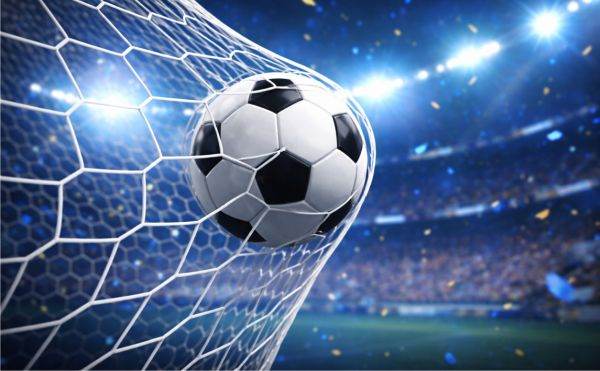
Russia's invasion of Ukraine in February 2022 triggered one of the fastest reactions in the history of international sports. In just a few days, world federations decided to almost completely exclude Russia from competitions. At the same time, in the context of the current conflict between the United States and Iran, world football is facing a paradoxical situation: the USA is organizing the 2026 World Cup, and one of the qualified teams, Iran, announced that it would not participate, citing precisely the conflict with the host state. A comparison between the two situations shows how differently sports sanctions are applied depending on the geopolitical context and power relations.
After the outbreak of the war in Ukraine, the reaction of sports institutions was rapid. Strictly speaking, FIFA and UEFA have decided to suspend all Russian teams - national and club - from international competitions "until further notice", according to inside.fifa.com. The decision had major consequences: Russia was excluded from the 2022 World Cup play-offs; Russian clubs were eliminated from European competitions; the Russian Federation was no longer included in the qualifications for Euro 2024 or the 2026 World Cup. Initially, FIFA had tried to adopt more moderate sanctions, such as playing matches on neutral grounds and without national symbols, but pressure from European federations led to a total suspension, according to the source cited above.
The Court of Arbitration for Sport later upheld these sanctions, considering that they were justified by the "extraordinary circumstances" created by the war and the need to maintain the order of international competitions, Reuters reported. Thus, Russia became one of the few countries in the modern era that has been virtually eliminated from world sports for political reasons.
• United States: World Cup organizer, in the midst of conflict
The situation is radically different in the case of the United States. Although Washington is involved in a major military conflict with Iran, the US remains the main host of the 2026 World Cup, organized together with Canada and Mexico. The crisis, however, became visible after the Iranian sports minister announced that the national team would not participate in the tournament, citing American-Israeli attacks on Iran and the security situation. Iran had already qualified and was to play the group stage matches in cities in the United States, such as Los Angeles and Seattle. FIFA has not announced any sanctions against the United States and insisted that all teams are welcome at the tournament, and Iran's withdrawal could lead to penalties for the Iranian federation, theguardian.com reports.
Therefore, the conflict does not result in sanctions against the organizing state, but risks leading to sanctions against the team that refuses to participate.
• Double standards in global sport
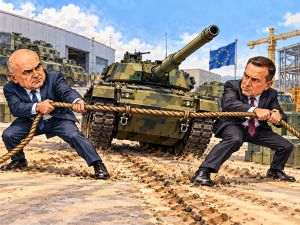
Comparing the two situations reveals an uncomfortable reality: sports sanctions are not applied uniformly. In the case of Russia: the sanctions were swift and almost total; athletes and clubs were excluded regardless of direct responsibility; the decisions were motivated by political pressure and the refusal of other federations to play against Russia. In the case of the United States: there is no discussion of suspending the federation or withdrawing the right to organize; responsibility for the sports crisis is transferred to Iran, which risks sanctions if it does not participate. This difference has already been noted in the legal debate in the field of sports, where experts discuss whether the principle of equality is respected in sanctions related to armed conflicts, according to link.springer.com. Naturally, the question arises, does FIFA have specialists who can decide whether a war is justified and another is not?
• Neutrality and geopolitics
FIFA and other organizations usually claim that sport must remain "neutral”. In practice, however, major competitions often reflect the power relations in international politics. Russia's exclusion was presented as a gesture of solidarity with Ukraine and protecting the integrity of competitions. In contrast, in the current conflict in the Middle East, the global sports system is trying to avoid direct sanctions against the states involved. The result is a paradoxical situation: a country at war organizes the world's largest football competition, while a qualified team is considering not participating precisely because of the conflict with the host. In this context, world sport continues to oscillate between two principles that are difficult to reconcile: declared neutrality and geopolitical reality.
















 Euro
Euro Dolar SUA
 Franc elveţian
 Liră sterlină
 Gram de aur