English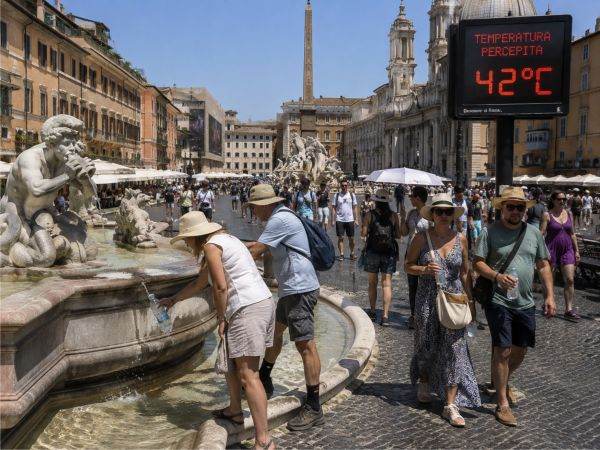
Increasingly intense heatwaves are forcing major Italian cities to rethink how they welcome millions of tourists each summer.From investing in urban infrastructure to reduce the effects of extreme temperatures to expanding night-time sightseeing programs, authorities are trying to adapt one of the most important sectors of the Italian economy to a new climate reality. However, experts warn that the changes could affect the traditional tourism model in southern Europe and alter travelers' preferences in the coming years.
• Heatwaves become a permanent challenge for tourism
Italy is experiencing a new episode of extreme temperatures, with authorities recently placing all 27 of the country's major cities under a red heatwave alert. According to Reuters, it is the first time in 2026 that the entire Italian urban system is simultaneously under the highest alert level, with the population and tourists being advised to avoid sun exposure between 11:00 and 18:00 and to limit their outdoor activities. For a country where tourism is one of the main economic pillars, temperatures that frequently exceed 40 degrees Celsius during the summer are no longer just a public health problem, but also an economic challenge. The traditional model of holidays based on daytime walks through historic centers, visiting monuments and spending time in public squares is increasingly under pressure.
• Rome invests in infrastructure adapted to extreme temperatures
The Italian capital is trying to respond to the phenomenon with a broad urban adaptation strategy. According to the municipal authorities, the city is developing an extensive network of spaces intended for the population to take refuge during the heat wave, which includes parks, libraries, museums, air-conditioned centers and squares designed to reduce the urban "heat island" effect. The strategy is part of Rome's first integrated plan aimed at combating the effects of extreme temperatures on daily life. In parallel, the local administration launched this summer the "Il Grande Freddo" program, through which air-conditioned cinemas offer free access to people seeking refuge during the hottest hours of the day. The initiative completes the network of libraries and museums used as cooling spaces for the population and visitors, according to Reuters.
• Tourism moves after sunset
Climate change is also changing the operating hours of tourist attractions. More and more historical monuments are organizing guided tours in the evening or at night, when temperatures become bearable. The Archaeological Park of the Colosseum continues the "Una Notte al Colosseo” program in 2026, and the Roman Forum can be visited during special tours conducted exclusively in the evening, offering tourists the opportunity to avoid the excessive heat during the day. At the same time, the City Hall of Rome launched the "Roma Notte” program, which involves expanding public lighting, increasing safety and supplementing public transport during the night, thus encouraging the development of tourist and recreational activities after sunset. The adaptation of tourist programs is not accidental. Many operators in the field already recommend visiting monuments in the early hours of the morning or after 7:00 p.m., when temperatures drop significantly.
• Historic cities change their operating rhythm
Tourism specialists appreciate that the phenomenon no longer represents a one-time reaction to an episode of extreme weather, but the beginning of a structural transformation. In the major cities of southern Europe, a redistribution of tourist flows towards the evening and night periods is observed, while economic activity in the afternoon is considerably reduced during periods of very high temperatures. This change influences the schedule of museums, restaurants, transport operators and tour guides, who are forced to adapt their services to the new climatic conditions.
• Is there a risk of a decrease in tourist attractiveness?
Although Italy continues to attract millions of visitors annually, more and more analysts are discussing the possibility that repeated heat waves may change tourist preferences in the long term. Some studies on sustainable tourism show that adapting urban infrastructure and investing in climate protection measures can help maintain the competitiveness of tourist destinations, but their success depends on the speed with which authorities and economic operators respond to the new climatic conditions. In parallel, travel agencies are observing a trend of moving travel to the spring and autumn months, periods considered more comfortable from a climatic point of view, which may change
Trimiteţi feedback as the traditional seasonality of the industry.
• Adaptation becomes the new strategy of Mediterranean tourism
Climate change experts estimate that heatwaves will become more frequent and intense in the Mediterranean basin, forcing tourist cities to invest in green spaces, shading systems, surfaces that reduce heat accumulation and infrastructure designed to protect the population and visitors. For Italy, the challenge is no longer just to manage a few days of extreme temperatures, but to adapt one of the most important economic sectors to a changing climate reality. Investments in urban infrastructure, the expansion of night tourism activities and the reorganization of visitor services could become, in the coming years, defining elements of the new tourism model in southern Europe.



















 Euro
Euro Dolar SUA
 Franc elveţian
 Liră sterlină
 Gram de aur