English

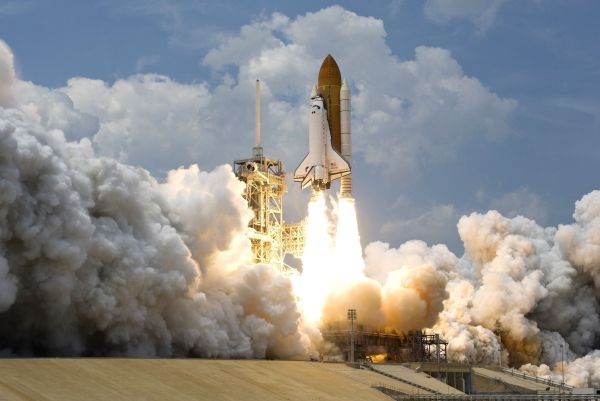
Japan has carried out the first controlled takeoff and landing of a reusable rocket prototype, marking an important step in the development of a technology considered essential for reducing the cost of space missions, according to AFP. The test was carried out by the Japan Aerospace Exploration Agency (JAXA) at the Noshiro test base in the north of the country. The prototype climbed to an altitude of about 10 meters and remained in flight for about 40 seconds, before landing in normal conditions.
"We have invested a lot of time and effort, and now that the prototype has taken off and landed without problems, I feel a great sense of relief," said Takashi Ito, the program manager, quoted by AFP. According to him, JAXA will analyze in detail the data collected during the test to evaluate the prototype's performance, but the initial results indicate that the experiment provided valuable information for the next stages of the project.
• Cost reduction, the main objective
Reusable rockets are considered one of the most important innovations in the space industry, as they allow the repeated use of the first stage of the launchers, significantly reducing the costs of missions. Currently, most rockets are designed for a single use, their components being destroyed upon re-entry into the atmosphere, crashing into the ocean or remaining in orbit as space debris.
• Global competition for reusable launchers
The technology is already widely used by the American company SpaceX, which has been operating the reusable Falcon 9 rocket since 2017, radically changing the economics of space launches. At the same time, international competition is intensifying. China has announced the first successful landing of a domestically developed reusable rocket, in a move aimed at closing the gap with the United States. In Japan, interest in the technology is growing. In June 2025, a subsidiary of Honda became the first Japanese company to successfully demonstrate the takeoff and landing of a reusable rocket. The test now carried out by JAXA is part of the Tokyo authorities' strategy to consolidate the national space industry and increase its competitiveness on the international market. In this context, Japan resumed launches with the H3 rocket in June, after the failure of a previous mission intended to place a satellite in orbit, according to AFP.
























 Euro
Euro Dolar SUA
 Franc elveţian
 Liră sterlină
 Gram de aur