English

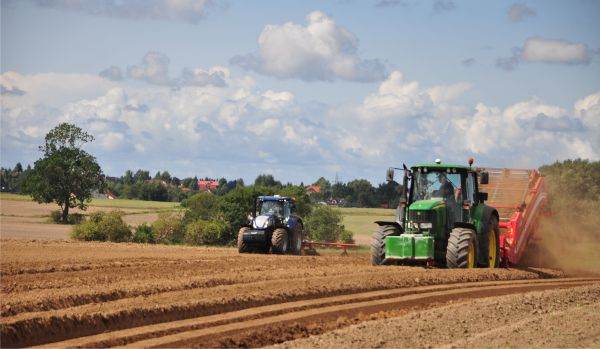
Our country achieves the absurd economic performance of producing millions of tons of cereals without being able to ensure the prosperity of those who grow them, of exporting wheat and corn while massively importing meat, milk, vegetables, fruits and processed food products and of administering annual subsidies of billions of euros without building an agricultural system capable of withstanding a drought cycle, a price collapse or an increase in interest rates.
The "granary of Europe” no longer grows only wheat, corn and sunflowers, but also debts, and the financial harvest of this model is starting to be reaped in the courts: the number of agricultural companies that entered insolvency increased from 127 in the first half of 2025 to 226 in the first six months of 2026, a jump of almost 80%, according to a CITR analysis based on data from the National Office of the Trade Register. By mid-April 2026, agriculture had already equaled the number of insolvencies registered in the entire first half of the previous year.
And it is not only small, undercapitalized and weather-dependent farms that are collapsing. In the category of companies with fixed assets of over 4 million euros, the number of insolvencies exploded from a single company in the first half of 2025 to 19 in the same period in 2026, and these concentrate assets of over 235 million euros, representing more than 57% of the total assets of companies of this size that have entered insolvency at the economy level.
The CITR analysis carried out on 3,700 agricultural companies with assets of at least one million euros shows that 40% are already in the area of high financial risk, 631 are in a state of imminent insolvency, and another 855 are in urgent need of operational and financial restructuring. In other words, we are not witnessing a few entrepreneurial accidents, but the cracking of the economic foundation of Romanian agriculture.
The CITR data dismantles the convenient explanation according to which the Romanian farmer only falls when it does not rain. Romania recorded its best year for wheat since 1997 in 2025, but the share of agriculture in total collective procedures rose from 9.6% in the first quarter of 2025 to 20.7% in the first quarter of 2026. A good harvest could not erase the losses accumulated in three years, expensive loans, rolled-over debts, moratoriums that came due and investments made during a period in which the prices of machinery, diesel, energy and fertilizers were increasing rapidly. The number of insolvency procedures in agriculture increased in the first quarter of 2026 by 181.8%, almost six times faster than the general pace of the economy, and the 31 agricultural companies that entered collective procedures had a combined business of approximately 1.68 billion lei and 953 employees.
• External factors who cause the farmers bankrupt
An analysis by the company Infinexa, quoted by AGERPRES, captures the essence of the crisis: the compression of margins in the grain trade, the short-term financing of long production cycles, insufficient working capital and the decline in sales prices are simultaneously putting pressure on companies that, just a few years ago, seemed healthy and booming.
In agriculture, harvest and profit are not synonymous. The farmer buys the seed, fertilizers, pesticides and diesel at the prices at the time he starts the crop, finances his work for months and only finds out at harvest how much his goods are worth. Between these two moments, the exchange rate, interest, energy prices, international quotations and transport costs can change, and additional volumes of grain from Ukraine, Russia or other major producing regions can appear on the market. If he needs money immediately to pay loans, rent and suppliers, the farmer is forced to sell in season, when supply is abundant and the price may be the weakest. Those who have silos, liquidity and access to market information can afford to wait. Those who do not have them turn a good harvest into a forced sale. This explains why barns can be full and farmers' accounts empty.
The money chain also shows who holds the real power. The supplier of inputs includes his risk in the price and may condition the delivery of guarantees or the early contracting of the harvest. The bank collects interest and requires mortgages on land, machinery or future productions. The landowner receives his rent, sometimes set in money, sometimes in quantities of grain, regardless of the final margin of the farm. The trader buys large volumes, controls logistics, storage, access to the Port of Constanta and the connection to international markets. The farmer remains with the biological, climatic, commercial and financial risk, although he is the one who carries out the activity without which the entire chain would not exist. This does not mean that banks, traders, suppliers or owners are guaranteed to win in all circumstances, but that they usually have better tools for transferring and diversifying risk. The farmer remains caught between prices that he does not control: he buys retail and sells wholesale, pays for inputs at European prices and sells his harvest as an undifferentiated commodity on a world market.
• Food deficit of 4 billion euros at the end of 2025
Here the insolvency crisis meets the second great failure of Romanian agriculture: the country exports soil fertility in the form of cheap raw materials and imports back the added value in the form of expensive food. According to the National Institute of Statistics, in 2024 farmers in our country exported agricultural products outside the European Union worth approximately 2.9 billion euros, mainly cereals to Egypt, Algeria, Morocco, Saudi Arabia and other markets in the Middle East and North Africa. Between July 1 and November 17, 2024, our country was the largest exporter of soft wheat in the European Union, with 2.524 million tons, and the largest European exporter of barley, with 1.106 million tons. Agricultural trade data confirm Romania's capacity to produce and ship huge volumes. The problem is that tonnage does not take place in development, and a ship loaded with wheat does not automatically represent economic success. It can also represent proof that our country does not have enough modern mills, pasta factories, industrial bakeries, feed mills, livestock farms, slaughterhouses and commercial networks capable of preserving the added value in the country.
Raw cereals have only one margin, and each processing stage adds another. Wheat becomes flour, bread, biscuits, pasta or frozen products; corn becomes feed, meat, starch, glucose or bioethanol; sunflower becomes refined oil and food products; milk becomes cheese, butter, yoghurt or ingredients for the food industry. Romania often sells the first link and buys the last links, that is, exactly those in which industrial investment, technology, higher wages, packaging, brand and profit accumulate. Trade statistics describe the result without any mercy: in 2025, we imported food worth over 11 billion euros, more than 30 million euros per day, and we recorded a food deficit of almost 4 billion euros. Structural deficits are concentrated in meat, milk and dairy products, vegetables and fruit, although the country has large agricultural areas, a zootechnical tradition and a considerable domestic market. Over the last 30 years, the cumulative deficit of agri-food trade has exceeded 22 billion euros. INS data show the size of an invoice paid not because Romania does not have land, but because it has failed to link land to factory and factory to shelf.
• European allocation of 15 billion euros for farm viability and agricultural competitiveness
The paradox is not caused by a lack of public money. The Common Agricultural Policy Strategic Plan for 2023-2027 provides farmers in our country with a European contribution of approximately euro15 billion, intended to support farmers' incomes, investments, rural development and increasing the resilience of the sector. The European Commission explicitly states that the plan aims at the economic viability of farms, market orientation and the competitiveness of agriculture. But the per-hectare subsidy can keep the farm alive without changing its position in the economy. It supports income, but it does not build a silo, a factory, a functional cooperative or an irrigation system on its own. If the money is distributed predominantly for annual survival, and strategic investments remain fragmented, the subsidy risks becoming an infusion administered to a model that continues to lose value. Worse, part of the payment can be capitalized in the price of the lease and land, shifting the benefit from the farmer to the owner. The more predictable the support, the more expensive the land becomes, and access for young people and farmers without family patrimony becomes more difficult.
Romania has approximately 3.1 million hectares developed for irrigation, but official documents indicated a much smaller viable area, approximately 1.8 million hectares, and the area actually irrigated remained well below the theoretical potential. The difference between "developed”, "contracted”, "prepared for irrigation” and "effectively irrigated” allowed for years of optimistic reporting, while the farmer continued to look to the sky. The degraded main infrastructure, water losses, the cost of energy, incomplete secondary networks and the difficulty of setting up water user organizations transform drought from a natural phenomenon into an institutionally amplified economic risk. In the absence of water, affordable agricultural insurance and effective risk management mechanisms, the farmer is pushed towards loans and aid granted after the disaster. The state pays compensation for the effects of a vulnerability that it has failed to reduce through investments. The same logic of improvisation is seen in storage and processing. Without its own capacities, the farmer cannot choose the moment of sale; without strong cooperatives, he cannot negotiate on an equal footing with the trader, processor or large commercial networks; without balanced contracts and risk hedging instruments, he cannot protect his margin; without sufficient capital, any major investment can turn him from a performing producer into a vulnerable debtor. The association continues to be invoked at every agricultural conference, but is hampered by distrust, historical experiences, administration, poor advice and policies that finance individual projects without always creating integrated economic chains. A genuine cooperative is not just a company set up to access a tax facility, but a structure that purchases inputs, stores, processes, negotiates and sells for its members. In its absence, thousands of small and medium-sized producers remain captive suppliers for a few large buyers.
The wave of insolvencies in 2026 shows that Romania can no longer limit itself to an agricultural policy based on the payment of subsidies, deferring installments and granting compensation after each calamity. Moratoriums can push the maturity into the future, but do not create income; state-guaranteed loans can ensure liquidity, but do not fix an unprofitable business model. The rate of non-performing loans among non-financial companies rose to 5.6%, exceeding 7% in the micro and small enterprise segment, where many farmers come from, and the state-guaranteed loans used intensively in 2020-2022 reached a non-performance rate of 11.3%. The state bought time, but the time was not used sufficiently for restructuring, consolidation and investments that produce added value.
Romanian agriculture is not collapsing because it does not produce, but because it produces in a system that leaves the farmer too much risk and too little economic power. The harvest may be good, but the price is low; the subsidy may come in, but it may leak out in rent, interest and inputs; exports may increase, but the added value may be achieved in another country; the supermarket may be full, but with imported food. If insolvencies are treated once again as accidents caused by the weather, and food shortages as a simple result of free trade, the state will continue to manage crises instead of developing agriculture.
















 Euro
Euro Dolar SUA
 Franc elveţian
 Liră sterlină
 Gram de aur