English


Current geopolitical tensions, rising inflation, weakening economic growth prospects, high asset valuations and the rise of cyber threats are forming an increasingly dangerous mix for the European insurance sector and occupational pensions system, according to two scoreboards published at the end of July by the European Insurance and Occupational Pensions Authority (EIOPA). Although the cited source describes a still resilient industry, the European authority states that the industry is increasingly exposed to shocks that can come simultaneously from the economy, financial markets, international conflicts and the digital world.
EIOPA notes that the macroeconomic outlook is deteriorating, market risks threaten to return, and digitalization and cyberattacks have become the only category that European supervisors have raised to a high level. Economic growth estimates in major regions of the world have fallen from 1.3% to just 1% for the next four quarters, while the global inflation forecast has risen from 2.3% to 2.9%. Monetary policy rates taken into account by EIOPA have increased from 2% in the first quarter to 3% in the second quarter, mainly in response to the resurgence of inflationary pressures. The unemployment rate has remained around 5.7%, and fiscal deficits in major economies have reached, according to the latest available data, an average of 3.5% of gross domestic product. In these circumstances, the escalation of geopolitical tensions in the first half of July has hit confidence and economic activity, while higher energy and transport costs threaten to fuel a new wave of inflation. The central risk is not necessarily the emergence of a single crisis, but the overlap of several, say EIOPA experts. Weak growth reduces the room for manoeuvre for companies and households, inflation erodes real incomes, higher interest rates make financing more expensive, and geopolitical tensions can simultaneously produce energy, trade and financial shocks. For insurers, each link in this chain can mean more volatile assets, higher costs, additional claims and customers with a reduced ability to buy or hold insurance products.
The cited source shows that credit risks remain, for now, at a medium level. European insurers' portfolios remain largely built on quality assets: around 26.2% of assets are placed in government bonds, 1.3% in secured financial bonds, and 9.2% in unsecured financial bonds. The median exposure to bonds issued by non-financial companies fell from 10.4% to 8.6%. The average investment quality is around AA on the Standard & Poor's equivalence scale, and low-rated assets represent only about 1.3% of the median portfolio.
• High private credit costs attract defaults
However, EIOPA points out that the comfortable data on the surface hides a vulnerability that is harder to measure: private credit. Higher borrowing costs can push heavily indebted companies towards default, and spreads observable on public markets may not reflect the risks accumulated in private financing, which is less transparent and less frequently assessed. In other words, credit risk can remain invisible until it becomes a loss.
The European authority shows that financial markets offered a brief respite until the end of June, when stock and bond volatility decreased. According to the data presented in the two dashboards, insurers had a median exposure of 49.7% of assets to bonds and 6% to equities, while real estate investments accounted for 2.9%. But the calm in June was called into question by geopolitical developments in July, which brought back volatility, especially in commodity markets. EIOPA warns of a possible large correction, amid high valuations, persistent uncertainty and a possible reassessment of risk premia. The European authority's experts also argue that liquidity does not cause immediate concerns for the time being. Insurers' median cash holdings are around 0.8% of assets, and liquid assets represent around 45%. The cited source states that the volume of bond issuances in the second quarter was almost three times higher than in the previous quarter, fueled by the high financing needs of states, refinancing and the still favorable access to capital markets. It is a demonstration of the functioning of the market, but also a signal of the increased dependence on debt.
Neither do the solvency indicators suggest an imminent crisis. The median solvency ratio of insurance groups fell to 210%, according to EIOPA data, while the indicator remained at around 247% for life insurers and 218% for non-life insurers. Tier 1 own funds represent around 86% of total own funds, indicating a still solid capital structure. Profitability, however, sends a more mixed message: the median combined ratio of non-life insurers deteriorated slightly, to 95.4%, approaching the threshold above which underwriting activity starts to produce losses. Premium volumes continue to grow, with a median annual advance of 6.3% in life insurance and 4.2% in the non-life segment. However, the distribution of results shows that not all companies benefit from this expansion. In life insurance, the lower end of the market has been recording premium declines since the third quarter of 2023, and in non-life insurance, the weak side of the distribution has deteriorated. The median loss ratio has fallen below 60%, but the values in the upper range have increased, which shows that some companies are already facing a deterioration in technical results. Above this, uncertainty looms over compensation related to war risks and trade disruptions, areas where the delimitation between what is covered and what is excluded can become a source of costly disputes.
• Insurers, caught in a double exposure due to increases in cyber risks
Interdependencies in the financial system also remain at a medium level. EIOPA data mentions that the median exposure of insurers to banks fell slightly to 13.5% of assets, and exposure to other financial activities stood at 22.4%. Investments in other insurers fell to 1.4%, exposure to domestic sovereign debt remained at around 7.2%, and derivatives accounted for around 0.2%. However, the median proportion of premiums ceded to reinsurers increased to 5.8%, indicating that risk transfer to other parts of the industry is becoming more important.
Environmental, social and governance risks are also assessed at a medium and stable level. Insurers' median investments in green bonds reached 8.5% of total outstanding green bonds, while exposure to climate-relevant assets remained at around 3.3% of assets. However, EIOPA warns that data limitations may lead to underestimation of real exposures to sectors vulnerable to the climate transition.
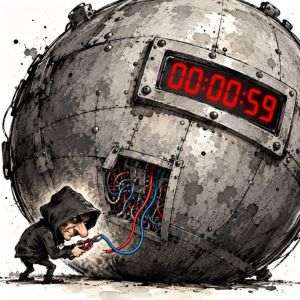
The most severe signal comes from the digital area. Cyber risks have risen to a high level, amid the intensification of attacks, geopolitical tensions and the development of border artificial intelligence models. Insurers are caught in a double exposure: they can be direct victims of attacks on their own systems, data and operations, but they can also bear the damage caused to the clients to whom they have sold cyber risk policies. The more sophisticated and systemic the attacks become, the more difficult it is to estimate the frequency, severity and correlation of losses.
Artificial intelligence thus no longer appears only as a tool for efficiency, but also as a threat multiplier. Advanced models can facilitate the automation of attacks, the identification of vulnerabilities, the production of fraud campaigns and the simultaneous compromise of a large number of entities. Therefore, EIOPA requires financial institutions to adapt their cybersecurity capabilities and comply with the requirements of the European Regulation on Digital Operational Resilience, DORA. The message is clear: capital and liquidity are no longer enough to protect an insurer if its digital infrastructure can be paralyzed.
• Investment income from occupational pension portfolios halved in 2025 compared to 2024
For occupational pension institutions, the picture is similar, but not identical. According to the EIOPA IORP dashboard, market and asset performance risks remain high. The analysis is based on reporting from 625 European institutions and covers both defined contribution and defined benefit schemes. Depending on the design of the scheme, losses are not only borne by the pension institution, but can also be passed on to participants, beneficiaries or employers who fund the plan.
For these institutions, the economic growth forecast for the major regions was reduced from 1.6% to 1.4%, and the inflation estimate was raised from 2.5% to 2.9%. Wage growth in the euro area slowed to 3.2%, the lowest level since 2021. This combination can simultaneously affect investment returns, the real value of pensions and the ability of employers or participants to support contributions.
The credit quality of occupational funds' investments remains good. The median indicator corresponds to a rating between AA and A, and the median exposure to assets below investment grade is almost zero. However, the weighted average at the sector level reaches 5.8%, which shows that large institutions hold larger proportions of risky assets than the median suggests.
The median exposure to bonds, including collective investment undertakings, increased from 53.3% to 54.8% of assets, while the exposure to shares fell from 26.4% to 25.1%. Real estate investments represent less than 1% for the median institution, but reach 5.8% of assets at the weighted average level. The differences become even more visible in the case of currency risk: the median exposure to assets denominated in foreign currencies is only 1%, while the weighted average reaches 25.4%, which demonstrates that large funds are much more connected to international currency movements.
Portfolio returns remained positive, but halved in annual terms. Investment income, including unrealized gains and losses, represented 3.2% of assets in 2025, compared to 6.7% in 2024. For some institutions, the result was already negative. In addition, EIOPA warns that high valuations and a possible general market correction may damage the outlook for the next 12 months.
Liquidity indicators are still solid. Liquid assets represent a median of 51.4%, and contributions equaled 112.8% of payments in 2025, compared to 108.1% in the previous year. For large institutions, the ratio was around 121%, indicating a more comfortable cash flow position. However, net derivatives remained negative, at a median of 1% of assets and a weighted average of 4.8%, against the backdrop of high interest rates.
The financial position of defined benefit schemes remains robust, with a median funding ratio of 125.3% and a median excess of assets over liabilities of 23.5%. Comparisons with previous quarters should be made with caution, as around a third of Dutch institutions switched from defined benefit to defined contribution schemes, substantially changing the composition of the sample.
Cyber risks for pension institutions remain formally at medium level, but their outlook is deteriorating. Supervisors see an increase in the importance of threats associated with geopolitical tensions and advanced artificial intelligence models. Pension funds manage huge assets, sensitive personal data and obligations spanning decades, which makes them attractive targets and potentially vulnerable to attacks with systemic effect.
























 Euro
Euro Dolar SUA
 Franc elveţian
 Liră sterlină
 Gram de aur