 English


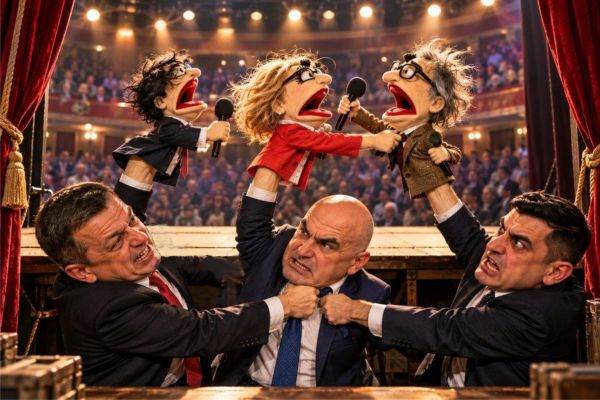
The nomination of diplomat Luca Niculescu for the role of Prime Minister, announced in early October, marks the fourth attempt to form a government in five months. The prolonged deadlock weighs on financing costs and Romania's economic credibility. Under these circumstances, the stakes of negotiating a majority go beyond the mere division of ministerial portfolios. Every week lost in the power struggle may come at a cost borne by people who are not part of the negotiations. Consequently, the fear of snap elections can bring political adversaries to the same table-not to become partners capable of effective governance, but to act as negotiators wary of losing their seats, shifting power dynamics within their own parties, or losing control over an election campaign. Should snap elections occur, some political parties could see their support drop even further than in the 2024 elections, while those currently riding a wave of rising poll numbers might find themselves-after the votes are counted-back at the same percentage levels seen in 2024 or even 2020. This uncertainty regarding the outcome is precisely what makes the prospect of heading to the polls so uncomfortable for the leaders of parliamentary parties.
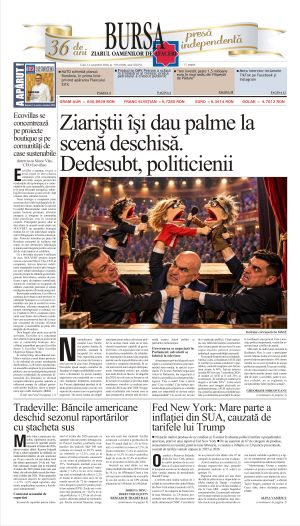
• Governance is negotiated in Parliament. "Saviors" are manufactured on television
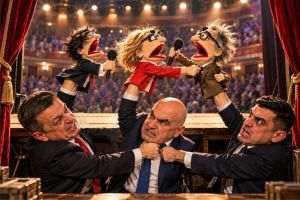
The threat of snap elections has been systematically built up through the media, particularly on TV news channels. Parties negotiate votes in Parliament, but they also negotiate how the public will interpret the deal. Who gave in? Who saved the country? Who committed a betrayal? Who must be portrayed as a danger so that an alliance-deemed impossible until yesterday-becomes indispensable today? An agreement requires a public explanation. When that explanation is manufactured before the actual results are in, television can become the venue where political survival is packaged as national responsibility.
Opinion polls also factor into this dispute. Marius Lulea, an AUR co-founder currently at odds with the party's leadership, challenges the image of a party polling at 40%. In an interview with PS News on October 7, 2026, he claims AUR is actually below 25% and warns: "We are lying to Romanians, and we'll end up with 20% in the election." Lulea accuses others of using an inflated electoral profile for AUR-partly to justify the other parties drawing closer together and continuing to govern under the pretext of countering a threat. This is a significant political accusation arising from an internal party conflict.
Furthermore, during a recent appearance on the Realitatea Plus channel, Marius Lulea cited studies indicating that approximately 50% of Romanians do not trust any politician or political party. Under these circumstances, how representative is the competition between parties when such a large segment of society-according to this -does not identify with any of the current political leaders?
A poll can measure the state of society. However, the way it is commissioned, selected, and presented can influence that very state. A figure repeated night after night on television screens can suggest that a certain outcome is inevitable, that voting is futile, or that a compromise must be accepted out of fear of the alternative. That is why the public needs to know who is paying for the research, when it was conducted, the sample size, the methodology used, and the exact wording of the question. Any political ties held by an institute or its leadership must be made transparent. The label "poll" cannot substitute for verification, just as the existence of a political sponsor does not automatically prove the results have been falsified.
• Who pays for the battle for Romanians' attention?
The issue becomes even more pressing when these figures intersect with a media sector dependent on political contracts. Data analyzed regarding party subsidies for the entire year of 2024 indicate that approximately 233.1 million lei were spent on media and propaganda. The category extends beyond television-and should not be conflated solely with the revenue of news channels-yet it illustrates the scale of resources deployed for political communication: approximately 98 million lei paid by the PSD, 69 million lei by the PNL, 39 million lei by the USR, and 21 million lei by AUR, according to data from the Permanent Electoral Authority and monthly analyses by Expert Forum regarding political party media spending.
These funds were utilized across all types of elections held in 2024: European Parliament, local, parliamentary, and presidential. Documents analyzed by Snoop regarding the autumn 2024 presidential campaign reveal payments made by the PNL to companies linked to Realitatea Plus, România TV, Antena 3, Digi24, and B1 TV. The same set of documents also lists Elena Lasconi's campaign expenditures involving Antena 3 and Digi24. These examples illustrate specific commercial relationships within the campaign rather than the television stations' annual totals. They also demonstrate why the funding landscape is more complex than the simplistic "one party, one channel" formula.
In 2025, parties reported spending over 117.6 million lei in state subsidies on media and propaganda, according to Expert Forum. Separately, documents from the presidential runoff campaign show that Nicuşor Dan declared expenditures of approximately 4.64 million lei to România TV, 2.19 million to Antena 3, 1.26 million to B1 TV, and 947,000 lei to the company operating Digi24. During the same campaign, George Simion declared approximately 1.34 million lei paid to România TV and 15.05 million lei to DBV Media House, an entity associated with Realitatea Plus.
A Snoop investigation into the 2025 AUR campaign detailed approximately 23.4 million lei directed to Realitatea Plus throughout the presidential election period. This figure encompasses spending across both rounds of the election-or, more precisely, the associated media campaigns. A portion of these expenses was not reimbursed by the Permanent Electoral Authority (AEP), which deemed the rates excessive-a decision that sparked dissatisfaction within AUR and was challenged by George Simion. In this context, Anca Alexandrescu stated: "A private television station has the right to set whatever rates it chooses!" Contract notifications for the current year, analyzed by Expert Forum up to August 31, 2026, reveal-for the • Realitatea• website-a contract with the PSD worth euro50,000 per month (scheduled for February-December 2026) and one with AUR worth euro60,000 per month (for January-December 2026). For • Antena3.ro• , a PSD contract worth euro90,750 per month (including VAT) appears for the period of March-August 2026.
A political advertising contract does not prove that every journalist at the media outlet receives orders from the paying party. However, the contract establishes a relationship that the public ought to be able to see. The risk arises when marked advertising, promotional content, guest selection, and editorial judgment become difficult to distinguish from one another. A citizen might watch a program convinced they are witnessing an independent assessment, while the financial ties relevant to that assessment remain off-screen.
• Anca Alexandrescu: from PSD communications to Georgescu and the rift with AUR
Shifts in attitude among certain hosts make this issue even more apparent. Anca Alexandrescu did not enter the public sphere without a political past. Her CV records work in communications for the PDSR and PSD, as well as collaborations with Adrian Năstase, followed by Victor Ponta, Liviu Dragnea, and Viorica Dăncilă. Her roles in party communications and within the government apparatus during the Dragnea-Dăncilă era are part of her documented biography. This past does not negate the right to practice journalism, yet it is essential for understanding the intersection of politics, communication, and the role of a political talk-show host at Realitatea Plus. Prior to the first round of the November 2024 presidential elections, Anca Alexandrescu raised critical questions regarding the online promotion-particularly on TikTok-of Călin Georgescu: "Where is the money coming from, and who is coordinating this campaign?" Following the results of November 24, when Călin Georgescu took first place in the opening round, Alexandrescu shifted to an ardent pro-Georgescu campaign. This moment is pivotal, as her change in attitude became evident after the candidate-whom she had previously dismissed as a fringe figure-demonstrated in the first round that he could mobilize a massive electorate. We are witnessing a clear shift here, evidenced by the contrast between the questions she posed to Georgescu before the first round and the editorial protection she offered him after the vote. However, tension subsequently arose between the two; this escalated in November 2025 when Călin Georgescu challenged the legitimacy of the mayoral election for the capital, while Alexandrescu continued to back the AUR-supported candidacy for the December 7 vote. Her response was telling: "It's not about the candidates! It's about YOU!" She later stated that she had known in advance that Georgescu would make that declaration. Participation in the mayoral election continued, despite the message challenging the vote that came from the political figure she had previously supported. However, tensions between the two boiled over in the spring of 2026, when Anca Alexandrescu harshly criticized Călin Georgescu-who had appeared on the first of the two broadcasts-during back-to-back shows. Subsequently, she also clashed with AUR during the negotiations for the investiture of the Veştea Cabinet. Thus, on the June 28, 2026 broadcast, Alexandrescu remarked regarding AUR and to his management: "I can no longer support this." This sequence of events is relevant to any political negotiation: a broadcaster's support can build legitimacy, yet it can turn into pressure when the relationship sours.
• Călin Georgescu: from candidate to symbol - the voices that amplified his message
In the case of Ion Cristoiu, the timeline differs. His favorable stance toward Georgescu was evident prior to the annulment of the elections; it did not emerge merely as a reaction to the Constitutional Court's decision on December 6, 2024. On December 3, appearing on Marius Tucă's podcast, Cristoiu criticized the media onslaught against the candidate: "Everyone is bashing Călin Georgescu; everyone has ganged up on him." Following the annulment, he continued to criticize the institutions involved. Here, one observes continuity rather than the abrupt shift in attitude seen with Alexandrescu after the first round.
On December 3, 2024, Marius Tucă and H.D. Hartmann participated in the broadcast where Georgescu presented his message ahead of the second round of the subsequently annulled presidential election. While merely hosting a candidate does not equate to endorsing them, one can track their stance through subsequent commentary. Tucă described the election annulment as a "constitutional coup d'etat." Hartmann later interpreted the vote for Simion as a vote for Georgescu "by proxy." These characterizations helped link Simion's candidacy to Georgescu's political capital and transformed the electoral crisis into a central explanation for the clash between the opposing camps. Following his January 2025 interview with Georgescu, Robert Turcescu spoke of the latter's magnetism, predicting that "He will likely be Romania's president." Turcescu has consistently supported Călin Georgescu over the past two years-a fact recently evidenced by two posts on TikTok and Facebook. Speaking from his hospital bed while recovering from surgery, the journalist-who had previously served as an undercover officer within the media-urged citizens to protest Georgescu's arrest and to denounce the court's decision as unjust and unlawful given the details of the former presidential candidate's latest criminal case. On • România TV• , Dan Diaconescu claimed that Georgescu was "loved by five or six million Romanians," yet in reality, no such numbers ever gathered at any rally or public call to support Călin Georgescu. Over the last two years, the number of people taking to the streets in support of Georgescu ranged from 2,000 to a maximum of 10,000. The statements made by these journalists represent public stances rather than independent measures of popularity. When such assessments are repeatedly voiced by influential media figures, they can help cultivate the image of an inevitable leader. For the public, the distinction between analysis, admiration, and promotion must remain clear. Ionuţ Cristache, the head of the editorial team at • Gândul• -who steered the publication's editorial stance toward the sovereignist camp-offered an explanation himself regarding the willingness to treat certain political groups more favorably. In July 2024, he stated that such support could manifest "through exposure and by limiting criticism," admitting: "I think I was somewhat more lenient with AUR." Yet, in the same commentary, he criticized the promise of affordable housing found in the "Simion Plan." Thus, favoring a political group in certain contexts could coexist with criticizing one of its specific promises. Following the first round of the 2024 presidential election and in the months that ensued, his efforts to defend Călin Georgescu became increasingly apparent, notably through his objections to how Georgescu was being treated by institutions and political opponents.
• A shift in tone at B1 TV regarding Nicuşor Dan's decisions
A different trajectory can be observed with Radu Buzăianu and Răzvan Zamfir, the hosts of the show • Bună, România!• on B1 TV. After Nicuşor Dan's victory in May 2025, the tone was favorable, with Zamfir linking his election to the valuing of education and performance. By September, however, disappointment was openly expressed. Buzăianu remarked, "This gentleman doesn't seem to be the person we put in office," while Răzvan Zamfir urged, "Remain an honest person even after you've secured the votes." Amidst the criticism, Nicuşor Dan's decision to grant an interview to Mihai Gâdea at Antena 3-marking 100 days into his presidential term-also came to the fore.
Subsequently, against the backdrop of the current political crisis triggered by the dismissal of the Bolojan government following a no-confidence motion initiated by the PSD and AUR, two B1TV hosts labeled the president "PSDan." This marks a clear shift in attitude toward him, contrasting with their previous support-which had lasted from at least 2020 through the period following his 2025 presidential election victory.
This shift reflects the erosion of the trust-based relationship with the politician they had backed for the presidency and serves as an example of how access to the leader, the choice of interviewer, and the symbolism of an interview becomes a political issue in itself. Such criticism can be legitimate-even necessary. Its credibility hinges on the consistency of the criteria applied: what exactly did the politician do? Which promise was broken? And would the same behavior be penalized regardless of party affiliation?
• Sorina Matei and SRS: different histories behind their respective rifts with Băsescu
Sorina Matei, too, cannot be defined by a label fixed in December 2024. In 2012, she described Traian Băsescu as "Romania's most powerful politician." By 2015, she was criticizing his support for Elena Udrea, writing that the man who had championed the cause of justice reform had become the "ideologue for those facing criminal charges." Later, her criticism regarding the protocols between judicial institutions and intelligence agencies shifted her alignment with various political narratives once more. In December 2024, her stance against "the system" placed her in the camp of Călin Georgescu and AUR-the very party that, in the summer of 2026, nominated her as interim president of TVR (Romanian Television), a position she holds to this day. Immediately after Sorina Matei took office, TVR's doors were thrown wide open to AUR; the first politician invited to appear on a public television program was none other than George Simion, the party's leader.
Sorin Roşca Stănescu brings a longer timeline to this narrative: his closeness to the democratic Right, his support for Băsescu's return to politics and the PD, followed by their eventual falling-out and his own parliamentary activity within the PNL. His closeness to Băsescu and the PD was noted by the publication • Gândul• ; in an interview dated June 14, 2022, Sorin Roşca Stănescu recounted how he had encouraged Băsescu to return to politics and had interceded with Petre Roman: "I also asked Petre Roman to receive him." This documents a personal relationship and political support that went beyond mere editorial sympathies.
The rift between Mr. Stănescu and Traian Băsescu occurred in 2005, amidst the conflict surrounding Dinu Patriciu. According to his own biography-cited by • HotNews• -the friendship ended following Dinu Patriciu's arrest, when Sorin Roşca Stănescu "accused Băsescu over the phone of breaking the law and put an end to the friendship." He himself identifies this as the turning point.
Subsequently, Mr. Stănescu became an advisor to Crin Antonescu and was elected senator in December 2012 on the USL ticket, representing the PNL. In November 2013, Sorin Roşca Stănescu leveled a series of accusations against Traian Băsescu regarding the funding of the 2004 "DA Alliance" campaign. The Prosecutor General's Office stated that the banking transactions cited were not genuine, and the incident led to calls for Sorin Roşca Stănescu's expulsion from the PNL. Between 2024 and 2026, Mr. Stănescu-pursuing an anti-establishment stance following the final criminal conviction he faced in the 2014 Rompetrol case-showed sympathy for the sovereignist camp, and, at times, specifically for George Simion and Călin Georgescu.
• The Păcuraru family and Realitatea Plus: when politics enters the TV Station
Within the Păcuraru family, the link between the political and media spheres is even more directly visible. On November 25, 2024-following the first round of the presidential elections that would subsequently be annulled by the Constitutional Court-Ana Maria Păcuraru published a critical analysis on Realitatea.net regarding Georgescu's rise on TikTok and the lack of public scrutiny of his rhetoric. Alexandra Păcuraru, conversely, championed the political message: "Georgescu for President and Simion for Prime Minister." Belonging to the same family does not imply identical views; however, the intersection of media ownership and political involvement makes transparency regarding conflicts of interest essential. Viewed together, these developments highlight several key moments of shifting dynamics: the results of the first round in November 2024, the annulment in December, the presidential elections in May 2025, the early months of Nicuşor Dan's term, and the race for the Capital's City Hall. Events have altered electoral prospects, created new key figures, and shifted public attention-a dynamic reflected in the editorial policy of Realitatea Plus. The channel had previously thrown its full weight behind the sovereignist camp-backing Georgescu, George Simion, and AUR-until recently, when it appears to have turned its guns in favor of the PSD.
• Antena 3, România TV, Realitatea, Digi24, and B1: beyond political labels
In this context, Antena 3, România TV, Realitatea Plus, Digi24, and B1 TV cannot be treated as five entities speaking with a single, unchanging voice. Contracts, the conduct of specific hosts, the selection of guests, and editorial coverage must be analyzed separately over time. At Realitatea, intense support for Georgescu and Simion later gave way to public rifts and criticism-including from Alexandrescu himself. At B1, the Buzăianu-Zamfir case illustrates a shift from enthusiasm to reproach regarding Nicuşor Dan. Meanwhile, campaign payments to Antena 3, România TV and Digi24 demonstrates that commercial relationships can transcend stated political divides.
Yet, it is clear that the political battle playing out on screen also involves a financial ledger: millions of lei transferred by political parties to television stations, their operating companies, and the agencies brokering the promotion. Figures documented by Snoop and Expert Forum for 2024, 2025, and the period ending August 31, 2026-based on data from the Permanent Electoral Authority-reveal the scale of these relationships, even though incomplete transparency makes it impossible to establish a comprehensive financial breakdown for each station.
During the 2024 European Parliament election campaign, the PNL directed 7.5 million lei to DBV Media House, the firm used to process payments for promotion within the Realitatea group. România TV received 1,793,820 lei from the Liberals; Digi24, via Campus Media TV, received nearly 1.4 million lei; and the Clever group-which includes Prima and Prima News-received nearly 900,000 lei. During the same campaign, sources within AUR told Snoop that approximately two million euros went to Realitatea through an intermediary agency. USR reported payments of 988,999.72 lei to B1 TV and 856,891.15 lei to Digi24. The PSD reported 13,670,672 lei spent on television, radio, and print media via Concept Media Management, indicating promotional activity on Antena 3, România TV, Realitatea, Digi24, Prima, B1, and Etno TV, though without a sufficiently detailed public breakdown to attribute the entire sum to specific stations. The autumn 2024 presidential campaign involved further payments. Regarding the promotion of Liberal candidate Nicolae Ciucă, documents analyzed by Snoop indicated payments of 1.1 million lei to Realitatea (via DBV Media House), 596,525 lei to România TV, 361,402 lei to Antena 3, 372,038 lei to Digi24, and 461,796 lei to B1 TV-with the last two figures representing the sum of separately listed payments. For Elena Lasconi, USR declared payments of 709,537 lei to Antena 3 and 39,475 lei to Digi24. In Marcel Ciolacu's campaign, the PSD directed approximately 10.5 million lei toward television promotion via Concept Media Management and another 1.5 million lei toward radio and television via Vertigo Events, without publicly identifying all the ultimate beneficiaries.
In 2025, one of the largest documented sums was paid by AUR to promote George Simion on Realitatea Plus: 23.4 million lei across the two rounds of the presidential election, according to the Snoop investigation. Separately, an Expert Forum report for the second round records payments of 1,336,018 lei to România TV and 15,050,000 lei to DBV Media House, with the latter figure encompassing expense categories reported distinctly.
For 2026, notifications identified up to August 31 indicate promotion contracts on websites associated with television stations. At Realitatea.net, the PSD contract stipulated euro50,000 per month for February-December, while the AUR contract specified euro60,000 per month for January-December. For the period up to the end of August, these rates correspond to contract values of euro350,000 for the PSD and euro480,000 for AUR, though these figures alone do not prove that all payments were actually made. At Antena3.ro, the six monthly PSD contracts spanning March to August totaled euro544,500 (including VAT), an amount estimated by Expert Forum to be equivalent to 2,722,500 lei. For RomâniaTV.net, a PSD notification worth 12,100 lei was identified, processed via Growmedia. These figures refer to declared online advertising, not the television stations' total revenue.
Under these circumstances, the crucial question for the citizen is whether they are receiving sufficient-or accurate and impartial-information to form their own judgment. An interview must allow for critical questioning, regardless of who purchased the advertising. A poll requires explanation, irrespective of who benefits from the result. A politician must be held accountable for their own promises, even if they were previously supported by the moderator. When these rules are abandoned, the media battle helps leaders shape the public perception of an agreement, while its actual substance remains vague.
• The test political leaders must pass
Returning to the start of this analysis, a substantive political agreement begins when leaders agree to be evaluated based on verifiable facts. Which measures reduce waste? Who bears the burden of budgetary adjustments? Which services are protected? Which investments have secured funding and a timeline? What happens to a minister who fails to honor their commitment? Citizens need predictable taxes, access to healthcare, a functional education system, and responsive institutions. A governing arrangement that cannot clearly articulate these matters remains merely a pact between leaders, no matter how solemnly it is announced.
Are there leaders capable of making this shift? That capacity must be demonstrated through the agreement they sign and the political costs they are willing to bear. Marius Lulea called for reforms to be discussed before the allocation of positions, warning otherwise, "Romanians will gain nothing." This principle should apply to everyone, including those who articulate it: first, public commitments and their funding; then, the names of those who will carry them out.
The fear of snap elections can forge a majority. To inspire trust, that majority must accept public scrutiny, and the press must be able to exercise this oversight without keeping its financial ties hidden. Otherwise, Romania risks receiving the same old promise in a new setting: yet another stability pact, another last-minute rescue, another adversary portrayed as a threat grave enough to silence uncomfortable questions.
Those in power can negotiate their survival. Citizens are entitled to demand proof that, once the leaders' fear of the ballot box subsides, the people's fear of tomorrow begins to fade as well.











 Euro
Euro Dolar SUA
 Franc elveţian
 Liră sterlină
 Gram de aur






























Reader's Opinion