English


The political crisis triggered in May, with the dismissal of the Bologna government by motion of no confidence, not only did not find a solution in July, but also produced an unprecedented situation in recent history: Romania has been led since May 5, 2026 by an interim Executive, with limited powers, while President Nicuşor Dan manages to coagulate a parliamentary majority that will ensure the vote of investiture for a new prime minister. On July 31, the Government reached 89 days of interim service and Ilie Bolojan became the longest-serving interim prime minister since 1989, surpassing the previous record, in a period in which the Executive had to simultaneously manage fiscal consolidation, the closure of the PNRR, warnings from rating agencies and, at the end of the month, an energy crisis caused by the historically low flow of the Danube.
Over this political deadlock, an institutional conflict of particular gravity was superimposed. The Government notified the Constitutional Court, accusing the High Court of Cassation and Justice of substituting itself for the executive and legislative powers by obliging the Executive to pay approximately 4.8 billion lei representing outstanding salary rights of magistrates. The High Court of Cassation and Justice responded that the Government's action affects the independence of the judiciary and that the non-execution of enforceable titles over a decade old empties the authority of court decisions of content. The budgetary stakes reach approximately 5 billion lei in the Supreme Court case alone and could rise much higher if the amounts claimed by the prosecutors, interest and penalties are included.
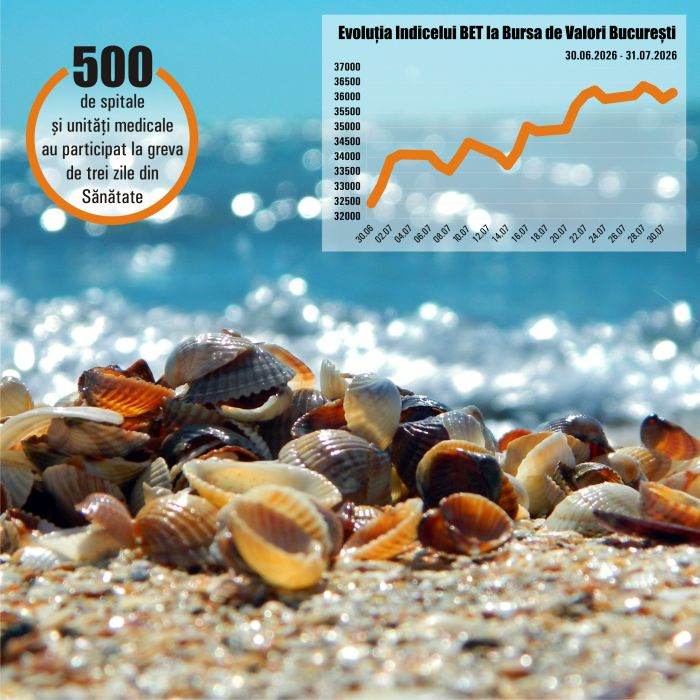
In addition to this conflict, the Government also had to deal with the largest union movement in the healthcare system in recent years. After the warning strike organized on July 20, the SANITAS Federation launched, on July 28, a general strike of indefinite duration. Over 500 hospitals and other medical units participated in the protest, with activity restricted to emergencies, complex cases and essential services, while some consultations, hospitalizations and scheduled interventions were postponed. The strike ended after three days of protest, after the Government unblocked several positions in the Healthcare sector and accepted the resumption of discussions on the single salary law in the budgetary system.
In financial terms, the six-month budget execution provided the Government with its main argument before the markets: the deficit was reduced to 41.03 billion lei, i.e. 2% of GDP, compared to 69.80 billion lei and 3.64% of GDP in the same period in 2025. The result contributed to Fitch Ratings' decision on July 31 to maintain Romania's sovereign rating at "BBB-", the last step in the investment-grade category. However, the victory is strictly defensive: the outlook remained negative, the agency warned that political instability reduces the visibility of public policies and estimated an economic contraction of 0.6% in 2026, as well as an increase in public debt to 64.5% of GDP by 2028. The month ended under the sign of a threat that went beyond the area of budget calculations. The flow of the Danube at the entrance to the country has dropped to 1,650 cubic meters per second, compared to a multi-annual average in July of approximately 4,750 cubic meters per second. One unit of the Cernavoda Nuclear Power Plant has been shut down, and the operation of the other has become dependent on urgent works to redistribute water at the Bala-Dunărea Veche bifurcation. The government has declared a national state of alert for 30 days, allocated 7 million lei for the deployment of metal barges to temporarily direct the flow, asked all available energy capacities to operate at maximum capacity, and started negotiations for additional imports, including from Ukraine.
• Constitutional war over 4.8 billion lei
The conflict between the Government and the High Court of Cassation and Justice broke out publicly on July 2, when interim Prime Minister Ilie Bolojan announced the referral of the Constitutional Court to resolve a legal conflict of a constitutional nature. The executive claimed that the court substituted itself for the executive and legislative powers in budgetary matters, after the Bucharest Court of Appeal admitted, on May 5, the action filed by the High Court of Cassation and Justice and obliged the Government and the Ministry of Finance to ensure, including through budgetary rectification, the payment of the outstanding salary rights of magistrates.
According to the interim Prime Minister, the amount claimed by the supreme court is approximately 4.8 billion lei, to which can be added almost 3 billion lei related to prosecutors' offices and other costs. The first instance decision provided, in case of non-execution, penalties of 1% per day of the amount owed, the equivalent of 48 million lei, approximately 9 million euros, for each day of delay, as well as fines applicable to the responsible authorities. The Government invoked the Public Finance Law and the Administrative Code, showing that the preparation and rectification of the budget, as well as the distribution of amounts from the Reserve Fund, are the responsibilities of the Executive and Parliament, not the courts.
The High Court of Justice rejected this interpretation and argued that the dispute does not concern the establishment of new salary rights by judges, but the enforcement of rights already recognized by enforceable titles. The Supreme Court showed that the non-payment of the amounts affects the property rights of magistrates and the authority of court decisions, and the Government's reaction would question the independence of the judiciary. The rights stem from decisions by which salaries in the judicial system were increased by 25%, with retroactive application from 2018, and some of the enforceable titles invoked have not been enforced for several years.
The case evolved along two parallel paths. In the appeal against the decision of the Bucharest Court of Appeal, the ÎCCJ postponed the ruling on July 9 to July 23, and then postponed it again to August 6. At the Constitutional Court, the debates took place on July 16. The Government requested the inclusion of Parliament in the conflict and argued that a court cannot impose a change in the state budget. The representative of the ÎCCJ requested the rejection of the complaint as inadmissible, also invoking the fact that it was formulated by the Prime Minister of a Government with limited powers. The CCR postponed the ruling to September 23.
On July 31, the conflict was therefore open both legally and institutionally. Beyond the immediate amount, the case establishes the limits to which a court can oblige the state to execute decisions with a major budgetary impact and the limits to which the Executive can invoke fiscal constraints to postpone the payment of definitively established rights. Any of the solutions will have effects beyond the judicial system: either the budget will have to bear an expense of the order of billions of lei, or the authority of enforceable titles against the state will be put into a new constitutional equation.
• The political crisis prolongs the interim and pushes the government to the limit of its legal powers
After the failure of the two appointments in June, Eugen Tomac and Adrian Veştea, President Nicuşor Dan failed in July to obtain an agreement between the parliamentary parties to form a cabinet with full powers. The PSD and the PNL remained locked in an exchange of conditions and accusations, the USR maintained its reservations regarding the formulas dependent on the social democrats, and the political negotiations did not produce a majority capable of passing a new Government through Parliament.
The situation is all the more sensitive because, unlike the interim of the presidential office, the Constitution does not establish an express time limit for the activity of a dismissed Government. The Cabinet can manage current affairs until a new Executive is sworn in, but it cannot adopt ordinances and cannot initiate policies that go beyond the current administration.
This limitation became concrete in the case of magistrates' salary arrears, in the preparation of a budget amendment and in the race to finalize the PNRR. Ilie Bolojan showed that an interim Government cannot issue normative acts with the force of law, although failure to implement the decision on salaries can attract huge penalties. At the same time, projects on which billions of euros of European funds depend had to be transferred to Parliament, the only institution that could adopt them during the interim period.
The crisis also produced an obvious political anomaly: parties unable to form a governing majority were forced to build punctual majorities for PNRR projects and for urgent economic measures. The government continued to function, but the focus of decision-making shifted to ad hoc parliamentary negotiations, with a limited horizon and the risk that each project would be transformed into an instrument of pressure between former coalition partners.
The risk of losing European funds forced Parliament to meet in extraordinary session from 27 to 31 July. At the beginning of the month, the government had listed six main legislative projects and three secondary projects, on the adoption of which depended amounts of at least 770 million euros for each major milestone, and in some cases almost 972 million euros. Among the priority projects were the law on the remuneration of personnel paid from public funds, the incompatibilities and integrity regime, the bonus-malus mechanism for ANAF, Ministry of Finance and Anti-Fraud staff, the amendment of the Administrative Code, the Urban Planning Code, the decarbonization of the heating and cooling sector, the transposition of the energy market directive and the legal framework for the closure of the PNRR.
• Fitch maintains "BBB-' rating, but negative outlook sanctions political instability
On the last day of July, Fitch Ratings reconfirmed Romania's sovereign rating at "BBB-", with a negative outlook. Maintaining the rating avoided a downgrade to the non-investment grade and preserved the state's access to a broader investor base, but the agency's report did not validate a return to stability, only that the deterioration had not yet justified the downgrade.
Fitch praised the correction of the budget deficit and estimated a deficit of 5.9% of GDP for 2026, below the Government's budget target. The agency warned, however, that the collapse of the pro-European coalition and the extension of the interim period reduce visibility on fiscal policies after 2026 and may delay the reforms necessary to absorb European funds. The divisions between the former governing partners make the rapid formation of a stable Executive unlikely, in the agency's assessment.
Fitch forecasts an economic contraction of 0.6% in 2026 and a public debt rising from 59.3% of GDP at the end of 2025 to 64.5% of GDP in 2028, above the median of countries with comparable ratings, estimated at 57.9%. The current account imbalance, the high share of foreign currency-denominated debt and financing costs remain additional vulnerabilities. In other words, Romania remained in the investment-grade category, but at the last step and under the agency's direct observation.
• The six-month deficit fell to 2% of GDP
The execution of the general consolidated budget as of June 30 was the strongest economic argument presented by the authorities in July. The deficit stood at 41.03 billion lei, or 2% of GDP, compared to 69.80 billion lei and 3.64% of GDP in the first half of 2025. The nominal correction was almost 28.8 billion lei, and the one reported to GDP was 1.64 percentage points.
Total revenues reached 342.52 billion lei, up 10.3% compared to the same period in 2025. Net VAT receipts rose by 25.1%, to 74.14 billion lei, insurance contributions amounted to 110.86 billion lei, and the amounts reimbursed by the European Union increased by 20.8%, to 30.29 billion lei. Total expenditures were 383.55 billion lei.
Personnel expenses decreased to 82.11 billion lei, while public investments increased to 59.96 billion lei, 9.52 billion lei above the level of the first semester of last year. Payments for projects related to the 2021-2027 financial framework and the PNRR were 15.32 billion lei, respectively 56.32%, higher than in the similar period of 2025. The favorable picture is, however, overshadowed by the interest bill, which reached 29.37 billion lei, 4.14 billion lei above the level of last year.
The execution shows that the adjustment was not made by blocking investments, but it does not guarantee reaching the annual target. The monthly deficit increased from 35.94 billion lei at the end of May to 41.03 billion lei at the end of June, and spending in the second half of the year, interest payments, possible legal obligations and energy interventions may substantially change the trajectory.
• BNR keeps key interest rate at 6.50%
The Board of Directors of the National Bank of Romania decided, on July 8, to maintain the monetary policy interest rate at 6.50% per annum, the lending facility at 7.50% and the deposit facility at 5.50%. The minimum reserve requirements rates also remained unchanged.
The decision was taken in the context of annual inflation reaching 10.85% in May, compared to 9.87% in March. CORE2 adjusted core inflation broke its downward trend and rose to 8.5%, amid the indirect effects of higher fuel prices, the exchange rate and import prices. The NBR indicated that natural gas, fuels, administered prices and state housing rents were the main sources of price increases.
The central bank showed that the economy stagnated in the first quarter compared to the previous quarter and contracted by 1.2% in annual terms. Household consumption continued to decline and the number of employees decreased. The NBR anticipated a substantial decrease in inflation in the third quarter, once the direct effects of the elimination of the energy cap and the increase in VAT and excise duties were exhausted, but it highlighted the risks generated by the domestic political situation, the conflict in the Middle East and the global energy shock.
The current account registered a deficit of 11.425 billion euros in the first five months, down from 12.075 billion euros in the same period in 2025. However, direct investments by non-residents fell to 2.195 billion euros, from 2.913 billion euros, and total external debt increased by 2.451 billion euros compared to the end of last year, to 230.914 billion euros.
• Economy in stand-by
Data presented by the National Institute of Statistics in July indicate, for the period July-September, a relatively stable activity in manufacturing, retail trade and services, a moderate increase in construction and price increases in all sectors analyzed.
In manufacturing, the short-term balance for production volume was -2%, and that regarding the number of employees was -5%, while expectations regarding prices indicated an increase, with a balance of +20%. In construction, managers anticipated a moderate increase in production, with a balance of +13%, stability in the number of employees, with +2%, and a strong increase in prices of works, with a balance reaching +36%.
In retail trade, turnover was estimated to be relatively stable, with a balance of +5%, and the number of employees was to increase moderately, with +8%. Price increases were anticipated by 38% of respondents and decreases by only 6%, resulting in a balance of +32%. In services, demand and the number of employees were assessed as stable, with balances of +1% and -3%, respectively, but sales or invoice prices were expected to increase, with the balance being +16%.
The INS table confirms the paradox of the economy in July: companies did not anticipate a new sharp drop in activity, but neither a convincing recovery, and price increases remained the only trend common to all sectors.
• Drought shuts down the Cernavoda Unit and pushes Romania into a state of energy alert
The energy crisis at the end of July transformed the level of the Danube from a hydrological indicator into an immediate national security problem. The river's flow at the entrance to Romania dropped to approximately 1,650 cubic meters per second, less than 35% of the multi-annual average for July, of approximately 4,750 cubic meters per second. High temperatures have increased electricity consumption, while drought has reduced hydropower production and affected the water needed to cool the reactors at Cernavoda. Unit 1, with an installed capacity of approximately 706 Megawatts (MW), has been shut down, while Unit 2 has been kept online due to the continued drop in water levels. The two units normally provide almost 20% of Romania's electricity production, so a simultaneous shutdown would have removed approximately 1,400 MW from the system during a period of high consumption and low import capacity across the region.
The National Emergency Committee has declared a nationwide state of alert for 30 days. Transelectrica has been tasked with ensuring the functioning of the National Electricity System by increasing production from all available sources, imports and, if necessary, reducing consumption. Gas and coal-fired power plants were called upon to operate at maximum capacity, and hydropower plants to concentrate production in the evening hours. Interim Prime Minister Ilie Bolojan asked public institutions, companies and the population to voluntarily reduce consumption in the evening.
On July 31, the Government allocated 7 million lei from the Reserve Fund for a temporary intervention at the Bala-Dunărea Veche bifurcation. The solution involves the phased placement of metal barges to redistribute the flow to the basin necessary for the safe operation of Unit 2.
• Romania joins the Defense Bank
Externally, the NATO summit in Ankara brought Romania the status of a founding state of the Defense, Security and Resilience Bank, alongside Canada, Albania, Belgium, Greece, Latvia, Luxembourg, Turkey and Ukraine. The new institution is designed to mobilize public and private capital for defense, critical infrastructure, energy, cybersecurity and resilience and is expected to start operating in 2027.
Our country will host the bank's regional office for the southern flank in Bucharest, which can facilitate access to loans, guarantees and equity investments for Romanian projects and defense industry companies. The initiative comes at a time when the Alliance is accelerating its military spending, and Romania must simultaneously finance defense, dual infrastructure and fiscal consolidation.
• Pfizer blocks ROMATSA revenues
At the beginning of July, the Government confirmed that ROMATSA's revenues from the European air traffic control organization had been seized in Belgium in the execution of a ruling favorable to Pfizer. Our country lost the litigation regarding vaccines contracted during the pandemic, and the value of the sentence was estimated by the interim prime minister at approximately 600 million euros. The annual flows to ROMATSA targeted by the seizure amount to approximately 300 million euros.
The executive announced that ROMATSA can continue its activity and that the safety and direction of air traffic are not affected. The company and the government's lawyers were to challenge the execution in the Belgian courts, in parallel with the negotiations carried out by the Ministry of Finance and the Ministry of Health with Pfizer.
• Health Strike: Over 500 Medical Units have limited activity
The end of July brought the largest union movement in the healthcare system in recent years. After the warning strike organized on July 20, between 09:00 and 11:00, the SANITAS Federation launched, on July 28, a general strike of indefinite duration. Over 500 hospitals and other medical units participated in the protest, with activity being restricted to emergencies, complex cases and essential services, while some consultations, hospitalizations and scheduled interventions were postponed.
The main cause of the conflict was the draft of the new law on the remuneration of staff paid from public funds. The unions claimed that the proposed mechanism for bonuses and compensatory amounts would freeze the income of a significant part of the staff and could produce net losses of up to 1,000 lei for certain categories of doctors and nurses who work in shifts or in particularly dangerous conditions. Representatives of SANITAS and the Federation "Health Solidarity" demanded the maintenance of income, adequate payment of guards, weekends and public holidays, fair rules for bonuses and the resumption of negotiations on the salary law based on a real social dialogue.
The staff shortage was the second major demand. Unions and representatives of health professionals indicated a shortage of over 30,000 positions and warned that medical performance cannot be correctly assessed in departments that operate far below the required staff. During the strike, the Government approved the release of 6,850 positions in hospitals and ambulance services, out of approximately 26,000 initially requested. The distribution was made according to the degree of bed occupancy and the share of personnel expenses in the budget of each unit, with almost 2,000 positions being redirected to county hospitals, university centers and units with intensive activity.
The general strike was suspended after three days, but the labor dispute was not closed. SANITAS announced that the staff would continue to wear armbands and that the protest could be resumed when a new draft of the salary law appears, if it does not eliminate the identified risks.
• Cyberattack on ANCPI blocked the real estate market
A ransomware-type cyberattack on the National Agency for Cadastre and Real Estate Advertising produced, starting on July 14, the largest disruption of IT systems in the institution's history and blocked an essential part of the real estate circuit in our country. The attackers encrypted and deleted components of the digital infrastructure on which ANCPI applications operated, and the e-Terra system, the payment platform and institutional email addresses became unavailable. The blocking of e-Terra made it impossible to issue land registry extracts necessary for the authentication of notarial deeds. In the absence of these documents, notaries were no longer able to finalize sales, donations, mortgages and other operations through which rights over real estate are transmitted or modified. Tabulations, deletions, dismemberments, annexations, cadastral documentation and numerous banking or administrative procedures dependent on ANCPI records were also affected.
The blockage occurred at a sensitive time for the residential market, before the change in the VAT regime applicable to certain homes. Buyers and developers under the pressure of contractual terms were forced to postpone transactions or conclude additional documents, at the risk of additional tax and foreign exchange costs. The incident thus affected not only the functioning of a public institution, but the entire economic chain formed by owners, buyers, notaries, banks, cadastres and real estate developers.
The compromised infrastructure was isolated, and ANCPI, supported by the National Cyber Security Directorate, the Special Telecommunications Service and Cyberint specialists, began rebuilding the system and migrating the e-Terra application to the government cloud.





















 Euro
Euro Dolar SUA
 Franc elveţian
 Liră sterlină
 Gram de aur