 English
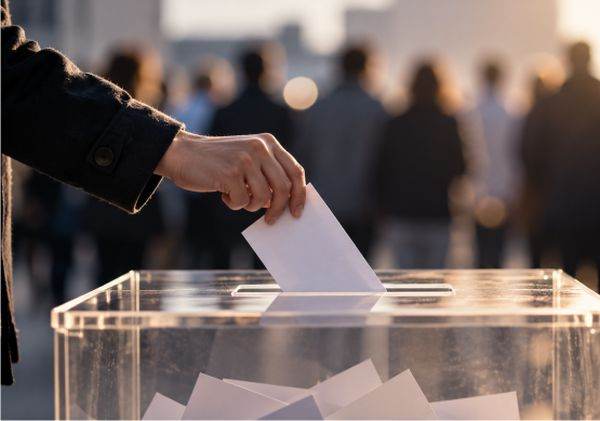
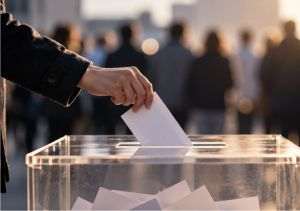
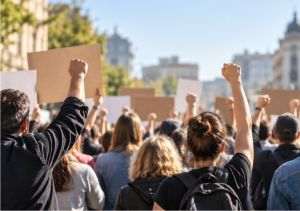
A government can withstand months of facing a public square filled with protesters, only to lose everything in a single election night. Serbia has just demonstrated how quickly the balance of power can shift when discontent finds organization, candidates, and votes. In Bulgaria, the presidential contest is heading into a decisive runoff. Israel is preparing to head to the polls under the weight of wars, while the United States approaches an election that could limit Donald Trump's freedom of action. In France, protests are already weighing on the race to succeed Emmanuel Macron. Despite the differences between these nations, the question underlying all these campaigns is uncomfortably simple: what are a government's promises worth when the people no longer trust those who make them?
In Belgrade, the answer arrived on October 25. Aleksandar Vucic conceded defeat for his side against the "Student List." "It is clear that we have lost this election; the Student List has won," he stated, according to Reuters. Projections by CeSID, as reported by El Pais, indicated that the student-backed ticket secured 52.9% of the vote and 140 out of the 250 parliamentary seats. While these are electoral estimates rather than final, official results, the political message of the evening could no longer be obscured by the vote-counting process: the protest movement had garnered enough support to lay claim to governance.
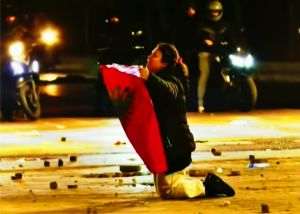
Behind this victory lies a tragedy that exhausted the patience of a segment of society. The collapse of the railway station canopy in Novi Sad in November 2024, which resulted in 16 deaths, triggered protests against corruption and a lack of accountability. Nearly two years later, this mobilization has produced an electoral alternative. Voter turnout approached 70%, according to a report by The Guardian. People who had taken to the streets to demand answers found themselves in a position to decide who would lead their country.
The name "Student List," however, may convey an incomplete picture. The slate brings together professionals and public figures, led by cardiologist Ilija Srdanovic. "European Western Balkans" quotes him as saying that "tonight, Serbia has won." The same outlet cites an estimate of 51.47% from the organization CRTA, a figure that differs from the projection provided by CeSID. According to data from the Central Election Commission in Belgrade, the Student List secured 52.69% of the vote, while Vucic's party received only 39.22%.
This victory does not automatically signal a shift in Serbia's foreign policy priorities. The student movement built its consensus around public accountability and institutional reform; its stances regarding the European Union and Russia remain cautious, according to The Guardian. The new central authorities in Belgrade will now have to translate the promise of change into concrete decisions, that will come at a cost and will inevitably alienate some of those who voted for them.
In Bulgaria, Sunday's vote, the first round of the presidential election, has left the contest wide open. Data from the Central Election Commission, following the processing of 99.94% of the vote tallies, indicated 34.76% for Iliana Iotova and 31.94% for Andrey Gyurov. The second round is scheduled for November 1st. However, the figure that perhaps speaks most volumes about the state of Bulgarian democracy is the voter turnout of approximately 22%.
This absence from the polls cannot be attributed to a single cause, nor can it be co-opted for propaganda purposes by any one side. It leaves the decision in the hands of those who choose to mobilize next Sunday. In Bulgaria, the divide between the candidates also concerns their stance on the war in Ukraine: Iotova - supported by President Rumen Radev - emphasizes diplomatic efforts, while Gyurov, backed by pro-Western reformist forces, takes a firmer pro-Kyiv position. Reuters also frames the election within the context of attacks on commercial vessels near the Bulgarian coast, which have brought the issue of insecurity in the Black Sea to the forefront of the domestic debate. For Romania, this contest carries immediate relevance. The security of navigation and the ability of littoral states to cooperate directly affect those who live and conduct business in the region. The tension between caution and firmness does not remain confined to television studios when commercial ships become targets; it spills over into ports, impacts transport costs, and shapes security decisions.
In Israel, today's election concerns the 120 seats in the Knesset, with a threshold of 61 mandates required for a majority. Among Benjamin Netanyahu's main adversaries are former military chief Gadi Eisenkot and former prime ministers Naftali Bennett and Yair Lapid. Responsibility for the security failure of October 7, 2023, and the track record of the country's leadership during wartime weigh heavily on the contest. The composition of the future coalition remains crucial: a party's first-place finish does not automatically equate to the power to form a government.
However, a potential defeat for Netanyahu should not marketed as a sure promise of peace. The Associated Press argues that core policies toward the Palestinians could persist under different leadership, even if the approach to settler violence and the exercise of power were to shift. Eisenkot, for his part, opposes Palestinian statehood. While these internal differences may matter to voters, for the Palestinians, a mere change in prime minister does not guarantee a fundamental shift in their situation.
In the United States, on November 3, voters will determine the composition of the entire House of Representatives - all 435 seats (for full two-year terms) - as well as 35 of the 100 Senate seats (which carry six-year terms). According to U.S. media and recent polls, it appears that Donald Trump and the Republican Party may face repercussions for the autocratic style of the White House administration during the first half of his presidential term. A hostile, Democrat-led majority in Congress could hinder the passage of legislation and intensify oversight of the executive branch; control of the Senate is also crucial for the confirmation of presidential appointments.
The stakes of the American elections extend beyond the country's borders, as the budgets and legislative decisions made in Washington influence the administration's capacity to pursue its foreign policy. Nevertheless, an opposition victory would not strip President Donald Trump of his powers, nor would it immediately bring peace to Ukraine or the Middle East. While the vote may alter the parameters for negotiation, it cannot, on its own, provide the solutions.
The next major elections will take place in France next spring. The presidential vote is scheduled for April 18 and May 2, 2027, according to the calendar released by the government in Paris. Emmanuel Macron cannot serve a third consecutive term. A contest for the Elysee Palace is already taking shape, featuring six prominent figures: Marine Le Pen, Jean-Luc Melenchon, Raphael Glucksmann, Edouard Philippe, Gabriel Attal, and Bruno Retailleau. According to analyses published by the daily Le Monde, Philippe - founder of the Horizons party - and Attal, leader of the Renaissance party, are vying for the centrist electorate, while Retailleau has been designated as the candidate for the Republicans. Melenchon represents La France Insoumise, whereas Glucksmann has emerged as the candidate for the social-democratic left. Marine Le Pen launched her campaign on October 25 in Orleans, as reported by Le Monde, aiming to channel the public's demand for order and dissatisfaction with the current administration into a presidential majority. Jordan Bardella continues to lead the Rassemblement National, but in this scenario, Le Pen is the presidential candidate; the French press suggests Bardella as her potential prime minister.
The succession to Emmanuel Macron is unfolding in a nation where issues such as purchasing power, public services, and the authorities' handling of protests are already fueling political confrontation. This discontent does not have a guaranteed electoral beneficiary. It could bolster candidates who promise wealth redistribution and social protection, but it could also strengthen the appeal of a "law and order" approach, especially when protests are accompanied by destruction. One of the decisive battles of the coming months is being fought here: who manages to define the problem, and who succeeds in convincing others that they can solve it. Leaders who mistake a fleeting advantage for an unlimited mandate should take a close look at Belgrade.


















 Euro
 Dolar SUA
 Franc elveţian
 Liră sterlină
 Gram de aur





























Reader's Opinion