English

The motion of censure filed by PSD and AUR was presented yesterday in the plenary session of Parliament by Petrişor Peiu, leader of the AUR group in the Senate and president of the party's National Leadership Council, with the debate and vote set to take place on Tuesday, May 5, 2026.
The document read at the Parliament rostrum by the AUR representative is more of a devastating indictment of Prime Minister Ilie Bolojan, accused of "destroying the economy", "impoverishing the population" and "fraudulently selling state assets". The language is imbued with political controversies, the images are extreme, and the conclusions are drawn with a certainty that could impress, if there were not one essential detail: PSD is not talking about a foreign government, but about an Executive of which it was a part until last Thursday, about policies that it endorsed, about decisions that it validated. Basically, we are witnessing a situation in which the same party that was in control until yesterday comes today and denounces, with theatrical indignation, the effects of its own actions. The motion of censure presents an economic apocalypse described with suspicious rhetorical voluptuousness, except that, in this torrent of indignation, exactly the essential element is missing: the mirror. Because the same policies, the same mechanisms, the same networks were endorsed, tolerated or even built in the years when the PSD was not only at the table, but at the head of the table. It is like setting fire to the house you have lived in for years and claiming that you suddenly discovered that the walls were made of wood and crooked. The irony becomes almost grotesque when the motion attacks precisely the mechanisms for listing and managing state-owned companies, citing risks of undervaluation, losses of billions and financial "cannons”. Among the examples cited is Transelectrica, a strategic company at the center of the national energy system. But the reality behind this criticism is inconvenient: the company is run by Ştefăniţă Munteanu, the godson of former Social Democratic Prime Minister Marcel Ciolacu, as we have shown in the last two years in the pages of the BURSA newspaper.
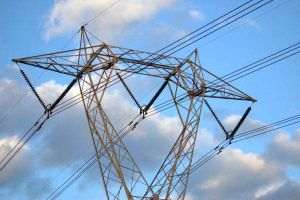
In other words, PSD criticizes not only a policy, but also the results of its own system of appointments and influence. And the figures related to the activity of this Transelectrica, recently presented by Prime Minister Ilie Bolojan, are, in themselves, a much harsher indictment than any sentence in the motion: over 1,400 technical connection permits issued for production capacity projects whose total exceeds 80,000 Megawatts, ten times more than Romania's current energy needs. At the same time, over 75% of the companies that received these notices have zero turnover, and over 78% do not have any employees. It is the image of a parallel system, in which speculative promises and phantom projects have proliferated under the eyes of Transelectrica management, in a climate of tolerance or complicity with political decision-makers over the past five years. And, inevitably, the question arises: who allowed this mechanism and who maintained it for years?
In this context, the attack in the motion takes on an air of farce. Because you cannot condemn today, with an almost moralizing vehemence, a system that you built yesterday. You cannot talk about the "robbery of the century” without explaining why you were part of the architecture that made it possible. And when indignation is selective and memory is short, political discourse inevitably turns into propaganda.
Against this background, Sorin Grindeanu's role becomes symbolic. The same politician who today supports the motion of censure repeats, almost mechanically, the scenario of June 2017, when the PSD dismissed its own government, or rather its own prime minister left alone at the Victoria Palace: Sorin Grindeanu. At that time, the current leader of the PSD was the victim of a brutal internal system built by Liviu Dragnea, today he is part of the mechanism that decides and executes. It is a rotation of roles that says everything about the deeply unstable and opportunistic nature of the internal politics of the PSD, where loyalty is temporary and principles are negotiable. The text of the motion goes further and talks about "non-transparent" listings, about strategic assets sold "below price" and about losses of billions for the state. Examples such as CEC Bank, Hidroelectrica, Romgaz or SALROM are invoked, in a rhetoric meant to induce the idea of an imminent disaster. However, beyond the drama, exactly the essential elements are missing: the context, the continuity of decisions and the cumulative responsibility. Because many of these processes did not start yesterday, but are the result of years of incoherent policies, compromises and intersecting interests.
The motion tries to create the image of a government that is "selling the country", but deliberately ignores the fact that the Romanian state has functioned for years based on the same mechanisms for managing public companies, in which economic criteria were be subordinated to political interests. And when this reality is passed over in silence, criticism becomes not only incomplete, but also deeply hypocritical.
Essentially, what happened yesterday in Parliament is not a simple presentation of a motion of censure, but a demonstration of aggressive political repositioning. PSD is trying to break away from its own past and reinvent itself as an opponent, while AUR is capitalizing on the moment to amplify its radical discourse. And in the midst of this game, reality is distorted, responsibility is diluted, and truth becomes a negotiable variable.
In the end, the motion of censure is not just about Ilie Bolojan. It is equally about PSD and its inability to assume its own decisions. It is about a political system in which the same actors change roles, but retain the methods. And it is about a public stage in which indignation is used as a tool, not as a principle. The rest, unfortunately, is just a show.














 Euro
Euro Dolar SUA
 Franc elveţian
 Liră sterlină
 Gram de aur