English

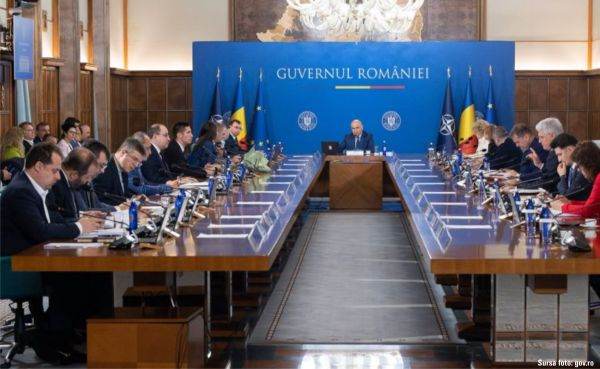
The internal political crisis seems unsolvable, after the consultations that took place at the Cotroceni Palace yesterday between President Nicuşor Dan and the parties of the former governing coalition did not offer any solution to remedy the situation. The PSD categorically declares itself in opposition, the PNL and the USR refuse to return to a governing formula alongside the social democrats, and Ilie Bolojan remains interim prime minister, although his Cabinet was removed by Parliament on May 5, 2026. While the Cotroceni Palace refuses to appoint Sorin Grindeanu or Siegfried Mureşan on the grounds that neither can demonstrate the existence of a parliamentary majority, the scenario of early elections, categorically rejected until recently, is starting to be invoked with increasing force, even though the presidential administration officially claims that it is not on the immediate agenda of the head of state.
The new round of consultations between the president and the leaders of the four parties in the former governing coalition lasted almost two hours, but confirmed the size of the deadlock rather than the existence of a way out. Presidential advisor Eugen Tomac tried to temper speculation regarding the dissolution of Parliament, declaring that "the organization of early elections is not on the agenda of the President of Romania”, that Nicuşor Dan "wants more openness from the political parties” and that the dialogue would continue. At the same time, Tomac specified that "the president has not put forward any name as a proposal for the position of prime minister”. Beyond these assurances, the simple fact that early elections are no longer unequivocally ruled out shows that institutional patience is beginning to reach its limit. The President does not appoint a candidate without a majority, the parties do not build a majority without an agreed candidate, and the dismissed Government continues to administer the country with limited powers, in a period in which important decisions must be made regarding the PNRR, OECD accession, the SAFE program, budgetary salaries and the reform of state-owned companies.
• Sorin Grindeanu calls for the resignation of Ilie Bolojan
Sorin Grindeanu, the president of the PSD, left Cotroceni with a speech that transformed the dispute regarding the future prime minister into an economic and political indictment against the Bolojan Government, but also against the PNL and USR. Sorin Grindeanu considers Ilie Bolojan the main and, essentially, the only one responsible for prolonging the political crisis triggered on May 5, 2026, when the Parliament dismissed the Government by adopting, with 281 votes, the motion of censure submitted by the AUR and PSD.
"Through all the actions he has taken so far, since he was dismissed, Ilie Bolojan shows me that he has no intention of unblocking the political situation. None, but only to continue to hold the position of prime minister, even if he has limited powers, as long as possible," declared Sorin Grindeanu. The PSD leader claims that Bolojan's continued leadership of the interim government is not a simple procedural consequence of the dismissal of the Cabinet, but has become the central obstacle to any political solution.
"If he wanted to unblock the situation, given this whole context, a first step towards unblocking would be to make a gesture to show Romanians that he is not holding on to his seat, namely to resign even as interim prime minister. Otherwise, it seems that he is still trying to hold on, to control the game, to dynamite any unblocking scenario and to give orders to Parliament what to do. A first gesture of good faith would be this: to have another interim prime minister, who would not have so much political weight, since we are still talking about interests that are beyond political parties," said the social-democrat president.
Grindeanu's verdict is unequivocal: Romania does not yet have a new government because Ilie Bolojan would cling to the position and would have successively compromised the formulas discussed in the last two months. "We have a prime minister who is clinging to office, who has been dismissed for over 60 days with a record number of votes, whom I have asked to unblock the situation and I hope he will do so, if they want us to take steps forward, who has blown up any attempt so far to find a solution and has blown up these possible scenarios, including publicly," said the PSD leader. He invoked the existence of at least two governing formulas on which Bolojan would have initially spoken favorably, but which would have been later compromised through political actions or statements. "I did not think for a second and we did not think for a second that someone was blocking Romania during this entire period and blowing up any unblocking scenario, as the dismissed prime minister did," Grindeanu added.
• PSD claims that it is the interim government's job to secure the necessary votes for the bills on the PNRR
The PSD president reminded those in the PNL and USR that he has left the coalition, is in opposition and cannot be transformed into automatic voter for an executive in which it is not represented. Moreover, the PSD leader accused the interim Government of trying to transfer political obligations and costs that belonged to the executive to Parliament. "It does not transmit or give orders to Parliament to do something that was the Government's job, namely all these things related to the PNRR, and does not hold Parliament accountable for something that was not initially its responsibility. All these things had to be done by the Government. Parliament is now coming to help, if it can", said Sorin Grindeanu.
However, he denied that the PSD intended to block all projects related to the National Recovery and Resilience Plan, the SAFE program or Romania's accession to the OECD. The Social Democrats claim that they will analyze and, if necessary, vote on essential projects, but refuse to assume unconditional responsibility for their adoption. "I did not say that we will not vote and I am not saying that now. It is just that it is not the PSD's responsibility", Grindeanu specified.
The dispute has also extended to the projects that must be adopted to meet the milestones in the PNRR. The PSD accuses the right-wing parties of trying to use the pressure of European deadlines to promote controversial changes regarding public integrity, salaries and state-owned companies. Grindeanu stated that the Social Democrats will not accept the use of the PNRR "as a media front for the obscure interests of some right-wing leaders” and accused the USR of trying to modify the ANI legislation for the benefit of some of its own leaders. Moreover, the salary law will not automatically receive the votes of the PSD, whose leader accuses that the project was not made transparent, and that the consultations with the unions and employers were formal.
• Rebuilding the coalition and a truce government, solutions rejected by the PNL and USR
The consultations at Cotroceni brought back into discussion several variants of governance, but none met the agreement of the parties. The representative of national minorities, Varujan Pambuccian, reportedly proposed reopening the dialogue and rebuilding the former coalition in a "2.0” formula, with another prime minister, who he claimed should "understand the economy”. Kelemen Hunor presented the option of a "truce government”, through which the parties would temporarily suspend their vetoes and accept a transitional formula until the budget for next year is voted on. None of the formulas was agreed to by the PNL and PSD, according to Sorin Grindeanu, who added: "It is difficult for me to answer you whether we will have a new government by September 1. It is really very difficult for me to make predictions of this type”.
Amidst the failure of all these formulas, early elections began to be discussed as a possible last way out of the crisis. Grindeanu acknowledged that the scenario cannot be eliminated, but described it as dangerous for political and economic stability.
"It's a scenario that you can never rule out. It's on the table. It's a scenario that can't happen from one week to the next. If this scenario were to happen, there would be elections sometime in the fall of this year. It's a scenario that would throw the political and economic scene into a kind of continuous instability, first of all, and this is actually the main criterion by which we have to look. But this is also a scenario. We have no problem entering this scenario. I don't see it as a happy one," declared the PSD president.
The Social Democrats warn that if the PNL and USR go into the elections with formal decisions by which they exclude any future majority alongside the PSD, they will respond with a similar ban.
• Liberals reject Grindeanu's accusations
The PNL immediately responded to Grindeanu's accusations. Gabriela Horga, senator and elected vice-president of the Liberals, claimed that "no other PSD president has misinformed more in a single day” and contested both the opposition status claimed by the Social Democrats and the economic data presented by their leader.
""PSD is in opposition', says Sorin Grindeanu. False! Almost all public institutions, including those in counties, state-owned companies in Romania are occupied by PSD members and sympathizers, by people appointed exclusively based on their party membership. For PSD to be in opposition, all PSD members must resign from the positions they hold,” declared Gabriela Horga.
Robert Sighiartău, secretary general of the PNL, shifted the confrontation to the PSD's political identity, describing "PSDism” as a system based on clientelism, dependency and institutional control. "PSDism is not just a party. It is a way of leading. For over three decades, PSD has been one of the most influential parties in Romania. Not just through the people it had, but also through the way of doing politics that it built and spread,” the liberal said. According to Sighiartău, in this political culture "it doesn't matter how good you are, but who you know” , institutions end up serving the party more than the citizen, public money is divided according to political interest, and those close to power are protected. The Liberal admitted, however, that such practices can also appear in other formations when they are tolerated, concluding that "the fight against PSEDism means more than changing a party" and implies changing the way politics is done in Romania.
The exchange of accusations demonstrates how unlikely the restoration of the former coalition has become. PSD and PNL are no longer negotiating only the name of the future prime minister or the division of ministries, but are also challenging each other's legitimacy, economic balance sheet and right to speak in the name of the public interest. The Social Democrats claim that they have been transformed into a scapegoat and parliamentary reserve of votes, although they are no longer part of the Government. The Liberals claim that PSD continues to control a significant part of the administration and state-owned companies, even if they officially declare themselves in opposition.
Between these two almost irreconcilable positions, President Nicuşor Dan is trying to find a majority that the parties are not willing to build. Romania has a dismissed Government that continues to function on an interim basis, a Parliament that is asked to adopt essential laws in the absence of a clear governing coalition, a President that refuses to appoint a Prime Minister without demonstrable support, and parties that are blocking, one by one, all the formulas put on the table.
Coalition government "2.0", truce executive, technocratic Cabinet, PSD minority government, PNL-USR-UDMR formula or early elections: all the variants are discussed, but none of them has the necessary votes and confidence.











 Euro
Euro Dolar SUA
 Franc elveţian
 Liră sterlină
 Gram de aur