English


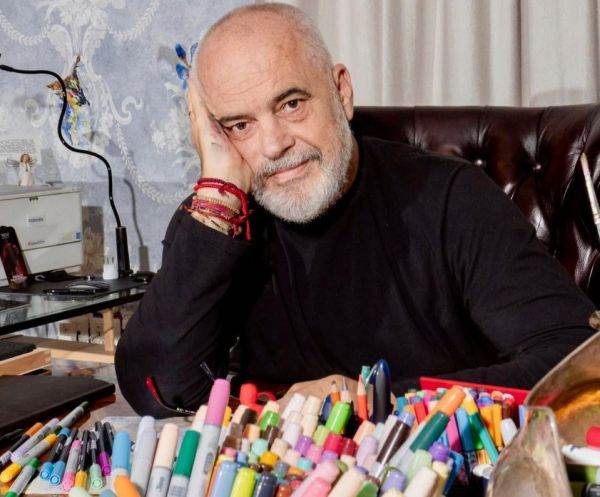
Regarding the Flamingo Revolution, political scientists in Tirana have stated that the issue is not ecological, but one of democratic representation, lawyers have accused citizens of intimidation, and the diaspora has begun to organize its own demonstrations. From all these reactions, the image of a society that no longer discusses only the protection of a lagoon, but the legitimacy of political power and who decides the future of Albania, is emerging.
The most active participant in this verbal confrontation was Prime Minister Edi Rama, who did not choose the path of conciliation, but that of direct confrontation. Instead of treating the protests as an expression of genuine dissatisfaction, the head of the Government tried to explain them by the existence of external mechanisms of influence. In a meeting of the Socialist Party parliamentary group, he stated: "The citizens did not revolt for the fate of Narta, but for the name of Jared Kushner.” With this statement, Rama tried to demonstrate that the protests were not generated by real environmental or legal issues of the project, but by the emotional impact of the fact that the investment was associated with the Trump family. In his opinion, the name Kushner functioned as a media detonator capable of transforming a local controversy into an international campaign.

The Albanian Prime Minister went further and claimed that the Flamingo Revolution was not only the result of domestic discontent, but also the product of a complex influence operation carried out in the online environment. In his speeches, he spoke of the existence of a "digital cyclone” that would have artificially amplified the protests and transformed a local conflict into a national political crisis. According to Rama, behind this mechanism were opponents of Donald Trump, anti-Israel groups, "digital mercenaries” and even hostile state actors, explicitly mentioning Iran. In this interpretation, social networks did not reflect the real state of Albanian society, but had become the instrument of a coordinated campaign of manipulation. The message was clear: the government in Tirana believed that the protests were fueled from abroad and that Albania was the victim of a modern form of information warfare.
This explanation was received with skepticism by much of the public opinion and became, paradoxically, one of the reasons why the protests continued to grow.
Another episode that provoked strong reactions was the way the prime minister chose to respond to the participants in the demonstrations. According to the investigation published by BIRN, Edi Rama began posting photos of the protesters on social networks, presented in a negative format and accompanied by comments regarding their identity and past, including references to legal proceedings or other personal information. The practice was perceived by many observers as an attempt to intimidate citizens participating in the protests.
Among the strongest reactions was that of Eridei Skëndaj, executive director of the Albanian Helsinki Committee, who publicly criticized this practice. She explained that the problem lies not in the simple fact that the photos were taken in a public space, but in the way they were collected, profiled and republished to create a negative image of the individuals concerned. In her opinion, when such information is gathered and used to stigmatize an individual, it already falls within the sphere of private life and may constitute a violation of the right to the protection of personal data. Skëndaj recalled that Article 35 of the Constitution of Albania and Article 8 of the European Convention on Human Rights guarantee the protection of private life and personal data, and that authorities have an obligation to show greater tolerance towards citizens than the other way around. She warned that the public labeling of protesters shifts the debate from ideas to individuals and creates a profound imbalance between state power and individual rights.
While the government in Tirana speaks of manipulation and hybrid warfare, the protesters have other explanations. According to media reports in Albania, the residents of Zvërnec have consistently rejected the idea that they are protesting against foreign investment. They said the real problem is that the land, beaches and areas they have used all their lives are being fenced off without anyone consulting them. For them, the barbed wire fences have become a symbol of a rift between the community and the state. In interviews with the press, the locals have repeated that they do not feel listened to and that they have been faced with a fait accompli, as if the future of the region had been decided without their existence. Minella Balliu, one of the most prominent voices of the Zvërnec community, told Albanian journalists that the fences erected near the beach are an aggression against a community that has lived for generations in that area. Balliu says that people were not informed, were not consulted and were not treated as partners in a project that radically changes their lives. Kostaq Konomi, a local community leader, is equally categorical, stating that the residents are not asking for privileges, but for respect for basic rights. He explains that the beaches, forests and roads in the area were part of the community's life long before the appearance of tourist projects and that their enclosure produces a feeling of alienation. The idea that the authorities talk more with investors than with the people who live there and that development cannot be built against the local community is a frequent theme in his statements.
The messages displayed during the protests also fell into the same category. One of the banners that caught the attention of the media simply said: "Vlora belongs to Albania, not the mafia and not the oligarchy." Another demanded an end to the transformation of natural heritage into a business for groups close to power. These slogans show that, in the perception of the participants, the conflict had already gone far beyond the boundaries of a dispute over environmental protection and had become a confrontation between citizens and what they called the alliance between political power and economic interests.
An equally harsh interpretation comes from the writer and analyst Fatos Lubonja, who stated, in an interview given to Le Monde and taken up by the Tirana press, that Albania is going through a period in which the public interest is being sacrificed in favor of projects presented as inevitable. Lubonja warns that the state is starting to treat natural heritage as a negotiable commodity and compares the tendency to concentrate power with controversial moments in Albania's history. He argues that economic development cannot justify the abandonment of democratic principles and that any government that tries to silence criticism by labeling protesters or delegitimizing them risks deepening the rift between society and institutions. In his opinion, the real problem is not the existence of foreign investors, but the impression that the state treats its own citizens as an obstacle to investment.
All these statements have built two irreconcilable narratives. For the Government, Albania is facing a historic opportunity for development and is the victim of a campaign of manipulation. For protesters, activists, lawyers and some analysts, the conflict is about transparency, the rule of law, natural heritage and the right of citizens to participate in decisions that change their future. It is precisely this clash of ideas that explains why the Flamingo Revolution did not remain a simple protest against a luxury resort, but became one of the most important debates about democracy, power and public interest in Albania in recent decades.















 Euro
Euro Dolar SUA
 Franc elveţian
 Liră sterlină
 Gram de aur