English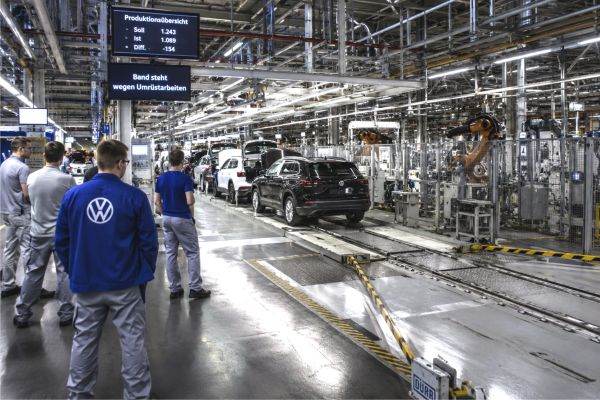
Volkswagen CEO Oliver Blume reaffirmed on Friday his plans for the "most extensive reorganization" in the history of the German group, after information about cost cuts from Europe's largest automaker triggered major protests at plants in Germany, according to DPA.
"With our plan for the future, we will make the group more robust and competitive, even in an extremely difficult global environment," Blume said after a supervisory board meeting in Wolfsburg on Thursday.
The management "assumes responsibility for the sustainable future of the company at a time when the automotive industry is under severe pressure. We are reducing risks, seizing new opportunities and sending a clear signal of a new beginning for Germany as a business environment," Blume added, notes Agerpres.
Blume had previously announced that he was working on a new target for 2030 and intends to significantly tighten cost-cutting measures.
According to the German magazine Manager Magazin, the company will lay off up to 100,000 employees globally, double the number it had initially planned. The tabloid Bild claims that it could be 120,000 employees.
Four Volkswagen Group plants in Germany could be closed by 2034, Der Spiegel magazine reported.
The information was not confirmed by company leaders, while unions and works councils organized major protests at some plants in Germany last week.
On Friday, CFO Arno Antlitz assured that the automaker "will continue to invest in electric vehicles and the latest software solutions for customers, while keeping combustion engine vehicles technologically competitive and strengthening VW's presence in major global markets.”
• Germany's largest union opposes new Volkswagen layoffs
Germany's main union, IG Metall, vowed on Thursday to oppose layoffs and plant closures at Volkswagen, according to Reuters.
"IG Metall, standing shoulder to shoulder with the employees, will oppose any new layoffs with all its might," said Jan Otto, IG Metall's director for Berlin-Brandenburg-Saxony.
• Auto sales hit by China slump
Vehicle sales at German giants BMW AG and Volkswagen fell in the second quarter of 2026 due to a deepening decline in the Chinese market, where growing competition from local rivals and a housing crisis are stifling demand for cars, according to Bloomberg.
Both automakers reported a decline in global sales in the April-June period on Friday, hit by a sharp decline in China, where local companies led by BYD Co. dominate the electric car market. Sales of BMW and Mini cars in China fell 30%, while Volkswagen Group deliveries fell 37% in the same market.
It is worth noting that BMW CEO Milan Nedeljkovic also plans to intensify cost-cutting measures, and last month he sharply reduced his financial forecast for 2026. BMW expects an operating margin that puts it on track to be the least profitable European automaker.
Also recently, German automakers Porsche AG and Mercedes-Benz Group AG reported a drop in deliveries, and in their case the main reason was China, where the prolonged housing crisis is eroding the purchasing power of wealthy customers. German manufacturers also face high energy and labor costs in Europe and import tariffs imposed by US President Donald Trump.
• Renault, Volkswagen and Stellantis ask EU to protect car sector
Last month, Volkswagen, Renault (French car group) and Stellantis (French-Italian-American car giant) joined forces to demand simpler regulations and subsidies to encourage the production of cars "Made in Europe", opposing the arrival of electric vehicles from China, according to the Financial Times.
The three car manufacturers, responsible for 60% of European car production, sent the European Parliament a package of joint measures, explicitly asking for rewards for manufacturers that localize production and maintain engineering, research and development activities in Europe.
In a joint document, the three presented their objective for Europe to remain a world power in the car industry, calling for a simple to apply and monitor mechanism that would favor European cars and domestic industry.
In March, the European Commission adopted a legislative proposal to increase demand for low-carbon technologies and products made in Europe. The Industrial Accelerator Act (IAA) will boost production, grow businesses and create jobs in the EU, while supporting the adoption of cleaner, future-proof technologies by industry, the EU executive said. The Buy-European strategy aims to increase the independence of local production. Current Commission proposals suggest that company fleet cars and small electric vehicles must be assembled in the EU to benefit from subsidies and participate in public procurement tenders. The proposals also foresee a 70% share of locally produced vehicle components, excluding batteries.
In contrast, Renault, Volkswagen and Stellantis propose a simpler system, based on a ceiling in which 70% of vehicles produced in Europe would have to contain at least 70% of components from the 27 EU member states, as well as Iceland, Liechtenstein and Norway. The remaining 30% could still come from countries outside the EU.
The three automakers say the definition of "Made in the EU" should include not only final assembly but also engineering, research and development (R&D) activities. They are calling for higher subsidies to offset the higher energy and labor costs that European manufacturers face compared to rivals in countries such as Turkey and Morocco.
Renault, Volkswagen and Stellantis also support extending so-called "super credits" currently aimed at small electric vehicles made in Europe to all electric vehicles made within the EU, which would make it easier to meet emissions targets.
The proposals have been criticised by some carmakers outside Europe, including Toyota, Jaguar Land Rover and Honda. They have raised concerns about the exclusion of components made in the UK, Japan and Turkey, saying the new requirements would increase the cost of vehicles for European consumers.













 Euro
Euro Dolar SUA
 Franc elveţian
 Liră sterlină
 Gram de aur