English


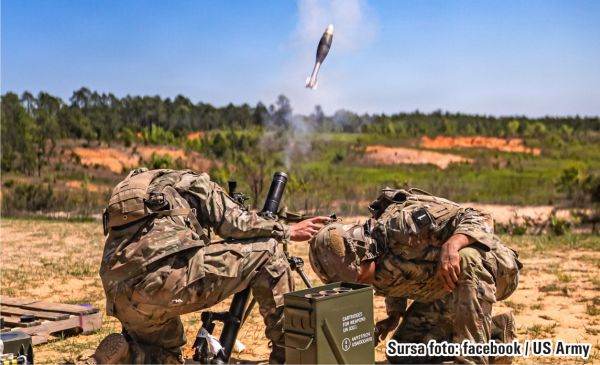
The US military spending in the first two months of the war against Iran amounted to almost $25 billion, with the bulk of this amount being spent on missiles, ammunition and weapons used in the conflict through the end of April, according to an official testimony given to the US Congress by Jules Hurst, the Pentagon's (War Department's) financial controller, during hearings in the House of Representatives' Armed Services Committee, according to articles published by the overseas media. The amount, beyond its colossal size, raises uncomfortable questions about the sustainability of a military campaign that appears to be consuming America's strategic resources at an alarming rate.
This official assessment comes at a time when the administration led by Donald Trump is already preparing an additional funding request to Congress to cover the costs of the war, without yet having a complete picture of the final bill, a sign that the real size of the conflict already exceeds initial estimates and that the pressure on the military budget is becoming increasingly difficult to ignore, given that the Pentagon is simultaneously requesting a record budget of $1.5 trillion for fiscal year 2027, a spectacular increase of 42% compared to the level of approximately $1.03 trillion in 2026. Beyond the raw numbers, the structure of the expenses is perhaps even more revealing, because, as Hurst himself admitted, the bulk of the $25 billion was consumed by munitions, in a conflict that has rapidly depleted stocks of advanced missiles and interceptors, indirectly confirming the fears expressed behind the scenes in Washington that the pace of military operations is pushing the United States into a dangerous zone of strategic point of view, in which the ability to support other possible theaters of war - either in Europe or in East Asia - could be seriously affected.
This tense reality is also reflected in the increasingly visible frictions within the administration, where Vice President JD Vance, according to high-ranking sources cited by Zerohedge, questions the Pentagon's optimistic assessments of the effectiveness of the campaign in Iran and the real level of weapons stocks, expressing concerns that the intensive use of critical systems, such as Patriot interceptors or standoff missiles, could leave the United States vulnerable to potential major conflicts with adversaries such as China or Russia.
At the same time, US media claim that independent reports indicate that, in just five weeks of confrontations, the US military has consumed about half of its stocks of advanced interceptors and a significant part of other categories of strategic munitions, while approximately 1,100 JASSM-ER missiles have already been launched into the Iranian theater of operations, an intensity of use that turns the war into a veritable industrial attrition race, in which production capacity becomes as important as actual military performance.
In this context, the meeting organized by Donald Trump in March with the leaders of the major defense giants, including BAE Systems, Lockheed Martin, RTX, Boeing and Northrop Grumman, takes on a special significance, being more of an alarm signal regarding the need to accelerate the production of munitions than a simple strategic consultation, especially since the weapons produced by these companies, from the Patriot and THAAD systems to cruise missiles, have been used massively in the conflict with Iran.
But, beyond the industrial effort, the war also raises questions about the real efficiency of the military campaign, given that internal assessments cited in the public space suggest that Iran still retains two-thirds of its air force, most of its missile launch capabilities and a significant fleet of fast boats capable of disrupting traffic in the Strait of Hormuz, which indicates that, despite the huge costs borne by Washington, the results obtained on the ground are far from decisive.
Moreover, the plans discussed at the US Central Command (CENTCOM), including the possibility of using Dark Eagle hypersonic missiles for the first time or launching new waves of "short and powerful” attacks, show that escalation remains a real option, even if each such decision involves additional costs of billions of dollars and major strategic risks, given that each hypersonic missile is valued at approximately $15 million, and the associated systems can reach $2.7 billion per battery. Against the background of these developments, it seems that we are witnessing a costly, intense and uncertain conflict, which is not only devouring the military resources of the most powerful army in the world, but also raising serious questions about the limits of American power in an era of increasingly fierce global competition.





















 Euro
Euro Dolar SUA
 Franc elveţian
 Liră sterlină
 Gram de aur