 English
The new government, led by Prime Minister Luca Niculescu, has included in its agenda the reopening of one of the state's most contentious issues: the merger of small localities and the downsizing of the administrative apparatus. Yet, behind the promise of better public services and budgetary savings lies a confrontation that directly affects the positions of mayors, the influence of political parties at the local level, and citizens' access to public administration. According to statements made by political leaders over the past two days, the discussion concerns 429 administrative-territorial units with no more than 1,500 inhabitants each, though the underlying financial issue is far more extensive. Data from the Court of Accounts indicates that, in 2023, 69% of communes were unable to cover their personnel expenditures using their own generated revenues.
Caught between the urgent need to cut spending and political resistance, the reform begins with a question to which the authorities have yet to provide a concrete answer: which local administrations will be merged, and based on what criteria?
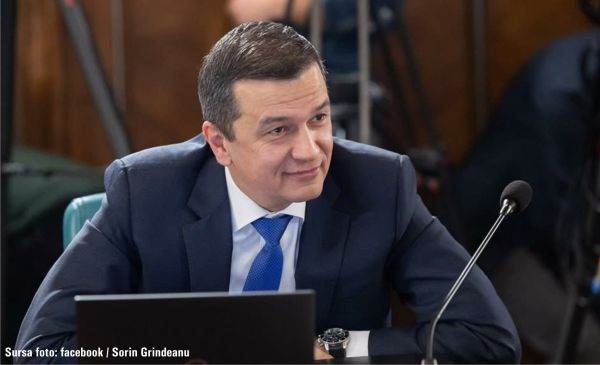
PSD President Sorin Grindeanu has demanded that the Niculescu government assume responsibility - via a separate procedure for each -for two major reforms. The first is intended to redraw the local administrative map by merging small communities, while ensuring that services for the population are maintained. The second initiative aims to reduce the number of government agencies and lead to the reorganization or liquidation of state-owned enterprises that are accumulating losses or whose continued existence is no longer justified. Within the PSD, the coordination of proposals regarding territorial reorganization has been assigned to MEP Dragoş Benea, while the coordination of matters concerning the government apparatus falls to Deputy Prime Minister Marian Neacşu. Grindeanu has set March 2027 as the deadline for these two initiatives, which are to be advanced via the "assumption of responsibility" procedure linking the reforms to the drafting of next year's state budget.
The PSD leader further argued that adopting these measures ahead of the public budget for the coming year would allow their financial impact to be factored into the state's fiscal projections. The stated objective is twofold: improved services and reduced expenditures. For now, the timeline remains political in nature: the end of this year is the preferred target, with the spring of 2027 serving as the announced deadline. As of yet, there is no finalized legislative draft specifying the number of mergers or the resulting cost savings.
• Voluntary mergers - the first step in public administration reform
Minister of Development Alexandru Stoica has focused the discussion on the 429 administrative-territorial units (UATs) with small populations. "We can no longer continue to operate with localities that have only 70 inhabitants," he stated during a debate on the Antena 3 television network. He proposes initiating the reform through voluntary mergers for communities with a population of no more than 1,500. The plan entails consulting the local population and providing investment incentives to ensure that administrative consolidation is accepted at the local level. However, at this point, the first rift emerges between the political message and the actual mechanism. Marius Oprescu, President of the Olt County Council, clarified that the voluntary approach presented by the Minister of Development and the reorganization via legislation proposed by the PSD are distinct initiatives. "These are two different projects," he insisted. He explained that the 1,500-inhabitant threshold relates to the discussion on voluntary consolidation, whereas the criteria for reorganization via legislation have not yet been defined. Consequently, the figure of 429 cannot be interpreted as a definitive forecast of how many local administrations will cease to exist.
This distinction is crucial for both citizens and the affected local authorities. The fact that 429 administrative units (UATs) were analyzed does not automatically mean that 429 local administrations will be eliminated. Some communities might merge with one another, while others could join larger administrative centers; the final number of administrations would depend on the specific structure of each merger. Furthermore, the consolidation of local administration should not be confused with the disappearance of villages: the core issue concerns the organization of local authorities, budgets, and the services provided to these communities.
Within the PNL (National Liberal Party), the recognized need for reform is coupled with skepticism regarding the PSD's ability to see it through to completion. Daniel Fenechiu, leader of the Liberal senators, has called for consultations with local administrations and civil society, warning that broad, general statements cannot serve as a substitute for a concrete plan. The Liberal senator pointed out that many local administrations struggle to even cover their own operational costs when drafting their budgets, and thus require support from the central government. At the same time, he requested that the reorganization be discussed with those affected and that it be based on a solution that is politically and socially acceptable.
Virgil Guran, the leader of PNL Dâmboviţa, directly criticized the voluntary mechanism. "Who is going to give up their position as mayor?" he asked during his remarks on Radio France International. In his view, interests of local elected officials can block mergers before they reach the stage of a community vote. Guran accused the PSD of having previously stalled administrative reorganization and indicated the Liberals' willingness to support a coherent law, once they have examined the documents and formulated their own proposals.
• The battle over the threshold: 1,500 or 5,000 inhabitants?
For its part, the USR is calling for a more ambitious reform. Sorin Şipoş, the party's leader in the Senate, dismissed the introduction of this topic -without any prior debate - as "mere window dressing." He proposed instead that a reorganization be considered that would also encompass administrative-territorial units (ATUs) with fewer than 5,000 inhabitants. This stance shifts the debate beyond the smallest communes; setting a higher threshold could significantly alter the scope of the project, while also necessitating a much more careful analysis of public services and the relationships between localities.
The UDMR warns that an administrative map cannot be drawn solely using a budget calculator. Speaking on Digi24, Kelemen Hunor stated that while reform has long been necessary, he rejected the notion that territorial reorganization can be managed from an office. "Yes, administrative reform must be carried out, but it must be done sensibly," the Union's leader remarked. Pointing to the geography of mountainous regions, he argued that in certain parts of the Apuseni Mountains, consolidating a population of several thousand people would entail covering very large distances. Under such conditions, centralizing administration could actually create additional hardships for citizens.
Kelemen Hunor distinguished between the restructuring of government institutions and changes to territorial organization. The first could be decided quickly, in his view, while the second requires an examination of community life, geographical distances, and ethnic composition. The UDMR leader requested that any potential mergers not alter the ethnic balance to the detriment of the Hungarian community.
A similar reservation was expressed by Csoma Botond, leader of the UDMR parliamentary group, who criticized the use of the "assumption of responsibility" procedure, a mechanism whereby the government bypasses standard parliamentary debate stating: "It strikes me as an anti-democratic measure." He called for respect for the will of the citizens and the protection of ethnic communities, citing international obligations regarding minorities. His stance leaves room for negotiating a reform, yet he challenges the announced procedure and demands guarantees concerning its local impact.
AUR focuses its criticism on the procedure itself and the lack of specific details. Petrişor Peiu, leader of the party's senators, took issue with the PSD's shift from proposing a parliamentary committee to opting for the "government's assumption of responsibility." In his view, this change reveals an inconsistency in how the Social Democrats intend to approach the reorganization.
AUR spokesperson Ştefan Avrămescu demanded that the content of the reform be presented before any discussion regarding its expedited adoption. "We, too, are waiting to see exactly what they will propose," the deputy stated. He noted that the PSD has discussed reorganization in the past without achieving any results, and he criticized the continued use of the "assumption of responsibility" procedure, a practice he associated with the former "Bolojan Government."
• Court of Accounts: 31% of communes are able to cover their own personnel expenses from their own revenues
Romania has 3,181 administrative-territorial units (ATUs) at the level of communes, towns, and municipalities: 2,862 communes, 216 towns, and 103 municipalities-including the Municipality of Bucharest, according to data published by the Association of Communes of Romania. Counties and the sectors of the capital city must be considered separately from this total. Communes account for nearly 90% of these primary-level administrative units, which explains why any serious reorganization would have a significant impact on rural areas. The 429 ATUs mentioned in the current debate represent approximately 13.5% of the total of 3,181.
Their distribution shows that the potential effects are concentrated in specific counties. According to data presented by Antena 3, Alba has 27 localities with 1,500 or fewer inhabitants; Caraş-Severin and Hunedoara have 26 each, while Cluj has 25. Next are Mehedinţi and Olt with 23 each, followed by Dolj (21), Teleorman (20), Arad (18), and Buzău (16). Together, these ten counties account for 225 of the 429 ATUs-more than half. This distribution illustrates the demographic scale of the discussion, though it does not constitute an official list of planned mergers.
However, the issue goes beyond just the number of inhabitants. The Court of Accounts audit covering the 2021-2023 period, published in October 2025, indicates that financial autonomy is fragile across a large portion of rural administrations. In 2023, only 31% of communes were able to cover their personnel expenditures using their own revenues down from 52% in 2022 and 44% in 2021. Applying this 69% share to the total of 2,862 communes points to approximately 1,975 such administrations. This is an estimate based on a rounded percentage; it does not represent an exact count of communes deemed non-viable, nor does it reflect an updated financial status for 2026.
For 2023, the Court of Accounts also identified 432 communes as no longer met the demographic threshold of 1,500 inhabitants, while 119 towns had fewer than 10,000 inhabitants, accounting for 55% of the 216 towns. These findings do not automatically mandate mergers or changes in administrative status. Rather, they highlight the gap between the requirements for establishing such units and the demographic reality of existing local administrations.
At the heart of this issue lies the citizen, for whom the reform will be judged based on the effort required to reach a service counter, the time it takes to obtain a document, and access to essential services. An audit by the Court of Accounts reveals that 12% of rural administrative units lacked family medical practices, while 24% had no access to pharmacies. Small communities were also disadvantaged regarding public utilities and transport. Consequently, any reorganization must be evaluated based on the capacity to manage investments and deliver services, not merely by the reduction in the number of administrative positions.
The 429 administrative units in question set the scale for the initial discussion on voluntary mergers. Furthermore, nearly 2,000 commune identified based on their salary-related vulnerabilities in 2023 illustrate the extent of these financial difficulties. Between these two benchmarks lies a decision that will put all political parties to the test: how many local administrations are willing to reorganize, what cost savings can be achieved, and what level of service can be guaranteed to the public following such changes? In the meantime, the push for public administration reform remains, in part, a struggle for control over local governments, all while the cost of the current organizational structure continues to be covered by public funds.





















 Euro
 Dolar SUA
 Franc elveţian
 Liră sterlină
 Gram de aur





























Reader's Opinion